Café de Olla: How to Make Mexico's Original Coffee
Born in the fires of the Mexican Revolution, café de olla has warmed hearts for over a century. This spiced coffee—simmered with piloncillo and cinnamon in clay pots—carries the spirit of the Adelitas who brewed it for soldiers, a tradition that still defines Mexican mornings.

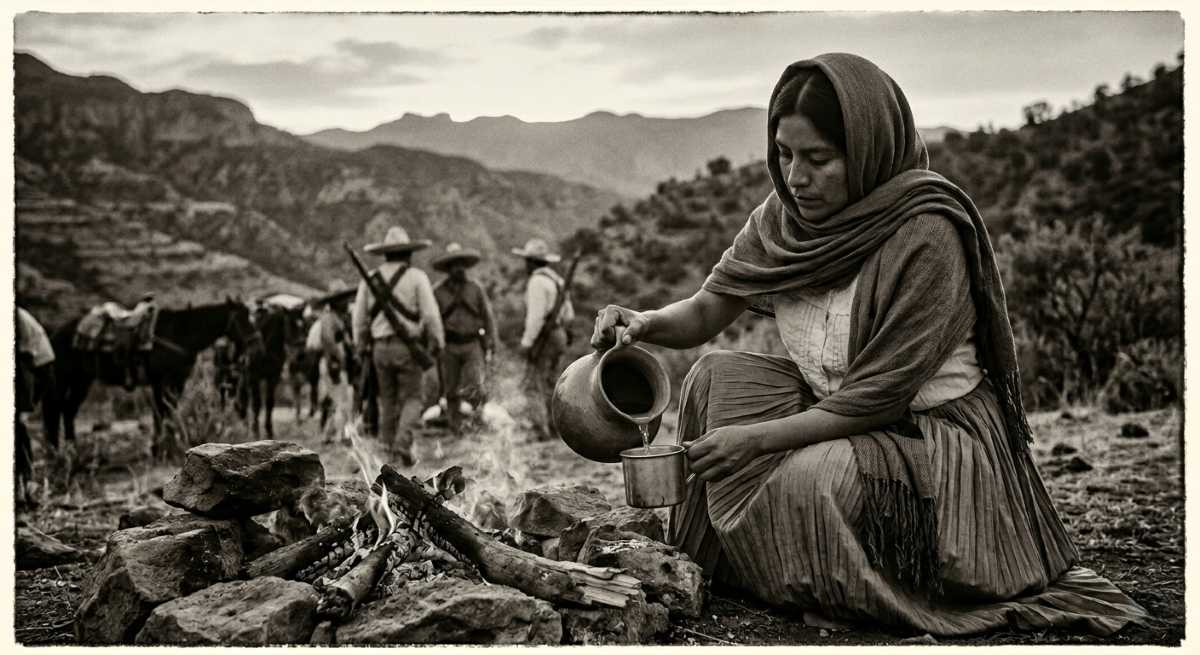
It's 1910, somewhere in the rugged mountains of northern Mexico. Revolutionary soldiers huddle around a campfire at dawn, their breath visible in the cold morning air. A woman—what locals would call an Adelita—reaches for a clay pot and begins brewing coffee that would become legendary. She tosses in cinnamon sticks, adds dark cones of unrefined cane sugar called piloncillo, and creates something that tastes like liquid warmth. This isn't just coffee. This is café de olla—"coffee from the pot"—and more than a century later, it remains Mexico's most beloved morning ritual.
Today, you'll find this aromatic drink served in restaurants from Mexico City to Los Angeles, in trendy coffee shops attempting to recreate its magic, and most importantly, in Mexican households where grandmothers guard their recipes like family treasures. But here's the thing: authentic café de olla isn't complicated. It's beautifully simple, steeped in history, and carries a story in every spiced, sweetened sip. Let's dive into how this revolutionary brew came to be—and how you can make it at home.
Born in the Fires of Revolution
The story of café de olla is inseparable from the Mexican Revolution (1910-1920), one of the most transformative periods in Mexico's history. During this decade of upheaval, women known as soldaderas or Adelitas traveled with revolutionary armies, cooking meals and providing essential support to soldiers fighting against the decades-long dictatorship of Porfirio Díaz. According to historical accounts documented by Barista Magazine, these remarkable women created café de olla in the war camps, brewing coffee in clay pots over open fires to keep soldiers warm and energized for battle.
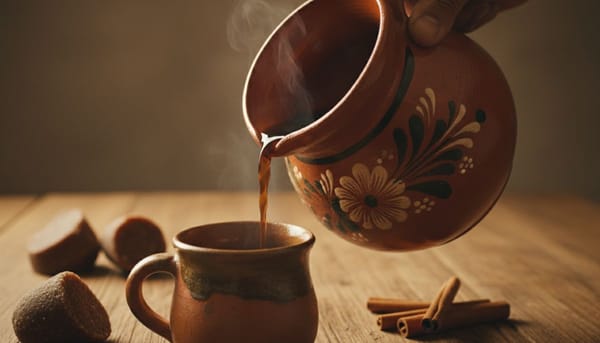
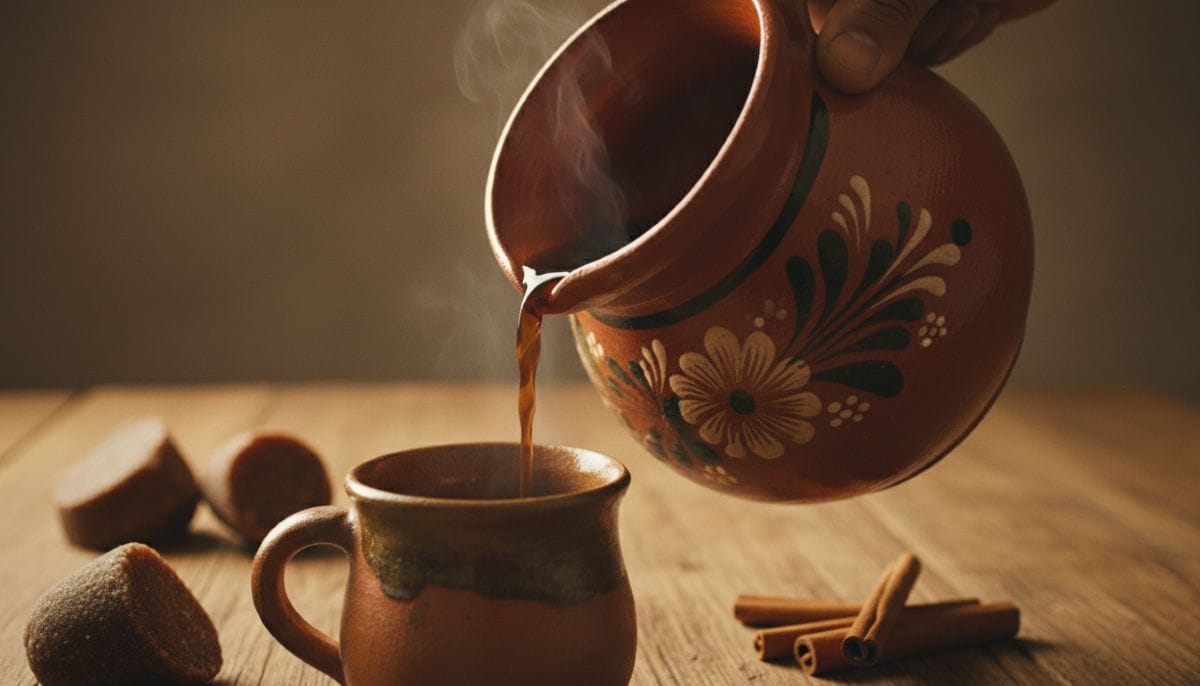
The clay pot—called an olla de barro—wasn't just a practical choice. These traditional earthenware vessels, used in Mexican kitchens for centuries, impart a subtle earthiness to whatever is cooked inside. The porous clay retains heat exceptionally well, keeping the coffee warm for extended periods—crucial for soldiers who might need a hot drink hours after brewing. Over time, the pot becomes "curado" (seasoned), absorbing flavors from repeated use and adding depth to each new batch.
But the revolutionary origins represent just one chapter of this coffee's story. Coffee itself arrived in Mexico much earlier—during the 18th century, brought from Africa through the port of Veracruz by Spanish colonizers. By the late 1700s, coffee cultivation had spread to the states of Veracruz, Oaxaca, and Chiapas, regions that remain Mexico's primary coffee-growing areas today. The USDA Foreign Agricultural Service reports that Mexico's coffee production for 2024/25 is forecast at 3.89 million 60-kilogram bags, with the United States remaining the top destination for Mexican coffee exports.
The Sweet Soul of Café de Olla
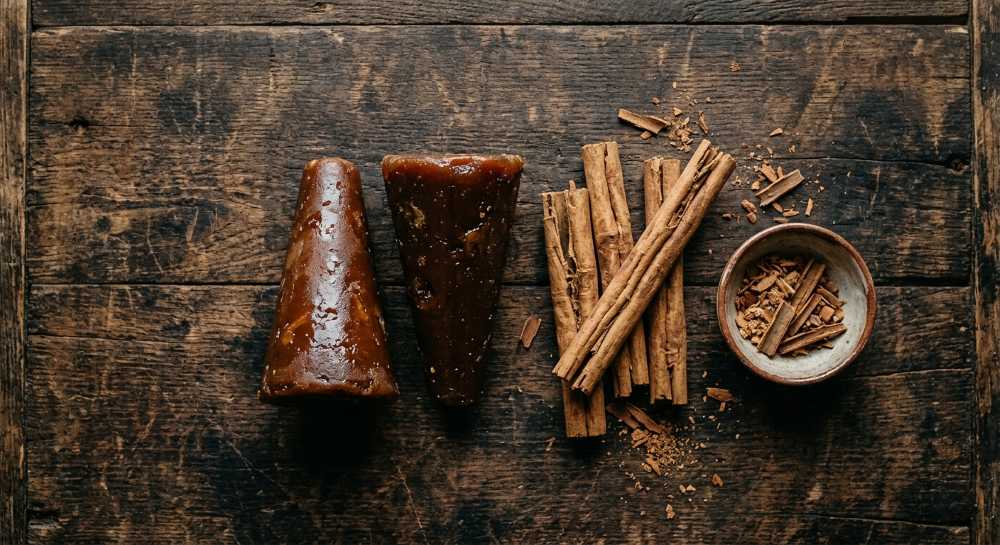
Here's where café de olla transforms from ordinary coffee into something extraordinary: piloncillo. This unrefined whole cane sugar, shaped into distinctive cone forms, has been sweetening Mexican cuisine for at least 500 years. Unlike refined white sugar, piloncillo retains all the natural molasses from sugarcane juice, giving it a complex flavor profile that includes notes of caramel, molasses, and even hints of rum.
The name "piloncillo" comes from the Spanish word "pilón" (pylon), referring to its conical shape. According to food historians at King Arthur Baking, piloncillo is technically a "non-centrifugal" cane sugar, meaning it's never spun in centrifuges to separate crystals from molasses. Instead, sugarcane juice is boiled down, poured into molds, and left to harden naturally. The result is what many consider a "true natural brown sugar"—sweetness with character, depth, and a connection to centuries of tradition.
Two varieties exist: piloncillo blanco (lighter, with subtle caramel notes) and piloncillo oscuro (darker, with deeper molasses intensity). For café de olla, the darker variety is traditional and preferred—its robust flavor stands up to strong coffee and warming spices.
If piloncillo provides the sweetness, cinnamon provides the soul. Mexican cinnamon—known as canela—is typically Ceylon cinnamon (Cinnamomum verum), which differs significantly from the Cassia cinnamon commonly sold in American supermarkets. Ceylon cinnamon is softer, more delicate, and can be easily crumbled by hand. Its flavor is subtly sweet with floral notes, lacking the sharp, almost peppery bite of Cassia.
The combination of cinnamon and piloncillo creates a synergy that defines café de olla. As the mixture simmers, the cinnamon releases its essential oils, infusing the water with aromatic compounds that complement the molasses-rich sweetness of the piloncillo. This isn't just flavor—it's aromatherapy in a cup, the scent alone capable of evoking memories of Mexican kitchens and family gatherings.
How to Make Café de Olla at Home
Ready to bring this Mexican tradition into your kitchen? Here's the beautiful truth: café de olla requires no special equipment, no barista training, and no hard-to-find ingredients. What it does require is patience and respect for the process.
Ingredients (Serves 4-6)
Ingredient | Quantity |
Water | 6 cups |
Piloncillo (dark, or dark brown sugar) | 8 oz (about 2 small cones) |
Mexican cinnamon sticks (canela) | 2 sticks (3 inches each) |
Whole cloves (optional) | 2-3 |
Star anise (optional) | 1 piece |
Coarsely ground coffee (medium-dark roast) | 6 tablespoons |
Step-by-Step Instructions
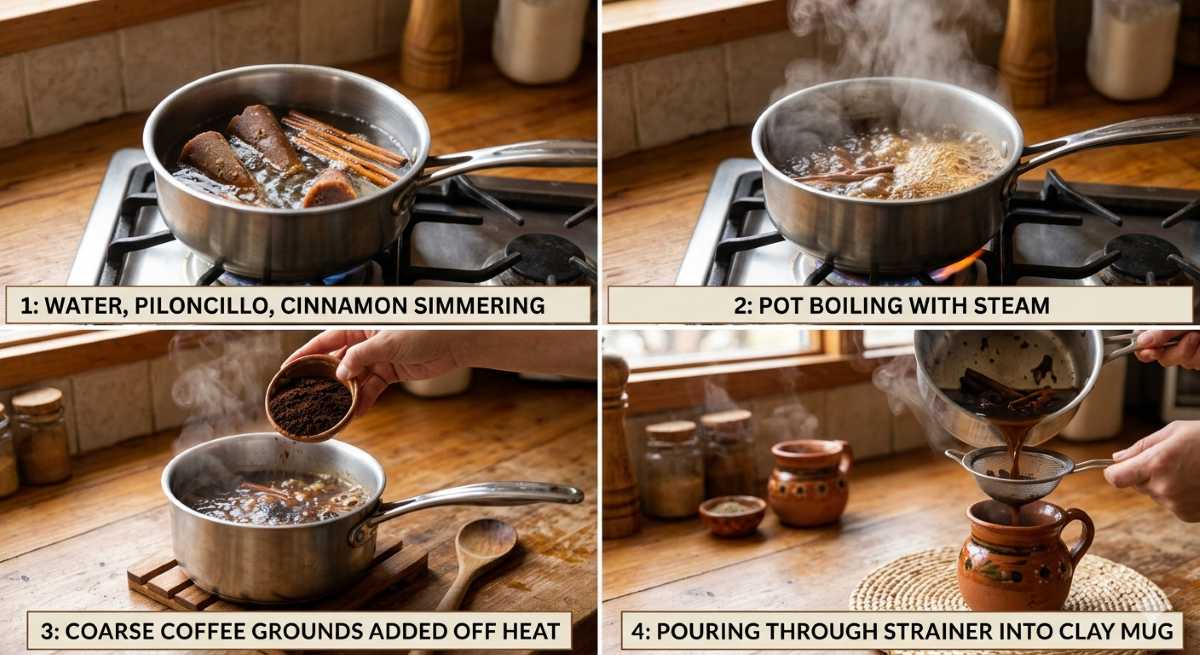
Step 1: Prepare the Sweetened Spiced Water. In a medium saucepan (or traditional clay pot if you have one), combine the water, piloncillo, cinnamon sticks, cloves, and star anise. Heat over medium, stirring occasionally until the piloncillo has completely dissolved. This usually takes about 5-7 minutes. The kitchen should now smell incredible.
Step 2: Bring to a Boil. Once the piloncillo is fully dissolved, bring the spiced water to a full boil. This step is crucial—the high heat helps extract maximum flavor from the cinnamon and other spices.
Step 3: Add the Coffee. Turn off the heat entirely, then add the coarsely ground coffee directly to the pot. Stir once to ensure all grounds are submerged. Let the coffee steep for 5-6 minutes. Unlike espresso or drip coffee, café de olla is never boiled with the coffee—only steeped, preserving the delicate aromatic compounds.
Step 4: Strain and Serve. Pour the coffee through a fine-mesh strainer into cups. Traditionalists leave the cinnamon stick in each cup for garnish and continued infusion. Serve hot, preferably in clay cups if available, though any mug will do. No milk needed—the spices and piloncillo create a naturally rich, satisfying flavor.
Pro Tips for the Perfect Cup
The Clay Pot Difference: If you can find an authentic olla de barro, use it. Before first use, "cure" the pot by boiling water with cinnamon and piloncillo—this seasons the clay and prevents a raw earth taste. A regular saucepan works perfectly fine, but you'll miss that subtle mineral complexity that clay imparts.
Piloncillo Substitutes: If piloncillo isn't available, dark brown sugar combined with a teaspoon of molasses makes a reasonable substitute. However, food experts at Ethnic Spoon note that "the result won't be quite the same"—piloncillo's unique mineral content and production process create flavors that refined sugars simply cannot replicate.
Coffee Selection: Mexican coffee beans from Veracruz, Oaxaca, or Chiapas are ideal, offering chocolatey, nutty profiles that complement the spices. A medium-dark roast provides the right balance of body and brightness. Avoid light roasts, which can taste sour against the sweet piloncillo.
From Campfires to Coffee Shops
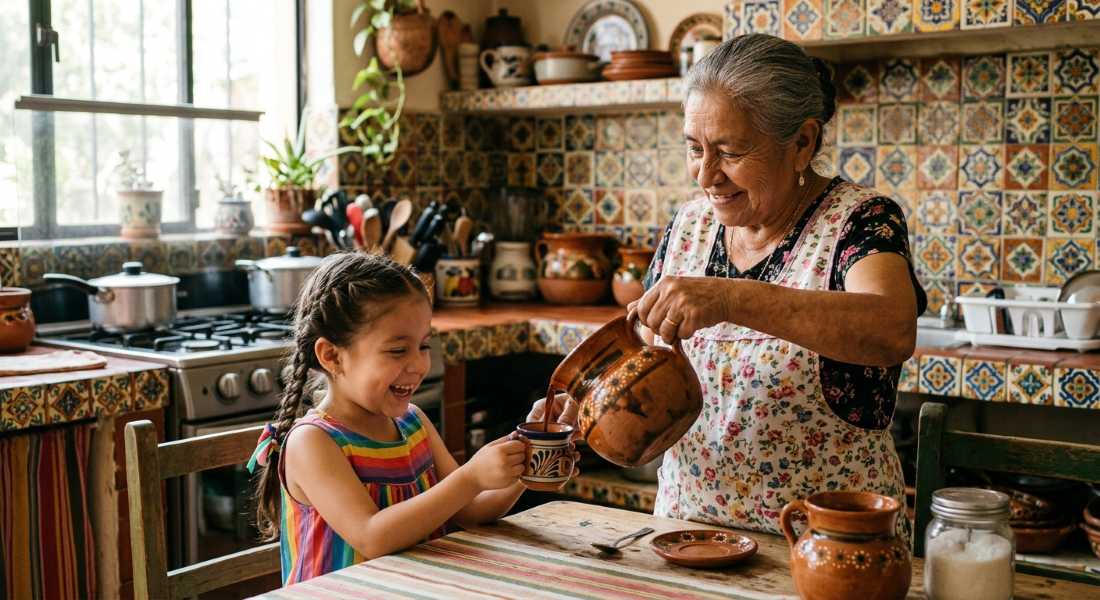
Café de olla transcends its role as a mere beverage. In Mexican culture, it represents hospitality, family, and connection to heritage. "It's a symbol of resilience, community, and the comfort of home," notes Casa Leal, a cultural organization dedicated to preserving Mexican traditions. When a Mexican grandmother serves café de olla, she's not just offering coffee—she's sharing history, love, and identity in a cup.
The drink appears during celebrations and ordinary mornings alike. In rural communities, it's common to find large pots simmering all day, ready for anyone who stops by. This communal aspect—coffee that's always available, always warm, always shared—reflects the Mexican values of generosity and togetherness that café de olla embodies.
For Mexican-Americans and the diaspora, café de olla serves as a tangible link to homeland and ancestry. The aroma alone can trigger powerful memories of childhood kitchens, of grandparents and their stories, of a culture that persists across borders and generations. In this way, brewing café de olla becomes an act of cultural preservation—a daily ritual that keeps traditions alive.
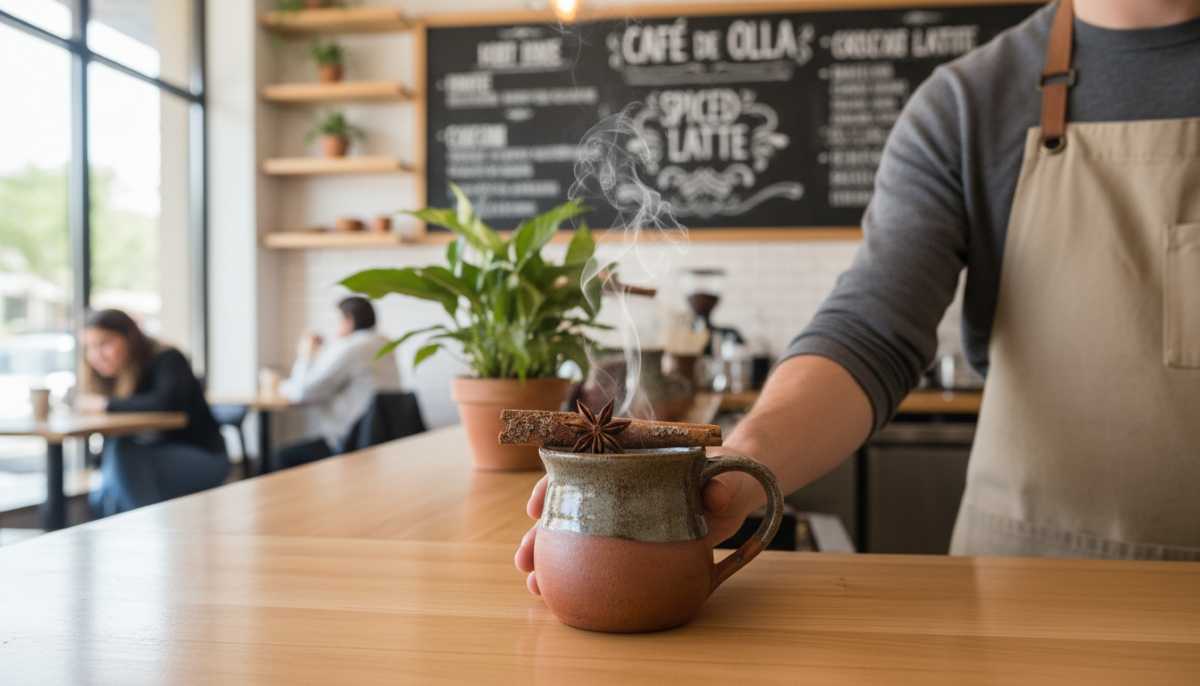
In recent years, café de olla has experienced a renaissance. Specialty coffee shops in Mexico City, Los Angeles, and beyond have begun featuring it on menus, introducing new generations to this traditional brew. However, purists note that some commercial versions have been "elevated" with additions like orange peel, anise, or even chocolate—delicious, perhaps, but straying from the simple three-ingredient foundation that defines authentic café de olla.
The rise of Mexican coffee on the global stage has also brought attention to café de olla. Mexico's specialty coffee industry has grown significantly, with the USDA reporting that exports for 2024/25 are forecast to reach 2.7 million bags. As international interest in Mexican coffee expands, café de olla offers an accessible entry point—a way to experience Mexican coffee culture without expensive equipment or brewing expertise.
Your Morning, Transformed
So there you have it—café de olla, a drink born in revolution, sustained by tradition, and ready to transform your morning routine. Whether you're connecting with Mexican heritage, exploring world coffee traditions, or simply seeking something warmer and more interesting than your usual cup, this spiced, sweetened brew delivers.
The beauty of café de olla lies not just in its flavor, but in its accessibility. You don't need expensive equipment. You don't need barista training. What you need is a pot, some water, piloncillo (or brown sugar), cinnamon, and good coffee. What you'll get is a cup that tells a story—of revolutionary women, of clay pots over campfires, of Mexican kitchens where coffee has been brewed this way for over a century.
Tomorrow morning, as the sun rises, consider skipping your usual routine. Instead, try something that soldiers drank before battle, that grandmothers have served for generations, that carries within it the warmth and resilience of an entire culture. Brew some café de olla. Taste history. Start your own tradition.
References
[1] USDA Foreign Agricultural Service - Mexico Coffee Annual Report 2024
[2] Barista Magazine - Coffee Drinks From Around the World: Café de Olla
[3] Mexico In My Kitchen - Café de Olla Recipe
[4] Ethnic Spoon - Café de Olla: Traditional Mexican Spiced Coffee
[5] King Arthur Baking - What is Piloncillo?