Crocodiles Can Be Trained, Conditioned, and Controlled — The Science Proves It
Forget Jurassic Park. A four-meter Nile crocodile hears a bell and flees. Real science shows crocodiles can be conditioned, detect infrasound, and possess 9,000 skin sensors. The cold-blooded killer stereotype is dead wrong.

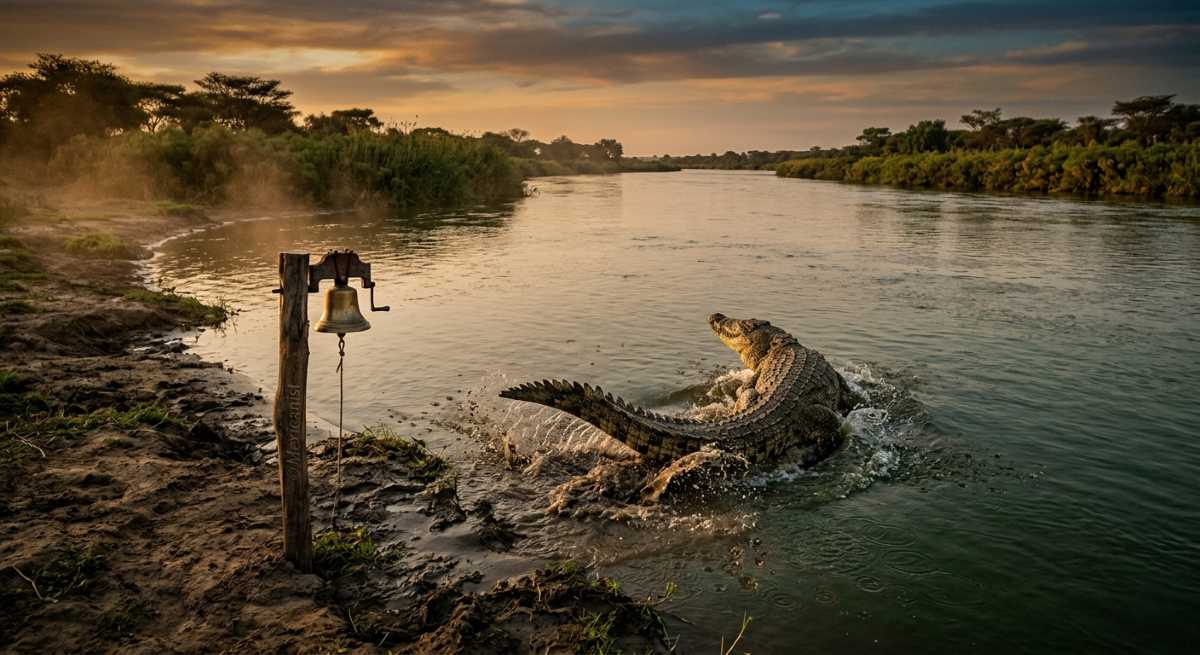
Forget the Jurassic Park nightmares for a moment. Picture this instead: a four-meter Nile crocodile hears a bell ring and literally flees the scene, tail tucked, doing an embarrassed scramble back into the river. No electric prod. No cattle prod. Just a sound, a memory, and a very fast reptile booking it in the opposite direction.
This is not a movie pitch. This is real science. And it is upending everything we thought we knew about the cold-blooded killing machines that have survived every mass extinction event the planet has thrown at them for the last 200 million years. For decades, the scientific consensus held that crocodilians were essentially biological robots: primitive, stimulus-driven predators with brains too small and too simple for anything we would recognize as learning, memory, or genuine behavioral flexibility. They were, in the popular imagination, little more than jaws with legs.
That picture is wrong. Spectacularly, provably, almost embarrassingly wrong. A growing body of research from institutions spanning four continents has revealed that crocodilians possess cognitive abilities that would impress a mammalogist: rapid associative learning, sophisticated sensory systems that detect vibrations and pressure changes invisible to human perception, complex social hierarchies, and even something that looks suspiciously like play. The question is no longer whether crocodiles can be controlled. The question is how much we have underestimated them, and what that means for the millions of people who share their neighborhoods with the world's largest living reptiles.
The Killers We Thought We Knew
Crocodilians, the order Crocodylia, include alligators, crocodiles, caimans, and gharials, twenty-seven extant species in total, ranging from the dwarf caiman, which barely cracks a meter, to the saltwater crocodile, which can exceed six meters and 1,000 kilograms. They are ambush predators of legendary patience, capable of waiting motionless for hours before exploding into a lethal strike that closes in under a tenth of a second. Their bite force, measured at up to 16,460 newtons in a 2012 study published in the journal PLOS One, is the highest ever directly recorded for any living animal. They have survived the K-Pg extinction that wiped out the non-avian dinosaurs, outlasted the rise and fall of countless mammalian megafauna, and adapted to habitats ranging from mangrove swamps to inland rivers to open ocean.
With that resume, you could forgive scientists for assuming that crocodilians had simply brute-forced their way through evolutionary history, relying on armor, size, and raw aggression rather than anything resembling intelligence. For most of the twentieth century, herpetology textbooks treated crocodilian behavior as a catalog of fixed action patterns: territorial displays, mating rituals, and feeding responses that were hardwired and unchangeable. Learning, in the strict Pavlovian and operant sense, was considered the exclusive province of birds and mammals. Reptiles, and crocodilians in particular, were thought to lack the neural hardware for it.
The first cracks in that wall appeared in the late 1990s, when researchers at the University of Tennessee published a landmark study showing that crocodiles could use tools, specifically, balancing twigs on their snouts to lure nesting birds. Then came studies showing that crocodilians could be trained to voluntarily participate in veterinary procedures using positive reinforcement, that they recognized individual humans, that they formed stable social networks across hundreds of kilometers of river system, and that their brains contained neuronal cell types that, in birds, are associated with goal-directed cognition and complex problem-solving. The old paradigm was not just crumbling. It had already collapsed.
Ring a Bell, Scare a Croc
The most direct and provocative evidence that crocodiles can be behaviorally controlled comes from a series of field trials conducted in East Africa and supported by the Rufford Foundation, a UK-based conservation charity. The premise was deceptively simple: if Ivan Pavlov could teach a dog to drool at the sound of a bell, could you teach a crocodile to flee at the sound of one?
The answer, it turns out, is yes. The experimental protocol combined classical and operant conditioning in a way that would be familiar to any introductory psychology student. Researchers placed a prototype training device near areas where wild crocodiles were known to congregate, typically riverbanks and watering holes frequented by livestock and humans. The device emitted a bell sound, a previously neutral stimulus, followed immediately by an aversive stimulus in the form of a mild electric shock delivered through the water. After repeated pairings, the researchers removed the electric shock and tested whether the bell alone was sufficient to trigger avoidance behavior.
It was. The crocodiles, both wild and captive, learned the association rapidly, typically within a handful of trials. Upon hearing the bell, conditioned crocodiles exhibited clear escape responses: retreating from the sound source, submerging, and vacating the area entirely. The implications were immediate and practical. In regions where human-crocodile conflict is a serious and growing problem, claiming dozens of lives annually across Africa and Southeast Asia, a low-cost, scalable behavioral deterrent could save both human and crocodile lives. The Rufford team estimated that a single training device, deployed at a conflict hotspot, could condition an entire local crocodile population within weeks.
The speed and reliability of the conditioning surprised even the researchers. While classical conditioning in mammals and birds often requires dozens or hundreds of pairings to establish a robust conditioned response, crocodiles in the Rufford trials showed significant avoidance behavior after as few as three to five bell-shock pairings. This rapid acquisition rate is comparable to that observed in laboratory rats and pigeons in controlled settings, which is remarkable given that the crocodile trials were conducted in the wild, with all the noise and variability that implies.
Moreover, the conditioned response appeared to persist. Follow-up observations suggested that crocodiles maintained their avoidance behavior for weeks after the last training session, indicating a degree of long-term memory formation that was not expected in a reptile. This finding dovetails with cognitive studies on American alligators conducted at Texas A&M University, which demonstrated that alligators could form associations between a secondary visual stimulus and a primary food reward, and that the strength of this association varied depending on the type of stimulus presented, suggesting a level of stimulus discrimination that goes well beyond simple reflexive responses.
Parallel to the aversive conditioning work in the wild, a quieter revolution has been taking place in zoos and aquaria around the world, where keepers have been successfully applying positive reinforcement training, the same operant conditioning techniques used with dolphins, dogs, and even parrots, to crocodilians. A comprehensive review published in the journal Veterinary Clinics of North America: Exotic Animal Practice documented how target training, where a crocodile is taught to touch a specific object with its snout in exchange for a food reward, could be used to facilitate voluntary blood draws, weight checks, and even ultrasound examinations without the need for physical restraint or chemical sedation.
The key insight from the zoo community is that crocodilians are not merely tolerating these interactions. They are actively participating in them. Trained crocodiles will voluntarily approach training stations, present body parts for examination, and remain still during procedures that would otherwise require four keepers, a rope, and a considerable amount of risk. This level of behavioral flexibility is inconsistent with the old model of the crocodilian brain as a fixed-action-pattern machine. It implies, instead, a nervous system capable of forming novel associations, updating behavioral strategies based on experience, and integrating multiple sources of sensory information to make decisions. In other words, it implies cognition.
Speaking Below Human Hearing
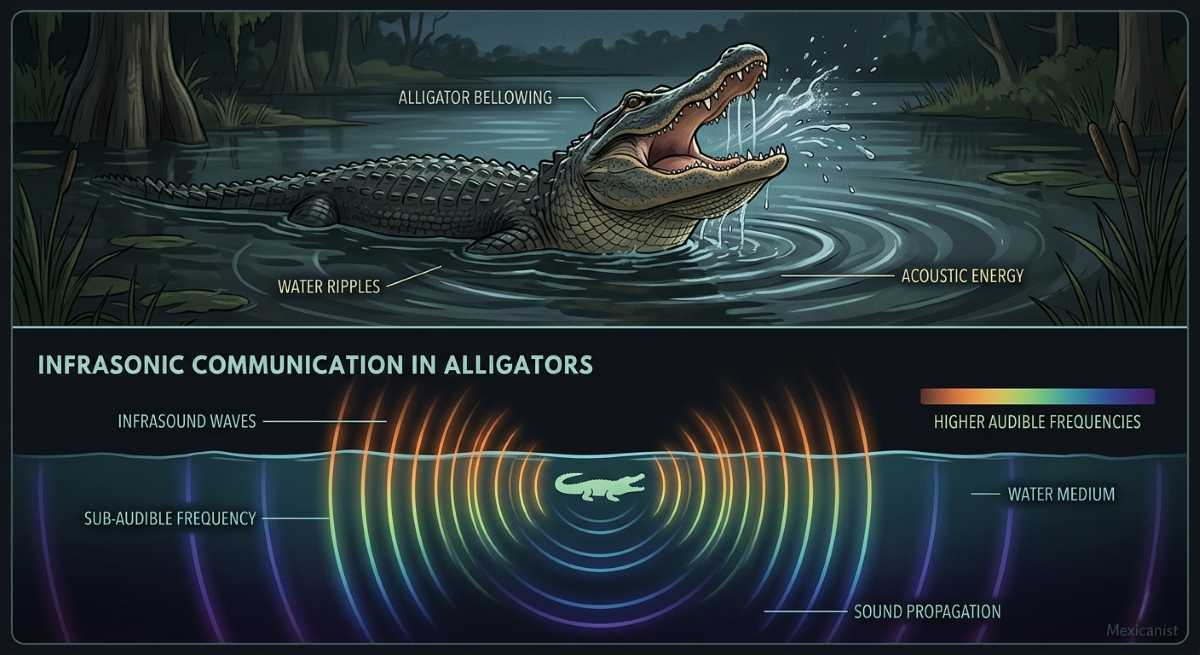
Human hearing spans roughly 20 hertz to 20,000 hertz. Below 20 Hz, we enter the realm of infrasound, sound waves too low in frequency for the human ear to detect but very much real and very much consequential. Elephants use infrasound to communicate across distances of ten kilometers or more. Whales use it to coordinate across entire ocean basins. And crocodilians, it turns out, are plugged into this sub-auditory channel with a sophistication that researchers are only now beginning to appreciate.
A 2013 doctoral thesis by researchers at the University of Lyon, titled Perception of Airborne Sounds and Vibrations in Crocodiles, provided some of the most detailed evidence to date. The study demonstrated that crocodilians can both produce and perceive low-frequency sounds and infrasound below 100 Hz, and that these sub-threshold signals play a crucial role in their behavioral repertoire, particularly in the context of territorial defense, mate attraction, and mother-offspring communication. Male alligators, for example, produce deep, resonant bellows during the mating season that contain significant infrasonic components. These bellows are powerful enough to cause the surface of the water to literally dance with ripples, a phenomenon known as 'water dancing,' which serves as a visual amplifier of an acoustic signal that most other animals cannot even hear.
If crocodilians were simple acoustic reflex machines, they would respond to any loud noise below 100 Hz with the same stereotyped behavior. But a groundbreaking study published in 2023 in the journal iScience, led by researchers at the University of Lyon, demonstrated something far more nuanced. Crocodilians, the study showed, can categorize sounds along an acoustic continuum, distinguishing between different call types based solely on their spectral envelope, the overall shape of the sound's frequency distribution, rather than simple amplitude or duration cues.
This is a big deal. Sound categorization is considered a cognitively demanding task because it requires the brain to extract abstract features from a continuously varying physical signal and sort those features into discrete behavioral categories. Human infants do this when they learn to distinguish between the /b/ and /p/ sounds in speech. The iScience study found that crocodilians could be trained to distinguish between two artificially generated sound categories and that the boundary between those categories could be shifted through learning, demonstrating neural plasticity, the ability of the brain to reorganize itself in response to new information, in a way that was previously thought to be beyond reptilian capabilities.
Vladimir Dinets, a zoologist at the University of Tennessee, compiled one of the most comprehensive surveys of crocodilian acoustic communication ever attempted, covering long-distance signaling behaviors across twenty-four species. His analysis, published as a monograph titled Long-Distance Signaling in Crocodylia, revealed that crocodilians adapt their signal composition to habitat structure, choosing physically different acoustic components depending on whether they live in open water, dense forest, or transitional environments. Species in open habitats, for example, tend to rely more on visual signals like head-slaps and body postures, while forest-dwelling species lean more heavily on low-frequency vocalizations that can penetrate dense vegetation.
The flexibility of this signaling system is particularly striking. Dinets documented cases of crocodilians using multi-component signals, combinations of bellows, roars, headslaps, and infrasound pulses, that appeared to be modulated in real time depending on the social context and the distance to the intended receiver. This kind of dynamic, context-dependent communication is a hallmark of complex social behavior and is rarely observed in species with simple or inflexible nervous systems. The fact that crocodilians have been using this system, essentially unchanged, for tens of millions of years, as evidenced by the similarity between modern crocodilian vocalizations and those inferred from fossil specimens, suggests that it confers a significant evolutionary advantage.
The Integumentary Sense Organs
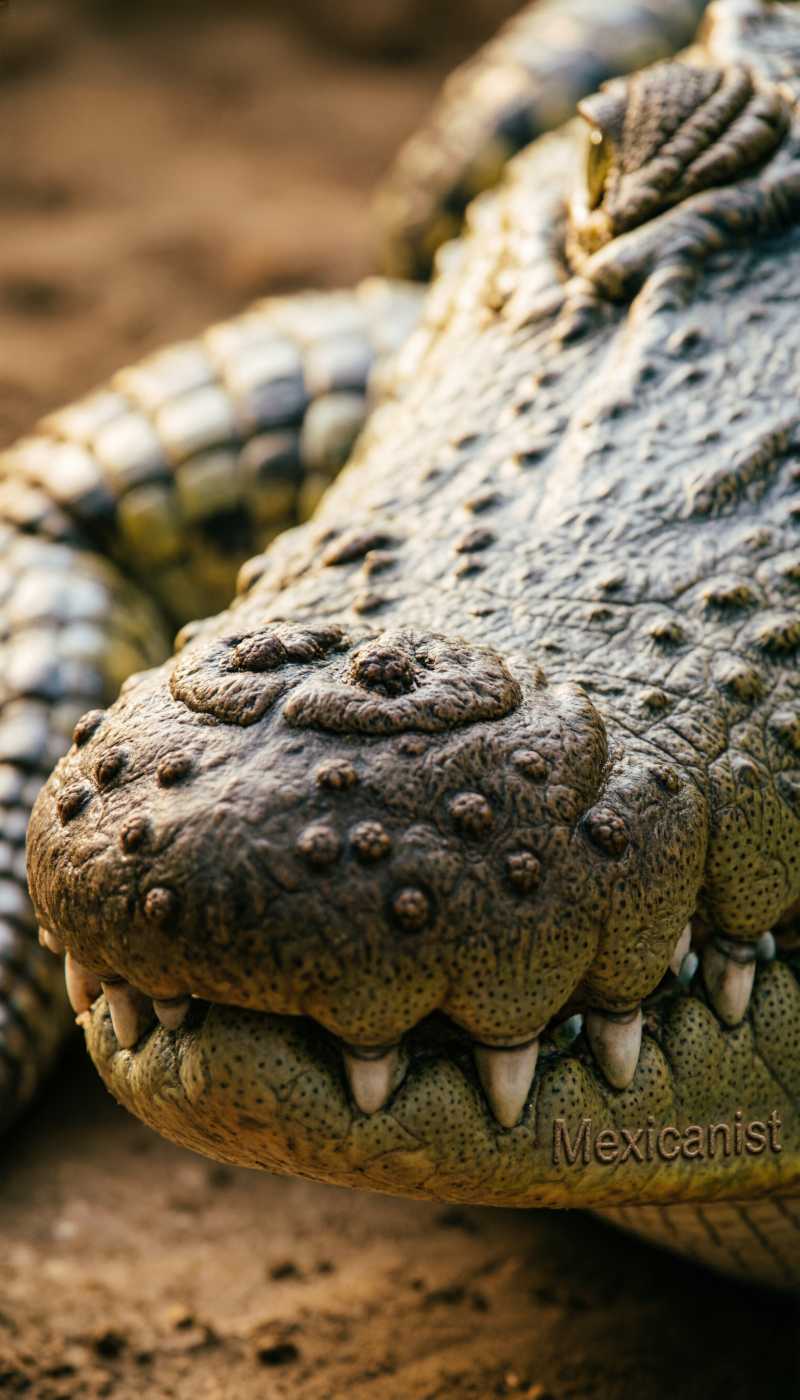
If crocodilian cognition surprises you, wait until you hear about their skin. Scattered across the faces and bodies of every crocodilian species are thousands of tiny, dome-shaped structures called integumentary sense organs, or ISOs. These structures, visible under a scanning electron microscope as small raised bumps, are among the most extraordinary sensory organs in the vertebrate world, and they have no direct equivalent in any other living animal group.
A landmark 2014 study published in the journal EvoDevo, conducted by researchers at the University of Geneva and Vanderbilt University, revealed that ISOs are far more than simple pressure detectors. They are multi-sensory micro-organs, simultaneously sensitive to touch, heat, cold, and the chemical composition of their environment. This multi-modal sensitivity means that a single ISO can tell a crocodile, in real time, whether the pressure change it just detected was caused by a passing fish, a drifting log, or the footstep of a wading animal, and it can do so by integrating tactile, thermal, and chemical cues simultaneously.
The density and distribution of ISOs vary dramatically between species, and these variations appear to be closely linked to ecological niche. A comprehensive anatomical survey published in 2014 in the Journal of Comparative Neurology documented approximately 4,000 ISOs in the American alligator (Alligator mississippiensis), concentrated primarily on the jaws and around the mouth, and approximately 9,000 in the Nile crocodile (Crocodylus niloticus), distributed across both the face and the entire body surface. This more than twofold difference in sensor density reflects a fundamental ecological divergence: alligators are primarily freshwater ambush predators that detect prey primarily through jaw-based touch sensors during the capture event, while Nile crocodiles are semi-aquatic generalists that need full-body environmental awareness to navigate complex river systems, detect approaching threats, and coordinate social interactions.
Each individual ISO is innervated by a network of afferent nerve fibers supplying multiple different mechanoreceptors, meaning that a single tiny bump on a crocodile's snout is wired into at least three distinct sensory channels. Electrophysiological recordings from the trigeminal nerve, the cranial nerve that supplies sensation to the face, showed that individual ISOs respond to different aspects of mechanical stimulation: some fire in response to sustained pressure, others to rapid changes in pressure, and still others to the directionality of water flow across the skin surface. The crocodile integumentary system, the researchers concluded, appears to have a far more structured and specialized adaptation for high-fidelity mechanosensation than that of humans.
The engineering world has noticed. Researchers at institutions including MIT and the IEEE have published multiple papers exploring how the structure and function of crocodilian ISOs can inspire new designs for underwater pressure sensors and flow detectors. A 2018 IEEE paper described dome-shaped pressure sensors modeled directly on crocodilian ISOs, demonstrating that the bio-inspired design outperformed conventional flat sensors in detecting weak underwater pressure changes, particularly in turbulent flow conditions. The potential applications range from autonomous underwater vehicles that can navigate complex river systems to early-warning systems for flooding and tsunami detection. The crocodile, it seems, is not just a survivor. It is a blueprint.
Crocodiles Just Wanna Have Fun
In 2015, Vladimir Dinets published the first scientific overview of play behavior in crocodilians, and the findings were enough to make anyone who has ever called a person a 'cold-blooded reptile' reconsider the insult. The study, published in the journal Animal Behavior and Cognition, documented three distinct types of play across multiple crocodilian species: locomotor play, object play, and social play.
Locomotor play included young alligators repeatedly sliding down muddy slopes, crocodiles surfing ocean waves in Australia, and caimans riding currents in their pools, behaviors that served no obvious survival purpose but were repeated voluntarily and appeared to be, well, fun. Object play involved crocodilians interacting with inedible objects: wooden balls, ceramic bits, streams of water, and debris floating on the surface. Social play was perhaps the most surprising category, including baby alligators riding on the backs of older individuals, young caimans engaging in playful 'courting' behavior, and, most remarkably, a male crocodile giving his lifelong mate rides on his back, a gesture that persisted across multiple breeding seasons.
The significance of these observations extends beyond their inherent charm. Play behavior, in the biological literature, is widely considered an indicator of complex cognitive processing because it requires the animal to engage in voluntary, non-survival-directed activity, to simulate scenarios, and to interact with conspecifics in ways that require social awareness and behavioral flexibility. The fact that crocodilians exhibit all three major categories of play suggests that their cognitive lives are far richer than the stereotype of the primitive, stimulus-driven predator would allow.
In 2013, Dinets published another headline-grabbing finding in the journal Ethology Ecology & Evolution: crocodilians use tools. Specifically, he documented two species, the American alligator (Alligator mississippiensis) and the mugger crocodile (Crocodylus palustris), balancing twigs and sticks on their snouts, a behavior that appeared to serve as a lure for birds during nesting season. The birds, searching for nesting material, would approach the apparently harmless debris, only to find themselves within striking range of a predator that had been waiting, motionless, with its eyes above the waterline, for exactly this moment.
Not everyone was convinced. A follow-up study by Adam Rosenblatt and Alyssa Johnson at the University of North Florida challenged the tool-use interpretation, suggesting that the stick-balancing behavior could be an accidental byproduct of the crocodiles' thermoregulatory strategy, staying still near the water's surface to absorb heat, rather than a deliberate hunting technique. The scientific debate, still ongoing, highlights the difficulty of inferring cognitive intent from behavioral observation alone, a challenge that applies equally to studies of tool use in primates, corvids, and cetaceans. What is not disputed is that crocodilians regularly interact with objects in their environment in ways that are flexible, context-dependent, and difficult to explain through simple reflexive models.
If crocodiles were solitary, asocial predators, the concept of a 'boss croc' would be absurd. But it is not. A 2013 study led by Dr. Hamish Campbell at the University of Queensland, tracking estuarine crocodiles (Crocodylus porosus) using satellite tags over a 120-kilometer stretch of river in northern Australia, revealed a complex social structure that the researchers described, with only mild exaggeration, as a crocodilian aristocracy.
Dominant males, the 'boss crocs,' controlled territories of seven to twelve square kilometers and maintained stable social environments with predictable overlap patterns among subordinates and females. Subordinate males bore characteristic scarring from territorial disputes and were observed moving rapidly through dominant territories, covering up to 1,000 kilometers in some cases, rather than risking confrontation. A 2023 study published in Animal Behaviour extended these findings over a ten-year tracking period, showing that male crocodiles with higher site fidelity had more stable social networks, while females and less-attached males had more dynamic social environments that peaked during the mating season.
These findings have profound implications for crocodile conservation and management. If crocodile populations are structured by social relationships rather than random distribution, then removing a dominant individual from a territory could cascade through the social network, potentially increasing conflict as subordinate males compete for the vacant position. Conservation strategies that fail to account for social structure may inadvertently create the very problems they are trying to solve.
The Brain Behind the Bite
Let us address the elephant in the room, or rather, the 80.5 million neurons in the room. A 2022 comparative neuroscience study published in the Proceedings of the National Academy of Sciences, one of the most comprehensive analyses of brain evolution in amniotes ever conducted, placed the Nile crocodile's total neuron count at approximately 80.5 million. For context, that is roughly comparable to the neuron count of a house mouse (71 million) and well below the 86 billion neurons in the human brain. By the raw numbers, the crocodile brain is not impressive.
But raw neuron count tells an incomplete story. The same PNAS study revealed that reptiles, including crocodilians, have fundamentally different brain scaling rules than birds and mammals. Where birds and mammals have densely packed neurons, particularly in the forebrain regions associated with higher cognition, reptiles have lower neuronal densities but proportionally larger cell bodies, which may support different kinds of information processing. In other words, a crocodile neuron might do more computational work per cell than a mouse neuron, even if there are fewer of them overall.
Perhaps the most startling neuroanatomical finding of the past decade came in a 2018 paper published in Current Biology, which identified neuronal cell types in the forebrain of birds that are similar to cells in the mammalian neocortex, the brain structure responsible for higher-order thinking, decision-making, and sensory integration. Because birds and crocodilians share a common ancestor that predates the mammalian-reptile split, this finding has profound implications for crocodilian cognition as well. If the avian brain contains neocortical-like cell types, the crocodilian brain almost certainly does too, albeit in a more ancestral form.
Subsequent immunohistochemical studies mapping the distribution of catecholaminergic neurons, the neurotransmitter systems involved in arousal, reward, and attention, throughout the crocodile brain have confirmed this picture. A 2020 study published in the Journal of Chemical Neuroanatomy detailed catecholaminergic neurons across multiple brain regions in crocodilians and identified a putative equivalent of the avian nidopallium caudolaterale (NCL), a structure that, in birds, is considered the functional analog of the mammalian prefrontal cortex. The NCL is where goal-directed behavior, working memory, and executive function live. The fact that crocodiles appear to have their own version of this structure, however primitive, suggests that the last common ancestor of birds, crocodilians, and mammals already possessed the basic neural toolkit for complex cognition, and that birds and mammals subsequently elaborated on this toolkit along their own evolutionary trajectories.
It is not just the crocodilian brain that defies reptilian stereotypes. Crocodilians possess a four-chambered heart, a feature found in no other living reptile and shared only with birds and mammals. Unlike the three-chambered hearts of lizards, snakes, and turtles, in which oxygenated and deoxygenated blood mix in a single ventricle, the crocodilian heart has two fully separated ventricles, allowing for complete separation of oxygenated and deoxygenated blood circuits. But it also features a unique adaptation called the Panizza foramen, a small hole between the two aortic arches that allows the crocodile to shunt blood away from the lungs during diving, directing oxygen-rich blood preferentially to the brain and heart while the animal is submerged. This elegant cardiovascular system enables crocodiles to stay underwater for over an hour on a single breath, a feat that no mammal of comparable size can match.
Are Crocodiles Secretly Geniuses?
Before we get carried away and start enrolling crocodiles in graduate programs, a few cautionary notes are in order. The evidence for crocodilian cognition, while impressive by reptilian standards, must be interpreted carefully and in context. There are genuine limitations and legitimate counterarguments that any honest assessment of the science must address.
First, the neuron count issue is real. Regardless of how you slice the scaling data, 80.5 million neurons is a fraction of the neuronal budget available to any mammal of comparable body size, and the crocodilian brain lacks the massive, densely packed forebrain structures that, in birds and mammals, are associated with the most sophisticated forms of cognition. Crocodilians can learn, but the complexity, speed, and flexibility of their learning appears to be limited compared to even relatively simple mammals like rats. Their serial reversal learning performance, while respectable, is not in the same league as corvids or primates.
Second, the interpretation of tool use in crocodilians remains contested. The Rosenblatt and Johnson critique of the stick-balancing behavior, while not definitive, raised valid methodological concerns about inferring intentionality from observational data. In the absence of controlled experimental manipulation, it is difficult to rule out alternative explanations, including thermoregulatory behavior, accidental byproducts of other activities, or simple stimulus-attraction responses, for many of the behaviors that have been cited as evidence of complex cognition.
Third, the behavioral conditioning results, while promising, have been demonstrated primarily in controlled settings with small sample sizes. Scaling these findings to wild populations, where individual variation, environmental noise, and competing pressures are far more intense, remains an open and practically important question. The Rufford Foundation's field trials were a promising start, but they were pilot studies, not large-scale deployment tests, and the long-term persistence of the conditioned responses in natural settings has not been rigorously established.
Finally, there is the broader philosophical question of whether associative learning, sensory sophistication, and social complexity, even in combination, constitute 'intelligence' in any meaningful sense. A thermostat can learn an association between temperature and heating output. A smartphone can detect more sensory modalities than a crocodile. The question is not whether crocodilians process information, they clearly do, but whether the nature and quality of that processing warrants the anthropocentric label of 'intelligence' or whether it is better described as a sophisticated form of behavioral flexibility that serves a fundamentally different cognitive architecture than our own.
The Crocodile in the Room
Here is why any of this should matter to you, even if you have never been within a thousand miles of a crocodile. Human-crocodile conflict is escalating worldwide, driven by habitat destruction, population growth, and climate change. The IUCN Crocodile Specialist Group estimates that crocodilians attack between 1,000 and 2,000 people annually, resulting in hundreds of fatalities, the vast majority in developing countries in Africa, South Asia, and Southeast Asia. The current management toolkit is blunt: culling programs, relocation efforts, and physical barriers, all of which are expensive, logistically challenging, and of debatable long-term effectiveness.
Behavioral conditioning offers a fundamentally different approach. Rather than removing crocodiles from the environment or attempting to physically separate them from humans, conditioning works by altering the crocodiles' own decision-making framework, teaching them that human-occupied areas are not worth the risk. If the Rufford Foundation's pilot results can be replicated and scaled, the implications are enormous: a cheap, sustainable, non-lethal tool for coexistence that works with, rather than against, the cognitive capacities of the animals themselves.
Beyond the practical applications, the science of crocodilian behavior forces us to confront some uncomfortable questions about how we classify and value intelligence in the natural world. For two centuries, the dominant narrative in Western science has placed mammals, and primates in particular, at the top of a linear intelligence hierarchy, with reptiles at the bottom. This hierarchy has shaped conservation priorities, research funding, and public attitudes. Crocodiles, as large, dangerous predators that happen to look like fossils, have been particularly disadvantaged by this framing, receiving far less scientific attention and conservation funding than more 'charismatic' megafauna.
The evidence reviewed in this report suggests that this hierarchy is, at best, an oversimplification and, at worst, a self-fulfilling prophecy that has caused us to systematically underestimate the cognitive capacities of an entire class of animals. Crocodilians may not be able to do calculus, but they can learn, remember, categorize sensory information, maintain complex social relationships, communicate across multiple channels including infrasound, and adapt their behavior in response to changing environmental conditions. They have been doing all of this, successfully, for 200 million years. We have been studying them for about 200.
Perhaps it is time we paid closer attention.
References
[1] Welby-Aust, P. (2013). Behavioural Conditioning as a Tool for Reducing Human-Crocodile Conflict. The Rufford Foundation. Retrieved from rufford.org/projects/patrick-welby-aust/
[2] Levrault, B. & Laloi, D. (2012). Using Operant Conditioning and Desensitization to Facilitate Veterinary Care in Reptiles. Veterinary Clinics of North America: Exotic Animal Practice, 15(2), 355-371.
[3] Martin, J. et al. (2023). Sound Categorization by Crocodilians. iScience, 28(4), 106560. PMC10074196.
[4] Dinets, V. (2013). Crocodilians Use Tools for Hunting. Ethology Ecology & Evolution, 25(1), 74-76.
[5] Dinets, V. (2015). Play Behavior in Crocodilians. Animal Behavior and Cognition, 2(1), 49-55.
[6] Di-Poi, N. & Milinkovitch, M.C. (2013). Croc supersense: Multi-sensory organs in crocodylian skin. EvoDevo, 4:19. ScienceDaily summary, July 2, 2013.
[7] Leitch, D.B. & Catania, K.C. (2012). Structure, innervation and response properties of integumentary sensory organs in crocodilians. Journal of Comparative Neurology, 522(16), 3668-3688. PMC4074209.
[8] Herculano-Houzel, S. et al. (2022). The evolution of brain neuron numbers in amniotes. Proceedings of the National Academy of Sciences, 119(17), e2121624119.
[9] Stacho, M. et al. (2018). Neocortical Association Cell Types in the Forebrain of Birds. Current Biology, 28(5), 686-691.
[10] Dinets, V. (2013). Long-Distance Signaling in Crocodylia. Herpetological Monographs, 27, 14-30.
[11] Campbell, H.A. et al. (2013). Long-term tracking reveals a dynamic crocodylian social system. PLOS ONE. Australian Geographic summary, May 2013.
[12] Alyssa Johnson & Adam Rosenblatt (2022). An experimental test of crocodilian stick-displaying behavior. University of North Florida.
[13] Rosenblatt, A. et al. (2023). Long-term tracking reveals a dynamic crocodylian social system. Animal Behaviour. PMC8238711.
[14] Karlsson, J. (2023). The functional anatomy of the crocodilian heart. Linkoping University, Diva-portal.
[15] Tuck, L. et al. (2020). Nuclear organization and morphology of catecholaminergic neurons in the crocodile brain. Journal of Chemical Neuroanatomy, 109, 101810.
[16] Grendeus, S. et al. (2021). Crocodylia Cognition. ResearchGate publication 374811387.
[17] EvOCRO Project (2023). Evolutionary Origins of Cognition in Crocodiles. Marie Sklodowska-Curie Actions, European Commission. CORDIS.