Cenote Azul: The Real Place Behind the Fiction
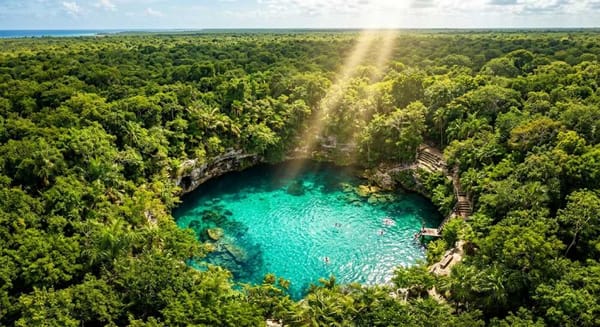
Pull off Highway 307 anywhere between Playa del Carmen and Tulum, and you might miss it. There's no neon sign, no parking garage—just a modest entrance where, for six bucks, you can swim in water so clear it makes your backyard pool look like a mud puddle.

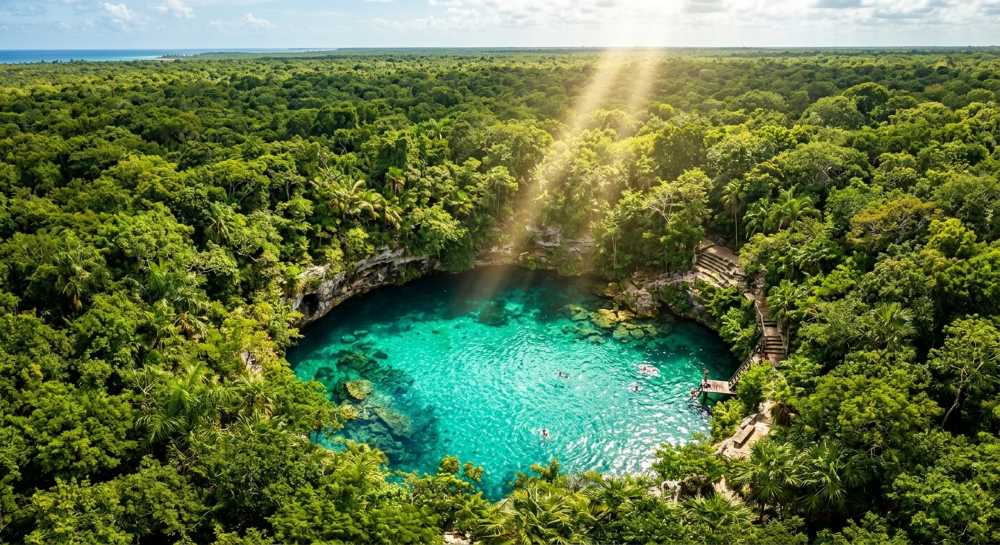
Pull off Highway 307 anywhere between Playa del Carmen and Tulum, and you might miss it. There's no neon sign, no parking garage, no gift shop hawking "I Survived the Cenote" t-shirts. Just a modest entrance tucked behind the Barcelo Maya Resort, where for about six bucks, you can swim in water so clear it makes your backyard pool look like a mud puddle. This is Cenote Azul, the Riviera Maya's most accessible natural wonder that somehow hasn't been completely ruined by its own popularity yet. But the clock is ticking, and everyone knows it.
The cenote sits like a secret hiding in plain sight, a geological miracle carved over millennia by the patient work of slightly acidic rainwater dissolving limestone bedrock. While tourists line up at more famous spots like Gran Cenote or Ik Kil near Chichen Itza, Cenote Azul remains something of a local secret, the kind of place where Mexican families spread picnic blankets on weekends and European backpackers stumble upon it by accident. The water stays a constant 75 degrees Fahrenheit year-round, fed by underground rivers that have been flowing since before the Maya built their first pyramid.
Where Exactly Is This Place?
Let's clear up the confusion right now: there are actually TWO places called "Cenote Azul" in Quintana Roo, and they couldn't be more different. The one we're talking about sits directly off Highway 307 near Puerto Aventuras, roughly 25 minutes south of Playa del Carmen and 20 minutes north of Tulum. You could literally throw a stone from the highway and hit the entrance sign. The other Cenote Azul, near Bacalar, is a completely different beast, a crater-like depression reaching depths of nearly 300 feet and connected to the famous Laguna de Siete Colores. Tourists routinely book flights to see one when they meant the other, a confusion that local tourism operators have learned to navigate with patient explanations.
The Highway 307 Cenote Azul is what geologists call an "open cenote," meaning the limestone ceiling collapsed long ago, leaving a natural swimming pool exposed to sunlight and surrounded by jungle vegetation. Unlike the cave cenotes that require flashlights and nerves of steel, this one welcomes swimmers of all skill levels with shallow shelves perfect for wading children and deeper sections where adventurous souls can practice their cannonballs. The maximum depth in the main swimming area reaches about 16 feet, though connected underground passages extend far beyond what recreational divers typically explore.
You descend a short wooden staircase through a curtain of hanging vines and tropical foliage, and suddenly you're standing at the edge of several interconnected pools, each tinted a different shade of turquoise and jade. The main pool stretches wide enough to accommodate dozens of swimmers without feeling crowded, while smaller adjacent pools offer quieter corners for those seeking solitude. Fish dart between submerged rocks, and if you bring a snorkel mask, you'll see the limestone formations that give these waters their characteristic clarity, filtered through layers of porous rock that act as nature's own purification system.
The site offers basic amenities that have improved significantly over the past decade: restrooms, changing areas, a small snack bar, and equipment rental for snorkels, dive gear, and life jackets. The entrance fee as of 2024 runs approximately 120 to 180 Mexican pesos (roughly $6 to $10 USD), with discounts for Quintana Roo residents and children. It's refreshingly affordable compared to the pricier cenotes that have become Instagram magnets, though prices have been climbing steadily as word spreads and operators recognize the site's growing tourism potential.
Sacred Waters
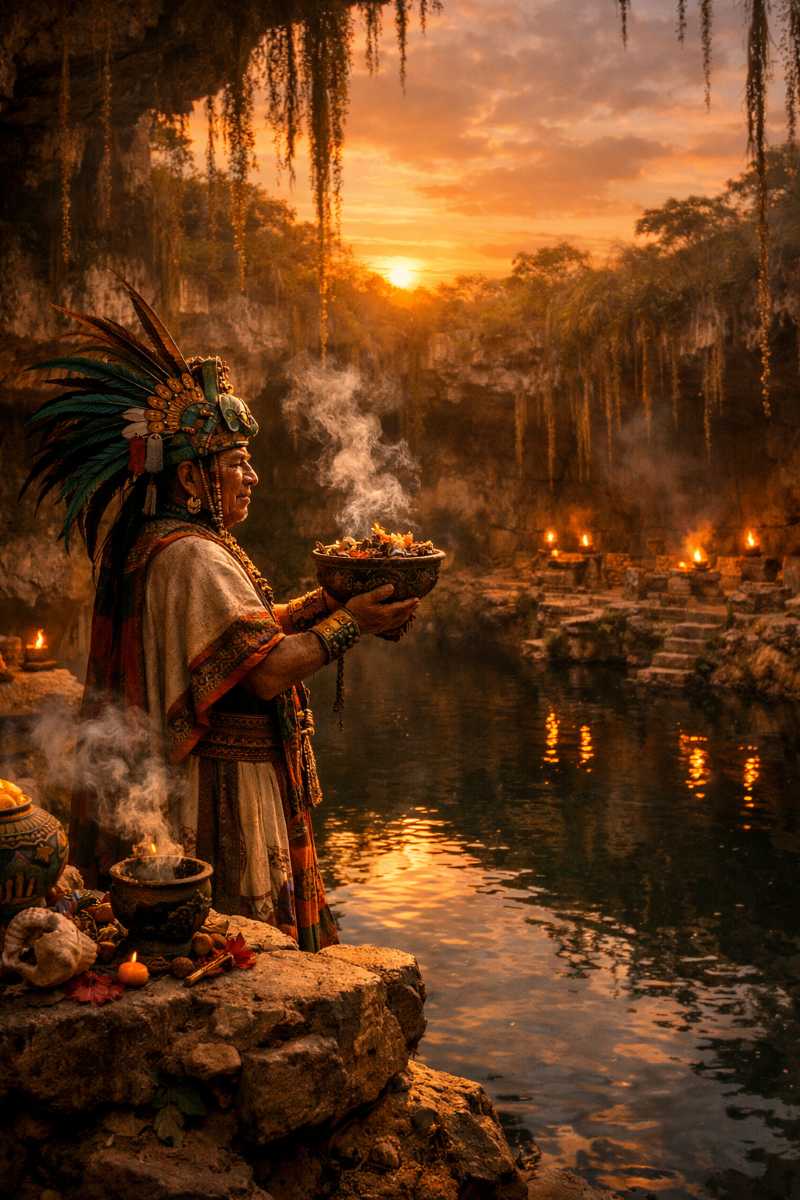
Long before tour buses started rumbling down Highway 307, the Maya understood these waters as something far more significant than a pleasant swimming hole. For the ancient inhabitants of the Yucatan Peninsula, cenotes were sacred doorways to Xibalba, the underworld realm of gods and ancestors. The very word "cenote" derives from the Mayan "tz'onot," meaning a sacred well, and these natural formations served as vital water sources in a region where surface rivers are virtually nonexistent. The entire Yucatan Peninsula sits atop a honeycomb of underground rivers and caves, with an estimated 10,000 cenotes puncturing the landscape like windows into an aquatic labyrinth.
Archaeological evidence from cenotes throughout the region reveals their central role in Mayan spiritual practice. Priests and shamans descended into these depths bearing precious offerings: jade, pottery, and sometimes human sacrifices, meant to ensure the continued favor of rain gods and ancestral spirits. While Cenote Azul near Puerto Aventuras hasn't yielded the dramatic artifact discoveries of sites like the Sacred Cenote at Chichen Itza, its proximity to numerous Mayan ruins suggests it almost certainly played a role in pre-Columbian religious life. The cenotes of the Yucatan were not merely swimming holes; they were cathedrals carved by water, altars where the veil between worlds grew thin.
Here's where the story takes a turn toward the complicated. The Riviera Maya has experienced explosive tourism growth over the past two decades, transforming from a sleepy coastline dotted with fishing villages into one of the world's most visited destinations. Mexico welcomed approximately 45 million international tourists in 2024, setting a new post-pandemic record with a 7.4% increase from the previous year. Quintana Roo alone expected roughly 2 million visitors during the 2023 travel season, and Bacalar, the nearest major town to the other Cenote Azul, recorded 254,649 tourists in 2023, up 8.5% from the previous year.
These numbers tell a story of economic opportunity and environmental pressure in equal measure. Cenotes throughout the region have become must-see attractions, drawing swimmers, snorkelers, and divers from around the globe. While this influx has brought jobs and development to communities that previously had little economic opportunity, it has also placed unprecedented stress on fragile ecosystems that evolved in isolation over thousands of years. A 2017 study determined that out of the approximately 6,000 cenotes documented in the Yucatan, around 80% showed signs of contamination. The culprits range from obvious to insidious: untreated wastewater discharge, sunscreen chemicals, and the subtle but cumulative impact of thousands of visitors disturbing delicate microbial communities.
Paradise Under Pressure
The environmental challenges facing Cenote Azul mirror those threatening cenotes throughout the Yucatan Peninsula. A peer-reviewed study published in Applied Sciences in July 2021 examined the impact of tourist behavior on sunscreen contamination in aquatic parks, sinkholes, and beaches across the Mexican Caribbean. Researchers found that sunscreen pollution in ecosystems is directly related to anthropogenic activities, especially in coastal tourist destinations, representing a serious environmental problem for Quintana Roo and the Caribbean coast of the Yucatan peninsula. Water samples from tourist cenotes in 2019 indicated increased pollution relative to previous years, with current regulations proving inconsistent and largely inadequate to address the scale of the problem.
The situation has grown dire enough that in September 2025, Playa del Carmen officials sounded the alarm over raw sewage contaminating cenotes and the local aquifer. A scientific analysis conducted by the civil organization Centinelas del Agua detected high concentrations of nutrients in several areas, linked to untreated wastewater discharges. Some cenotes in Quintana Roo registered record-high contamination levels in 2023, according to water quality monitoring reports. For divers who remember when the waters around Puerto Aventuras were pristine, the change has been heartbreaking. One veteran cave diver noted in a 2025 interview that the clarity in certain cenotes had been "ruined by pollution flowing in from Puerto Aventuras," leading them to stop diving in areas they had explored for decades.
It would be unfair to paint tourism as purely destructive. Responsible operators have implemented measures to minimize environmental impact, including biodegradable sunscreen requirements, mandatory life jacket use in some areas, and caps on visitor numbers during peak periods. Cenote Azul itself has been cited by eco-tourism advocates as an example of sustainable management, maintaining clean waters and encouraging visitors to appreciate nature while minimizing their environmental footprint. The entrance fees generate revenue that funds conservation efforts and provides employment for local communities, creating economic incentives to protect rather than exploit these natural resources.
Furthermore, the alternative to managed tourism is not pristine wilderness but unregulated access. Before formal operations established entrance fees and basic facilities, cenotes throughout the region suffered from uncontrolled visitation, litter, and damage from careless explorers. The current system, imperfect as it may be, at least provides a framework for environmental monitoring and visitor education. Organizations like Amigos de Sian Ka'an and local water monitoring groups work to raise awareness about cenote conservation, and there are encouraging signs that younger visitors are increasingly conscious of their environmental impact. The challenge lies in scaling these efforts to match the explosive growth in visitor numbers.
A New Threat on the Horizon
No discussion of cenote conservation would be complete without addressing the Maya Train project, the ambitious infrastructure initiative that promises to connect tourist destinations across the Yucatan Peninsula while potentially endangering the very ecosystems that make those destinations worth visiting. Environmental activists have raised alarms about construction impacts on the region's karst geology, warning that cenotes could disappear beneath the train's path while deforestation and construction activities increase contamination risks. A widely circulated image showed biologist and environmental activist Roberto Rojo kneeling in despair as cenotes were covered during construction, a powerful visual that galvanized opposition to the project's environmental practices.
The train's proponents argue that sustainable infrastructure can coexist with environmental protection, pointing to planned mitigation measures and the economic benefits that improved connectivity will bring to underserved communities. Critics counter that the underground water systems of the Yucatan are too complex and too fragile to survive large-scale construction without lasting damage. The truth likely lies somewhere between these positions, but for cenotes like Cenote Azul, the stakes are immediate and tangible. Increased accessibility brings more visitors, more development pressure, and more strain on systems that are already showing signs of stress.
So what's the verdict on Cenote Azul? It remains one of the Riviera Maya's most accessible and appealing natural attractions, a place where travelers can experience the geological and cultural heritage of the Yucatan without the crowds or costs of more famous sites. The water is still clear, the fish are still swimming, and the jungle still presses close around the pools like it has for thousands of years. But this window of relative pristine condition is closing, perhaps faster than most visitors realize. The combination of growing tourism pressure, inadequate wastewater infrastructure, and climate-related challenges poses an existential threat to these ecosystems.
For travelers, the message is straightforward: visit responsibly or don't visit at all. Use biodegradable sunscreen or, better yet, wear protective clothing instead of chemicals. Support operators who demonstrate genuine commitment to conservation rather than those simply cashing in on cenote fever. And perhaps most importantly, recognize that these are not just swimming holes but sacred spaces with deep cultural and ecological significance. The Maya understood cenotes as portals to another world. Perhaps it's time modern visitors started treating them with similar respect, before the portal closes for good.
References
[1] Cenote Azul Visitor Info & Prices 2024 - Coco Motos
[3] Cenote Azul Riviera Maya 2026 Guide
[4] Cenote Azul TripAdvisor Reviews
[5] Bacalar Tourism Statistics - Travel and Tour World
[6] Impact of Tourist Behavior on Sunscreen Contamination - MDPI Applied Sciences
[7] Playa del Carmen Cenotes Tainted by Sewage - Riviera Maya News
[8] Mass Tourism and Sustainability in the Riviera Maya
[9] Cenotes on the Edge - Preserving Mexico's Underwater Heritage
[10] Cenote Geology: How They Form - Tribu Tulum
[11] Xibalba: The Maya Underworld - Alchemy
[12] Why Were Cenotes Important to the Mayans - Triton Diving
[13] The Magical Cenotes of Bacalar - Mexican Caribbean