HALF A TON OF SKY: How a Belize Bush Strip Became the Narco Highway Into Quintana Roo
On Friday evening, Belizean special forces intercepted a cocaine-laden Cessna at a Mennonite settlement just miles from Quintana Roo's border. The haul: 551 kilograms. The pilots: Mexican. The implications for Mexico's Caribbean coast? Enormous.

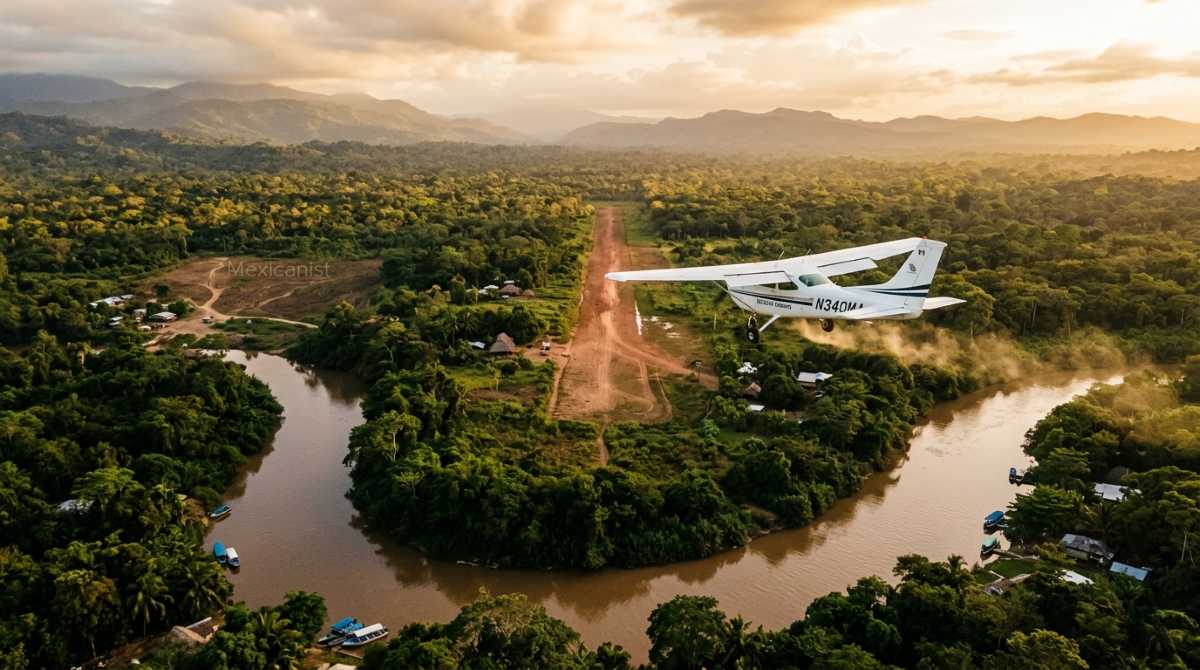
It was 6:14 PM on a Friday when the radar locked on.
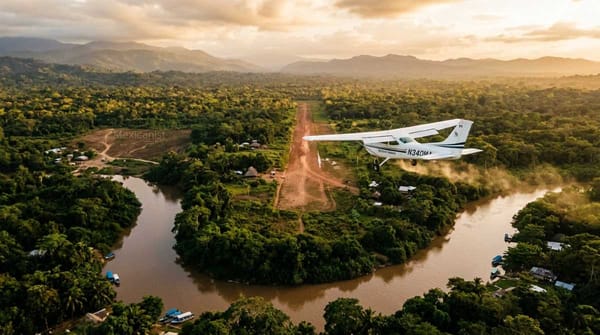
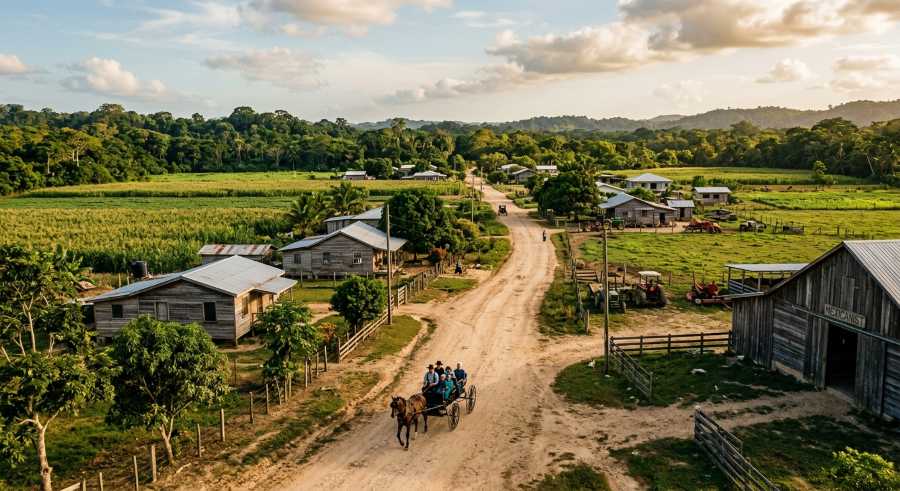
A Cessna, tracked since it lifted off somewhere in South America, banked low over the bush of northern Belize and set down on a clandestine airstrip near Neuland — an Old Colony Mennonite settlement in the Corozal District, population 1,080, where people speak Plautdietsch and drive horse buggies.
Waiting on the ground: two Belizean accomplices with a truck and a plan.
Also waiting: Belize's Joint Intelligence Operations Center, which had been watching this bird since it entered Central American airspace.
When the Belize Defence Force, Coast Guard, and national police swept the site, they found 551.39 kilograms of what field tests confirmed was high-purity cocaine. Two Mexican pilots. Two Belizean ground crew. One dismantled transnational logistics chain.
The Diario de Quintana Roo — the state's newspaper of record — ran the story on page 10, below a drunk guy who hit a cop with a stick in Calderitas.
Let's talk about why that's insane.
The Flight That Didn't Get Away
Here's what the Belizean government's own three-phase interception protocol tells us, even without the classified bits:
The Cessna was identified and tracked from South America using real-time intelligence — likely US-supplied radar and satellite feeds through the Central America Regional Security Initiative (CARSI) or direct DEA-SOUTHCOM cooperation. This wasn't a traffic stop. This was a transcontinental stakeout.
The National Security Ministry activated a three-phase ground protocol, dispatching units to anticipated landing sites in the Corozal District. They didn't scramble after the plane landed — they were already there. That means they had intelligence on the destination before the wheels touched dirt.
A combined force of BDF, Coast Guard, and police hit the Neuland site at 18:14 hours. All four suspects were captured without reported resistance. The 551.39 kg cargo was secured under military custody.
This is textbook interdiction. The kind that makes PowerPoint slides at the State Department. The kind that barely makes the news because when it works, there are no bodies to photograph.
But here's the question nobody's asking: how many flights like this one DON'T get intercepted?
Neuland: The Perfect Landing Pad
Neuland isn't a random dot on the map. It's a settlement with specific characteristics that make it — and the wider Corozal District — catnip for drug logistics operators.
Neuland sits in the Corozal District, the northernmost district of Belize, bordered by Mexico's Quintana Roo to the north and west. The border — 250 km of it — follows the Río Hondo, a murky, jungle-choked river that is functionally impossible to fully police. The main official crossing is at Subteniente López/Santa Elena, 16 km from Chetumal. There's a second bridge at Blue Creek/La Unión. And then there are the unofficial crossings — dozens of river fords, boat routes, and jungle tracks that locals have used for generations.
The Corozal District is 77% Mestizo and 8.9% Mennonite. Spanish is spoken by 76.7% of the population. It is, culturally and linguistically, closer to Quintana Roo than to Belize City. The 46,000-person district operates more like a cross-border community than a hard international boundary. That porousness is a feature for families and trade — and a very attractive feature for cartels.
Belize's Mennonite settlements — 15 colonies totaling ~15,000 people — are remarkable communities. They're also agricultural powerhouses with heavy machinery, truck fleets, storage facilities, and private airstrips used for crop-dusting and transport. Neuland itself was established in 2010 by Old Colony Mennonites from Shipyard, with a population of 1,080 and an average household of 5.6 people. These are tight-knit, low-visibility communities — exactly the kind of environment where a stranger's arrival might go unremarked, or unreported.
To be crystal clear: there is zero evidence that the Neuland community as a whole was complicit. Individual actors — like the two Belizean accomplices arrested at the scene — are a different matter. The cartels don't need entire communities. They need two guys with a truck and a willingness to look the other way.
The Corozal District's own documented economy notes that "contraband is the biggest source of growing income in Corozal since it is adjacent to Mexico, and includes such things as vegetables, fruits, liquors, cigarettes, and gasoline." When smuggling is already a normalized part of the local economy, moving from cigarettes to cocaine is less of a moral leap and more of a logistics upgrade.
What 551 Kilos Really Means
Let's talk street value, because that's how you understand scale.
Stage of the chain | Price per kg (USD) | Total value |
Farm gate (Colombia/Peru) | $1,500–$3,000 | $827K–$1.65M |
Wholesale transit (Central America) | $8,000–$12,000 | $4.4M–$6.6M |
Wholesale in Mexico | $12,000–$18,000 | $6.6M–$9.9M |
Wholesale US border | $25,000–$35,000 | $13.8M–$19.3M |
Street (US, cut and sold) | $80,000–$150,000+ | $44M–$82.7M+ |
These numbers come from DEA price reports, UNODC market analyses, and Mexico's own financial intelligence unit (UIF). They vary by purity, geography, and the caffeine levels of whoever's counting.
But the point is this: a 551-kg shipment is not retail.
This isn't some guy with a backpack. This is industrial logistics. You don't move half a ton of cocaine without:
· A procurement network in South America
· An aircraft with the range and payload (a Cessna 208 Caravan can carry ~1,000 kg; a smaller Cessna 206 can handle 400-500 kg with modified tanks)
· A pilot willing to fly 2,000+ km over monitored airspace
· A ground crew, fuel cache, and transport at the destination
· A distribution network on the other side of the border
Each of those links costs money, which means each of those links is a business relationship built over time. Friday's bust didn't expose a one-off. It exposed a supply chain.
Why Belize? Why Now?
The squeeze effect.
Mexico's military — Sedena and the Guardia Nacional — have increased presence in traditional narcoaviation corridors: the Sierra Madre Occidental (Sinaloa/Durango/Chihuahua), the Pacific coast of Chiapas and Oaxaca, and the Yucatán interior. Radar coverage under the Mérida Initiative (the US-Mexico security cooperation framework that has pumped $3+ billion into Mexico since 2007) has improved. Direct flights into Mexico are riskier than they were five years ago.
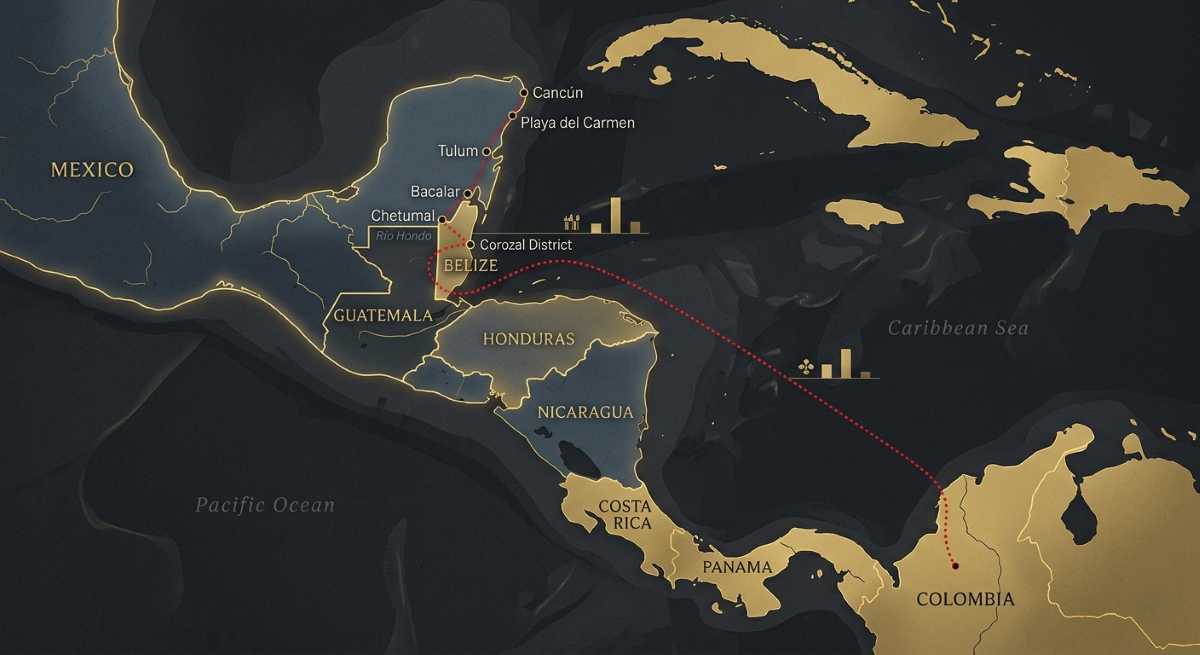
Result: the traffic reroutes. Cartels are rational actors. They go where the resistance is lowest. And right now, that's the Caribbean corridor: South America → Guatemala/Belize → Quintana Roo.
Belize's entire military — the Belize Defence Force — has roughly 1,500 active personnel. That's fewer soldiers than the NYPD has detectives. The country's GDP is $3.5 billion (2025 estimate). Its entire defense budget is a rounding error in the cartel's logistics costs.
Belize's Joint Intelligence Operations Center, the unit that scored this interception, exists precisely because Belize can't do this alone. It depends on US intelligence feeds, DEA cooperation, and British military advisory support. When the intelligence works — as it did Friday — the results are spectacular. When it doesn't, flights land, offload, and disappear.
Increased naval interdiction off Guatemala's Pacific coast — where semi-submersible submarines and fast boats have been the preferred method — has pushed aerial traffic toward the Caribbean side of Central America. Belize, with its isolated airstrips and tiny air force (literally: Belize has no air force, just two Britten-Norman Defenders for maritime patrol), is the path of least resistance.
Same Day, Same State, Different Page
Here's what makes this story a Mexicanist exclusive. On the exact same day that Belizean forces intercepted 551 kg of cocaine at QRoo's doorstep, the DQR's own police blotter recorded no fewer than six separate narcomenudeo busts across Quintana Roo:
· Cancún, Supermanzana 51 — Reyli 'N' caught with 83 doses of marijuana, 53 bags of crack, 15 wraps of cocaine, plus a handgun with 8 rounds. Ford Maverick seized.
· Cancún, Supermanzana 253 — Oswaldo Adrián 'N' (31, from Tamaulipas) and Isela Andrea 'N' (43, also Tamaulipas) caught with 200 doses: 119 bags of marijuana, 81 bags of crystal.
· Cancún, Supermanzana 105 — José Javier 'N' (27) with 21 bags of marijuana.
· Cancún, Supermanzana 249 — Gervacio 'N' (41) with 58 bags of marijuana and 36 bags of crystal.
· Playa del Carmen — María Ceferina 'N' and Kareli de los Angeles 'N' linked to narcomenudeo supply chain.
· Holbox — José Azael 'N' caught dropping baggies near the tourist photo letters. 23 bags of marijuana seized.
Plus: nine people formally charged with narcomenudeo across Benito Juárez, Playa del Carmen, and Othón P. Blanco.
That's the retail spray from the wholesale hose.
The Cessna at Neuland is where the product enters the system. The Supermanzana busts are where it hits the street. The connective tissue between them is the story.
Quintana Roo processes the cocaine that comes through Belize's corridor, and its tourism economy — 18 million visitors a year, $22 billion state GDP — provides both the customer base and the money-laundering infrastructure. The state's 11 municipalities stretch from the mega-resorts of Cancún to the jungle communities of Felipe Carrillo Puerto, creating a distribution gradient that runs from wholesale entry point (Chetumal/Bacalar) to retail consumption (Cancún/Playa del Carmen) to export north (Highway 307 → Tren Maya → US border).
The Cartel Question: Whose Cocaine?
The DQR article doesn't identify the cartel. The pilots are Mexican nationals, period. But geography narrows the suspects.
The Corozal-Chetumal corridor has historically been Los Zetas territory — and its successor organizations (Cartel del Noreste, Vieja Escuela). The corridor's proximity to the Guatemalan border and the Río Hondo's smuggling history aligns with CDN's operational profile. However, the Sinaloa Cartel — particularly the Chapitos faction — has been expanding into the Yucatán Peninsula, and the volume of this shipment (500+ kg suggests serious wholesale infrastructure) would be consistent with either organization.
CJNG (Jalisco Nueva Generación) is less likely in this specific corridor but has been making inroads into Quintana Roo's tourism zones, particularly Cancún and Playa del Carmen.
The Tamaulipas connection is a tell.
Two of the Cancún busts involve suspects from Tamaulipas — historically Gulf Cartel territory, with deep links to CDN. That's circumstantial, but it's the kind of thread that experienced security analysts pull.
The two Belizean accomplices are equally significant. Local ground crew in Corozal suggests established relationships — not a first-time operation. These are people who've done this before.

What to Watch
1. Will Mexico respond at the border?
Governor Mara Lezama's administration has focused on tourism promotion, the new Chetumal hospital, and infrastructure (the Tren Maya). Security is the topic nobody wants to foreground because it contradicts the 'safe Caribbean paradise' brand. But 551 kg landing at the border is harder to wave away than street-level arrests.
2. Who are the pilots?
Their names are suppressed (standard Mexican legal practice). Their cartel affiliation would map the entire network. A Sinaloa pilot means one thing. A CDN pilot means another. Independent contractor means the logistics are outsourced — which suggests a mature market with service providers.
3. Flight frequency.
Counter-narcotics professionals generally estimate interdiction rates at 10-15% of total flow. If 551 kg was caught, the total through this corridor could be 3,500-5,500 kg per operational cycle. That's $100-200 million at US wholesale. Per cycle.
4. The Belizean judicial process.
Belize's courts are slow and, historically, vulnerable. Will the four suspects face real prosecution? Will Belize share intelligence with Mexico?
5. The Mennonite angle.
If cartel operators are systematically using Mennonite airstrips — as this case suggests — it's a vulnerability that affects not just Belize but Mexico's entire southern border strategy.
Cocaine's Record Year
This bust doesn't happen in a vacuum. Coca cultivation in Colombia hit record levels in 2023-2024 — the UNODC's latest data shows over 230,000 hectares under cultivation. Peru is the world's second-largest producer. Bolivia is third. Combined potential cocaine manufacture now exceeds 2,000 metric tons per year.
That product has to move. It moves through Mexico. And Quintana Roo — Mexico's Caribbean front door — is feeling the pressure.
The same DQR edition also reports:
· A taxi-extortion prevention program in Chetumal (cartels squeezing transport workers)
· Cybercrime warnings in Cozumel (digital infrastructure being targeted)
· Human trafficking awareness sessions (QRoo ranks among Mexico's worst for trafficking for the third consecutive year)
· Nine people charged with domestic violence across four municipalities (the social fabric fraying under cartel pressure)
These aren't separate stories. They're symptoms of the same disease.
A half-ton of cocaine was intercepted at Quintana Roo's back door. The pilots were Mexican. The product was South American. The ground crew was Belizean. The intended market was Quintana Roo and beyond.
The narcoaviation route through Belize into Quintana Roo isn't a hypothetical threat matrix in a security consultant's pitch deck. It's operational. It's scaled. And it's being serviced by professional pilots flying transcontinental loads of cocaine to a Mennonite settlement 45 minutes from Chetumal.
Friday's bust is a data point. The trend is the story. And the trend says: Quintana Roo's southern border is a coke highway, and the toll booth is broken.
SOURCES
1. Diario de Quintana Roo — April 12, 2026, Year XL, No. 13,764 — Primary source for the Belize interception, all Quintana Roo municipal reporting, and narcomenudeo arrests. Pages 8A, 9A, 10A, 4A. https://www.dqr.com.mx
2. Belize–Mexico Border — Wikipedia (citing CIA World Factbook, International Boundary Study No. 161). Border length: 250 km following the Río Hondo. https://en.wikipedia.org/wiki/Belize%E2%80%93Mexico_border
3. Corozal District — Wikipedia (citing 2022 Belize Census via Statistical Institute of Belize). Population 46,071; 77.2% Mestizo, 8.9% Mennonite. https://en.wikipedia.org/wiki/Corozal_District
4. Mennonites in Belize — Wikipedia (citing 2022 census). Neuland colony: established 2010, Old Colony affiliation, population 1,080. https://en.wikipedia.org/wiki/Mennonites_in_Belize
5. Belize — Wikipedia (citing IMF WEO April 2025). GDP nominal $3.488 billion; population 397,483 (2022). https://en.wikipedia.org/wiki/Belize
6. Quintana Roo — Wikipedia (citing INEGI 2020). Population 1,857,985; GDP MXN 447 billion (US$22.2 billion, 2022). https://en.wikipedia.org/wiki/Quintana_Roo
7. DEA National Drug Threat Assessment — US Drug Enforcement Administration. Wholesale cocaine pricing tiers. https://www.dea.gov/documents/national-drug-threat-assessment
8. UNODC World Drug Report — United Nations Office on Drugs and Crime. Global cocaine production estimates. https://www.unodc.org/unodc/en/data-and-analysis/wdr2024.html
9. Mérida Initiative — US Department of State. US-Mexico security cooperation framework, $3+ billion since 2007. https://www.state.gov/merida-initiative/
10. CARSI — US Department of State. Central America Regional Security Initiative. https://www.state.gov/bureau-of-international-narcotics-and-law-enforcement-affairs/