How Long Do Crocodiles Actually Live? The Biology Behind the Yucatan's Oldest Residents
While the rest of us stress about wrinkles and retirement planning, these prehistoric predators have figured out something pharmaceutical companies would pay billions to understand: how to cheat death itself. Morelet's crocodiles live 50-65 years in the wild, but they don't age—not really.

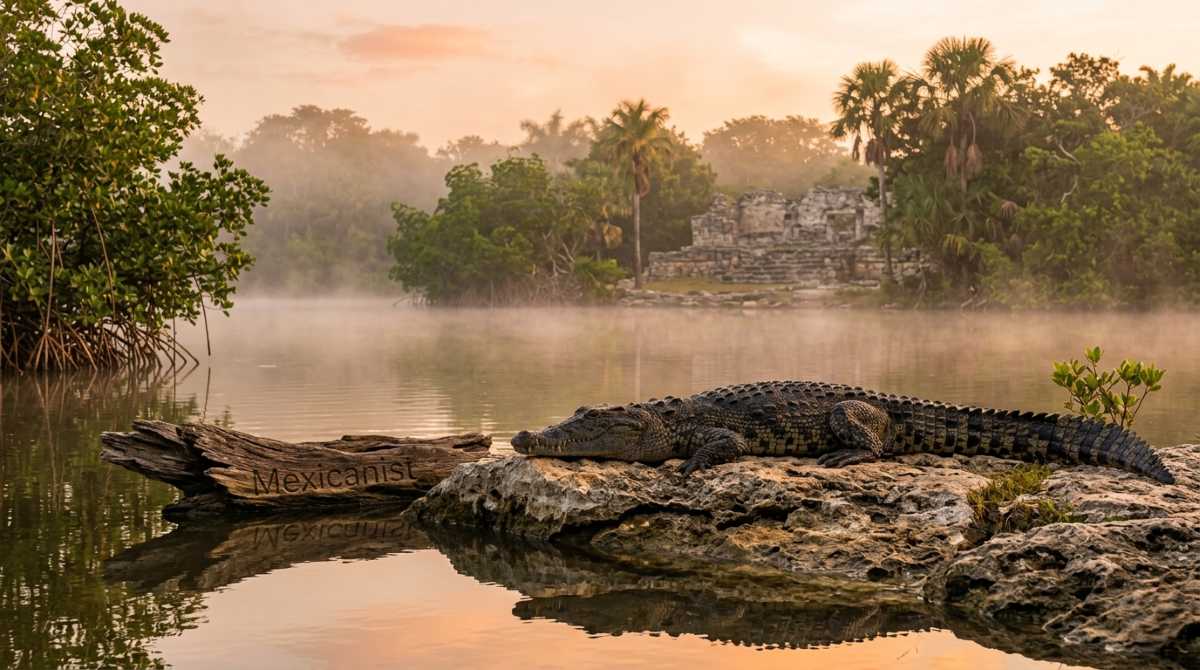
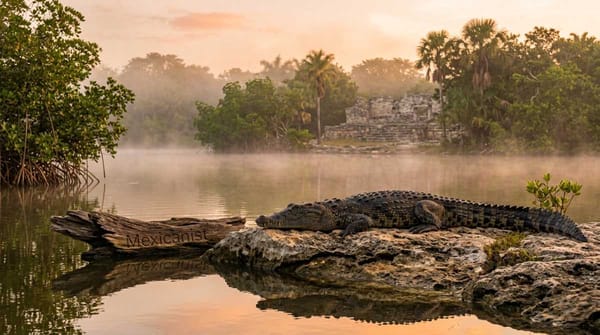
You're standing on the banks of a limestone lagoon in Mexico's Yucatan Peninsula, the steam rising off the water like something out of a prehistoric dream. Somewhere beneath that murky surface, a creature that has remained virtually unchanged for 200 million years is watching you with unblinking eyes. But here's the thing that'll blow your mind—that crocodile might have been patrolling these same waters since your grandparents were children. Maybe even your great-grandparents.
We're talking about Morelet's crocodile (Crocodylus moreletii), the Yucatan's resident living fossil and one of nature's most intriguing examples of extreme longevity. While the rest of us stress about wrinkles and retirement planning, these prehistoric predators have figured out something that pharmaceutical companies would pay billions to understand: how to cheat death itself. Or at least, how to give it a seriously hard time.
Meet the Yucatan's Gentle Giant
Before we dive into the mind-bending science of crocodile aging, let's get acquainted with our subject. Morelet's crocodile—also known as the Belize crocodile—is a medium-sized species found exclusively in the Atlantic regions of Mexico, Belize, and Guatemala. Unlike its more aggressive cousins, this croc has something of a reputation for being relatively... well, chill. Don't get me wrong, it's still a 10-foot armored killing machine with 66 teeth designed for one purpose, but compared to the American crocodile or the saltwater crocodile, Morelet's is practically neighborly.
Adult males typically reach about 3 meters (10 feet) in length, though some exceptional specimens have been documented at up to 4.5 meters. They're freshwater specialists, preferring the inland forests, wetlands, and coastal lagoons that make the Yucatan Peninsula such a biodiversity hotspot. These waters—part of an ancient limestone platform once covered by a shallow sea—provide the perfect hunting grounds for a predator that has been refining its technique since before the dinosaurs went extinct.
What makes Morelet's crocodile particularly fascinating from a biological standpoint is its unique reproductive behavior. It is the only crocodile species in the New World known to be exclusively a mound nester. Females construct elaborate nest mounds from vegetation, laying between 20 and 40 eggs that incubate for approximately 80 days. Unlike many reptiles that abandon their eggs, Morelet's mothers guard their nests vigilantly and even help their hatchlings reach the water after emergence—a level of parental care that would make any mammal jealous.
How Long is Long Enough?
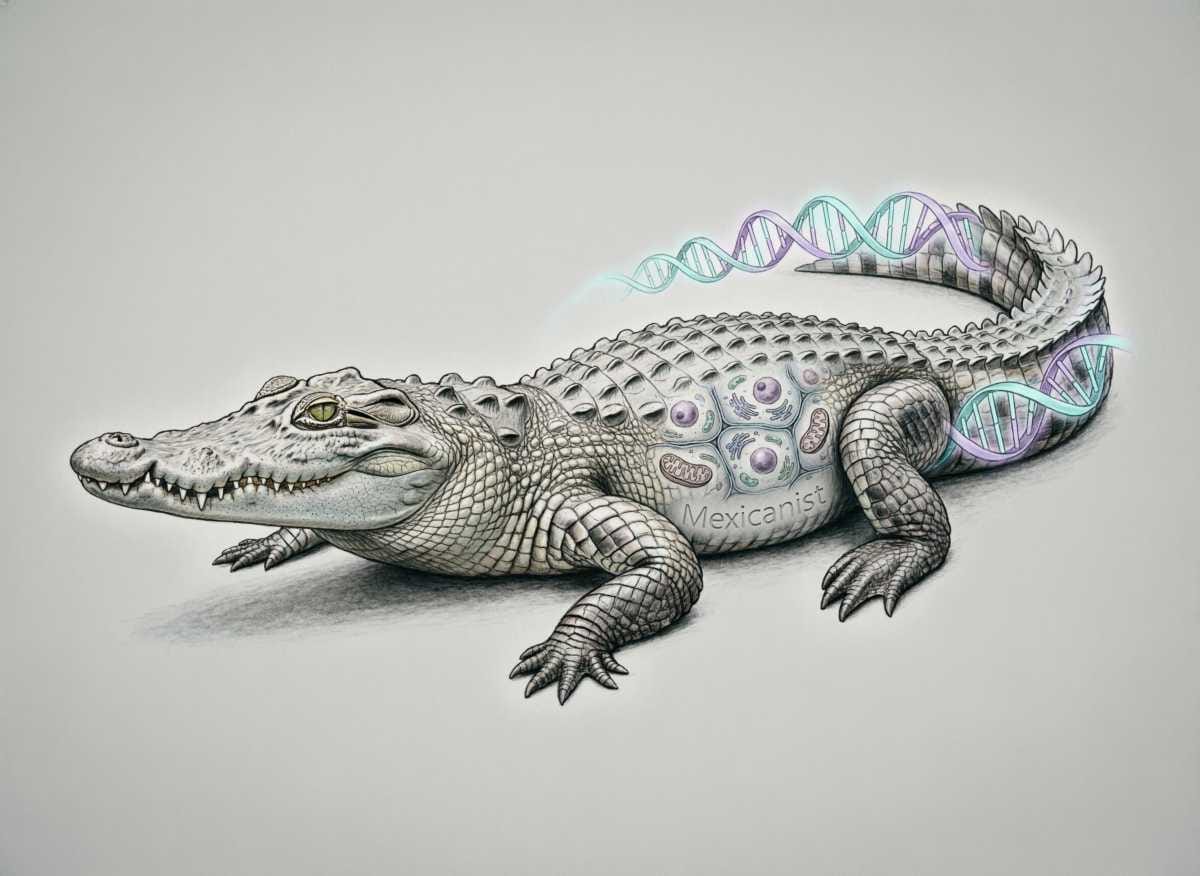
Now for the data you came for. According to the Animal Diversity Web at the University of Michigan and corroborated by Encyclopedia Britannica, Morelet's crocodiles in the wild typically live between 50 and 65 years, with an average lifespan hovering around 60 years. In captivity, where threats like predation, territorial disputes, and starvation are eliminated, these remarkable reptiles can survive up to 80 years—making them roughly as long-lived as a well-cared-for human.
But—and this is a big but—determining the exact age of any crocodile is notoriously difficult. Traditional methods rely on skeletochronology, which involves counting growth rings in bones, similar to counting tree rings. Each ring theoretically represents one year of growth. However, groundbreaking research published in 2026 by paleontologists at the University of Cape Town has thrown this method into question. Their study revealed that crocodiles can produce multiple growth rings in a single year, depending on environmental conditions, meaning a crocodile estimated at 5-6 years old based on ring counting might actually be significantly younger.
Parameter | Wild Population | Captivity |
Typical Lifespan Range | 50-65 years | Up to 80 years |
Average Lifespan | 60 years | 70-80 years |
Maximum Documented Age | ~65 years (estimated) | 80 years |
Sexual Maturity | 1.5 m length (7-10 years) | Similar |
Average Adult Length | 3 m (10 ft) | Up to 4.5 m |
Table 1: Morelet's Crocodile Lifespan and Growth Parameters
Henry and the Age Champions
While Morelet's crocodiles can live impressively long lives, they're not the record-holders of the crocodilian world. That distinction belongs to Henry, a Nile crocodile who resides at the Crocworld Conservation Centre in South Africa. Born around 1900 in Botswana's Okavango Delta, Henry celebrated his estimated 124th birthday in December 2024, making him the oldest known crocodile in recorded history. Over his century-plus of existence, Henry has sired more than 10,000 offspring with his six female companions—a level of reproductive success that would make any evolutionary biologist swoon.
Henry's extraordinary longevity raises a fascinating question: What makes crocodiles so remarkably long-lived? The answer lies in a biological phenomenon called "negligible senescence," and it's about as close to immortality as nature gets. Unlike humans and most other animals, crocodiles don't experience cellular senescence—the gradual deterioration of cellular function that we typically call "aging." A 70-year-old crocodile, biologically speaking, is essentially as healthy as a 10-year-old one. They don't get wrinkles, their organs don't fail from old age, and their immune systems remain robust throughout their lives.
As science writer John H. Ostdick poetically described in a 2016 article for Vice, "Old crocodiles never die, they just keep getting bigger." And therein lies the catch. While crocodiles may not age in the traditional sense, they do face an inevitable constraint: size. As they grow larger, their food requirements increase exponentially. Eventually, an old crocodile simply becomes too big to sustain itself in its environment. They don't die from old age—they die from starvation, accidents, disease, or competition with younger, more agile rivals. In the wild, nature eventually catches up even to the functionally immortal.
How Crocodiles Cheat Death
The secret to crocodile longevity begins with something remarkably simple: being cold-blooded. As ectotherms, crocodiles rely on external heat sources to regulate their body temperature rather than generating their own heat internally. This comes with a significant metabolic advantage—they require far less energy to survive than warm-blooded animals of comparable size. A crocodile can go months without eating if necessary, a feat that would kill a mammal in a matter of weeks.
This slow, efficient metabolism reduces the production of free radicals—unstable molecules that damage cells and DNA over time. Free radical damage is one of the primary mechanisms of aging in most animals, but crocodiles produce significantly fewer of these cellular vandants. Combined with robust antioxidant systems and highly efficient DNA repair mechanisms, crocodiles have evolved a cellular maintenance program that would make any gerontologist green with envy.
Another factor contributing to crocodile longevity is their remarkable immune system. Crocodilians live in some of the most bacteria-laden environments on Earth—stagnant swamps, muddy rivers, and decomposing vegetation. Yet they routinely suffer severe injuries during territorial fights and emerge without infection. Research has identified powerful antimicrobial peptides in crocodile blood that can destroy bacteria, viruses, and fungi that would be lethal to other animals. This biological antibiotic, sometimes called "crocodillin," represents an evolutionary adaptation that not only protects crocodiles from infection but may also contribute to their extended lifespans by preventing disease-related mortality.
If crocodiles don't technically age, does their behavior change over time? Absolutely. While their cells may remain perpetually young, their social status, hunting strategies, and territorial preferences evolve dramatically as they grow larger and more experienced.
The Rise of the Boss Croc
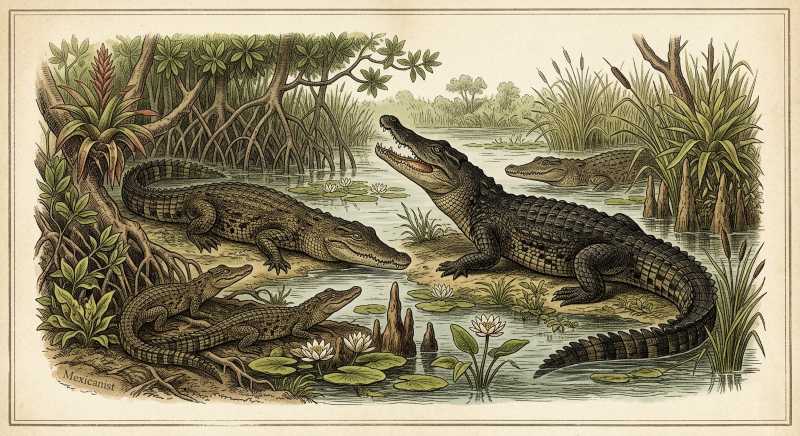
In crocodilian society, size equals dominance. Research published in Australian Geographic in 2013 revealed what scientists call the "boss croc" phenomenon—dominant males establish and defend large territories, maintaining harems of females and excluding other males from prime hunting and nesting grounds. For Morelet's crocodiles in the Yucatan's network of lagoons and cenotes, these territorial dynamics shape everything from population distribution to genetic diversity.
Young crocodiles, regardless of chronological age, occupy a precarious position in the social hierarchy. They typically inhabit marginal habitats—smaller water bodies, areas with less prey abundance, or territories on the fringes of dominant males' domains. As they grow larger, they become more confident and aggressive, eventually challenging established territorial holders. This progression can take decades, meaning a "young" 30-year-old crocodile may still be socially subordinate to a "boss" crocodile of 50 years who has held prime territory for a generation.
Diet composition shifts dramatically as crocodiles age and grow. Hatchlings and juveniles primarily consume insects, small fish, and amphibians—prey items that require agility and quick reflexes rather than raw power. As Morelet's crocodiles mature, their prey spectrum expands to include larger fish, crustaceans, birds, and small mammals. Fully grown adults, armed with the strongest bite force of any animal relative to size, can take down prey as large as deer, wild pigs, and even domestic livestock.
But there's a trade-off: older, larger crocodiles become less maneuverable. They can no longer chase down swift prey in open water, instead relying on ambush tactics and patience. This behavioral shift represents an interesting parallel to aging in other species—while crocodiles don't experience physical senescence, they do face ecological constraints that shape their behavior as they grow. The ancient crocodile sunning itself on a riverbank isn't just resting; it's employing a hunting strategy refined over decades of experience, conserving energy while waiting for prey to come within striking distance of its deadly jaws.
Long-term tracking studies have revealed that crocodilian social structures are more dynamic than previously thought. Research published in Animal Behaviour in 2023 demonstrated that estuarine crocodile populations maintain complex social hierarchies that shift both within and across years. Individuals segregate into distinct communities along waterways, with relationships changing based on factors including seasonal water levels, breeding cycles, and competition intensity.
For Morelet's crocodiles in the Yucatan, these patterns are complicated by the region's unique hydrology. The peninsula's extensive network of underground rivers and cenotes (natural sinkholes) provides connectivity between apparently isolated water bodies. Older, experienced crocodiles may have intimate knowledge of these subterranean passages, allowing them to move between territories undetected—a form of environmental knowledge that accumulates over decades and provides advantages that younger crocodiles cannot match.
Why "Immortal" Is a Stretch
Before you start planning your crocodile-blood transfusion for eternal youth, let's pump the brakes on the "biological immortality" hype. While crocodiles exhibit negligible senescence, they are absolutely, definitively, 100% mortal. The phrase "biologically immortal" gets thrown around in popular science writing, but it's more accurate to say that crocodilians experience dramatically slowed aging rather than no aging at all.
As the science journalists at Earth Touch News correctly pointed out in a 2016 explainer, crocodiles in captivity do eventually die, even when protected from external threats. While they may not succumb to "old age" in the traditional sense, physiological changes do occur over time. Organ function may decline gradually, immune responses may become less robust, and accumulated injuries may impair hunting efficiency. These aren't classic aging processes, but they do create functional limitations that affect survival.
Furthermore, the popular conception that crocodiles "just keep growing" has been challenged by herpetologists. Most crocodilian species appear to have maximum sizes determined by genetic and environmental factors, beyond which growth either stops or becomes negligible. A crocodile won't simply grow indefinitely until it becomes too large to exist—there are biological constraints at play. The challenge for researchers is that these maximum sizes take decades to reach, making longitudinal studies extremely difficult.
The recent skepticism about skeletochronology as an aging method also introduces uncertainty into all crocodilian lifespan estimates. If we can't reliably determine the age of wild crocodiles, our understanding of their longevity rests on shaky foundations. The University of Cape Town study published in March 2026 found that growth ring counts could underestimate actual ages by significant margins, meaning crocodiles might be even longer-lived than current estimates suggest—or potentially shorter-lived, depending on how the science develops.
Protecting the Yucatan's Living Fossils
Understanding crocodilian longevity isn't just an academic exercise—it has profound implications for conservation. Long-lived species with slow reproductive rates are particularly vulnerable to population declines, because they cannot quickly replace individuals lost to hunting, habitat destruction, or other threats. Morelet's crocodile was nearly hunted to extinction for its valuable skin before international protection efforts began in the 1970s.
Today, the species is classified as "Least Concern" on the IUCN Red List, representing one of conservation's great success stories. Populations in Belize recovered rapidly following the cessation of skin hunting, and the species is now regarded as common throughout much of its range. In Mexico, Morelet's crocodile is listed under the category "Subject to Special Protection" on the Mexican Endangered Species List (NOM-059-SEMARNAT-2010), and the species is included in CITES Appendix II, which regulates international trade.
But challenges remain. Habitat destruction, pollution, and human-crocodile conflict pose ongoing threats, particularly as development expands throughout the Yucatan Peninsula. Climate change may alter the hydrological patterns that maintain the region's wetlands and cenotes. And the very longevity that makes crocodiles fascinating also makes them vulnerable: population recovery is slow when individuals take decades to reach reproductive maturity, and the loss of mature adults removes not just current breeders but decades of future reproductive potential.
What Crocodiles Teach Us About Living
There's something profoundly humbling about sharing a planet with creatures that were perfecting the art of survival while our ancestors were still figuring out how to walk upright. Morelet's crocodiles, patrolling the same waters their great-great-great-grandparents patrolled, embody a kind of temporal continuity that humans can barely comprehend. When a 60-year-old crocodile slides into a Yucatan lagoon, she's not just continuing her own life—she's continuing a legacy that predates human civilization by millions of years.
The science of crocodilian longevity continues to evolve. As researchers develop more accurate methods for determining age and understanding the cellular mechanisms behind negligible senescence, we may unlock secrets applicable to human health and aging. The antimicrobial peptides in crocodile blood are already being studied for pharmaceutical applications. Understanding how crocodiles maintain cellular integrity over decades could inform treatments for age-related diseases in humans.
For now, Morelet's crocodiles continue their ancient routine in the Yucatan's waterways, oblivious to the scientific interest they generate. They bask on limestone banks, hunt in moonlit lagoons, and guard their nest mounds with fierce maternal devotion. They don't know that humans find their longevity remarkable—they've simply been doing what works for 200 million years. And perhaps that's the most valuable lesson these living fossils can teach us: sometimes, the secret to a long life isn't fighting change, but perfecting what already works.
References
[1] Animal Diversity Web - Crocodylus moreletii
[2] Encyclopedia Britannica - Morelet's Crocodile
[3] IFLScience - Henry the World's Oldest Crocodile at 123
[4] Forbes - World's Oldest Crocodile Since 1900
[5] University of Cape Town - Age Estimation Methods Challenged
[6] Vice - Old Crocodiles Never Die
[7] Earth Touch News - Crocodiles Are Not Immortal
[8] IUCN Crocodile Specialist Group - Morelet's Crocodile
[9] ScienceDirect - Long-term Tracking of Crocodylian Social Structure
[10] Australian Geographic - Boss Crocs Rule Complex Social System
[11] Wikipedia - Morelet's Crocodile
[12] Smithsonian Magazine - Modern Crocodiles Evolving Rapidly