How Mexican Police Jurisdictions Actually Work
The morning ritual isn't one of mourning — it's bureaucracy. A phone call. Municipal police arrive, take one look, realize this might not be their case. Maybe the dead tourist is American. Maybe there's evidence of organized crime. And just like that, the case begins its journey.


The sun rises over Cancún. A hotel maid opens a door and finds what no one should ever find — a body, cold, on the floor of Room 412. Within minutes, the morning ritual begins. Not a ritual of mourning, but of bureaucracy. A phone call to the front desk. The manager calls the municipal police. The municipal police arrive, take one look, and realize this might not be their case. Maybe the dead tourist is American. Maybe there's evidence of organized crime. Maybe, just maybe, someone decides this is "federal jurisdiction." And just like that, the case begins its journey through the labyrinth of Mexican justice — a system so complex, so layered, so maddeningly byzantine that cases routinely disappear into the cracks between jurisdictions, never to be seen again.
This is the story of how Mexican police jurisdictions actually work — the municipal, the state, and the federal. It's a story of overlapping authorities, confused protocols, and the devastating consequences for families seeking answers. If you've ever read a headline about a tourist death in Mexico and wondered why justice seems so elusive, this is your roadmap to understanding why. The system isn't broken; it was built this way. And until you understand the architecture, you'll never understand the outcomes.
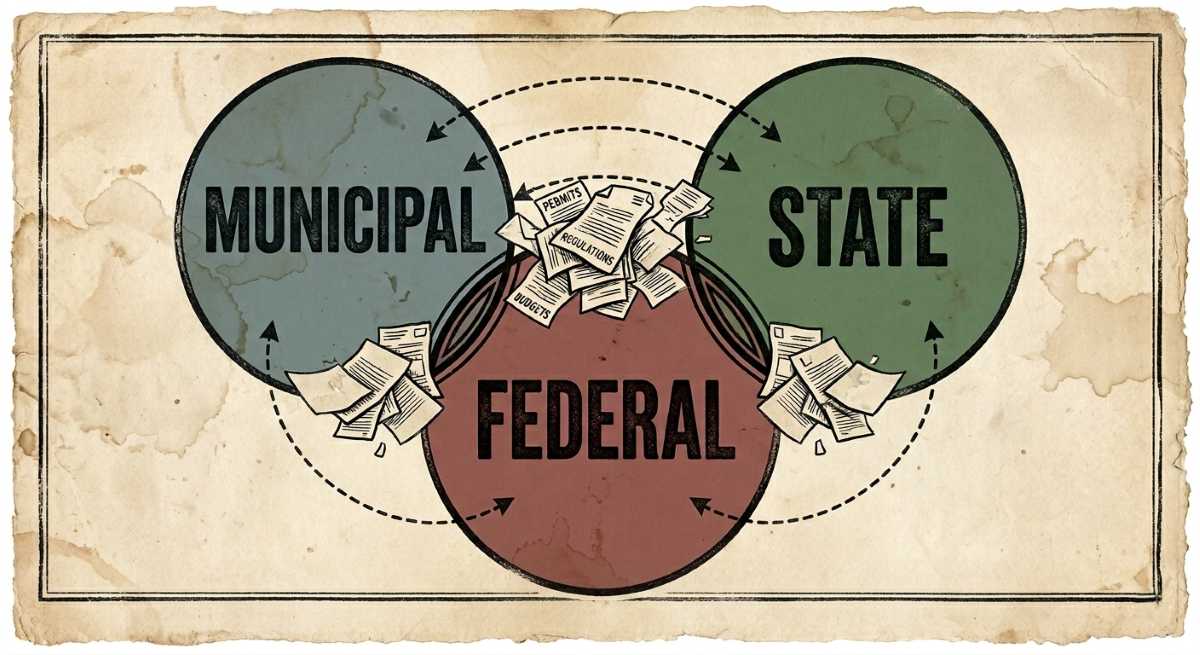
Mexico is a federal republic, much like the United States, with three distinct levels of government: federal, state, and municipal. Each level has its own police force, its own prosecutor's office, and its own jurisdiction. Sounds straightforward, right? It isn't. The devil lives in the details, and in Mexico, the details are where cases go to die.
According to the Executive Secretariat of the National Public Safety System, Mexico maintains approximately 1,807 municipal police forces, 31 state police forces (plus two for Mexico City), and multiple federal law enforcement agencies. That's not a typo — nearly two thousand separate municipal police departments, each with its own chain of command, its own culture, and its own relationship with local power structures. Add to this the fact that Mexico has 366 officers per 100,000 people — over 50% more per capita than the United States — and you have a system that is both overstaffed and undercoordinated, a recipe for chaos masquerading as order.
Mexican law enforcement operates under what scholars call a "double system of jurisdictions" — federal (fuero federal) and common law (fuero común). Understanding this distinction is essential to understanding why cases fall through the cracks. The federal jurisdiction covers crimes that affect national interests or involve organized crime. State jurisdiction covers everything else — including most homicides. Municipal police don't investigate crimes at all; they maintain public order and turn cases over to state prosecutors. It sounds clean on paper. In practice, it's anything but.
The Federal Level
At the federal level, Mexico has undergone dramatic transformations in recent years. The old Federal Police (Policía Federal) was dissolved in 2019 by President Andrés Manuel López Obrador due to widespread corruption and links to organized crime. In its place rose the National Guard (Guardia Nacional) — a militarized force that reports to the Secretariat of National Defense. As of September 2024, constitutional reforms have made the National Guard officially a branch of the armed forces, further blurring the line between military and civilian law enforcement.
The federal prosecutor's office — the Fiscalía General de la República (FGR) — handles federal crimes. These include drug trafficking, organized crime, terrorism, currency counterfeiting, arms trafficking, human trafficking, and customs violations. When a case falls under federal jurisdiction, it bypasses state courts entirely and goes straight to the federal system. Sounds efficient? Not quite. The FGR is notoriously overwhelmed, and the criteria for what constitutes a "federal" crime can be surprisingly elastic.
Here's where things get murky. A simple murder — say, a bar fight that turns deadly — is almost always a state matter. But if that murder involves weapons trafficked across borders, or if the perpetrator belongs to a criminal organization, or if there's any whiff of drug-related activity, the case can be "elevated" to federal jurisdiction. This isn't automatic; it requires a determination by prosecutors, and that determination can be influenced by politics, resources, or even personal connections.
According to a UNODC report, some crimes like terrorism and drug trafficking are exclusively federal, while others like kidnapping and vehicle theft exist in both federal and state codes, "which frequently creates conflicts over jurisdiction." This jurisdictional overlap is not a bug — it's a feature, and one that creates endless opportunities for cases to be passed around like unwanted stepchildren.
The State Level
Most homicides in Mexico — the vast majority — fall under state jurisdiction. Each of Mexico's 31 states (plus Mexico City) has its own prosecutor's office, known locally as the Fiscalía or Procuraduría. These offices are responsible for investigating and prosecuting common crimes: murder, robbery, assault, theft, and most crimes against persons and property.
The Human Rights Watch report from February 2025 paints a devastating picture of these offices. Investigators are overloaded, undertrained, and often terrified. In one case documented by HRW, a mother named Pascuala spent nearly four years seeking justice for her murdered son, only to face death threats, a prosecutor who told her to stop pursuing the case or she might "end up joining her son," and a trial that was postponed 14 times. This is not an anomaly; it's the norm.
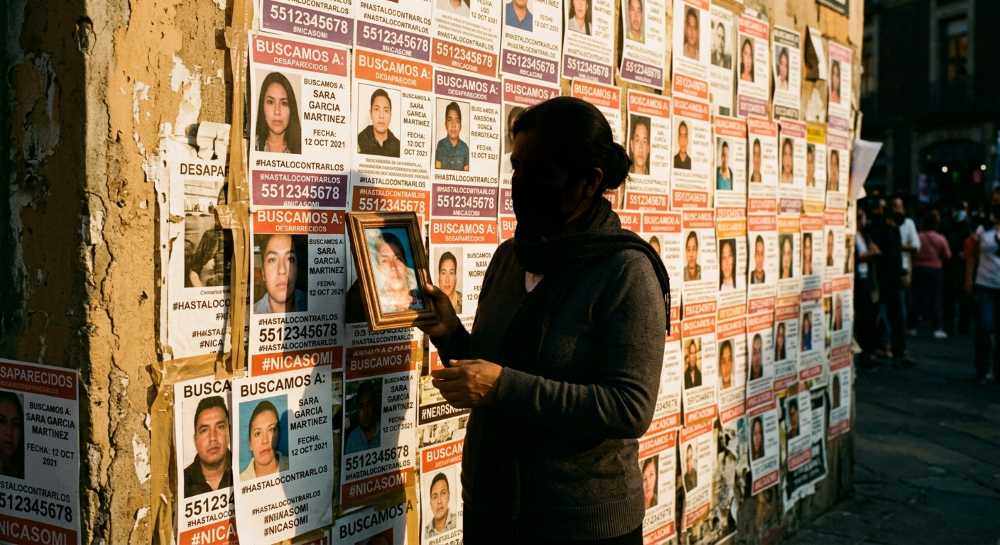
Numbers don't lie. The current rate of impunity for violent crimes in Mexico is estimated at 94.8% — meaning that for every 100 violent crimes committed, fewer than six result in any kind of conviction. Mexico's homicide rate stands at almost 25 per 100,000 people, one of the highest in the world. Since 2007, more than 94,000 people have been reported missing and have not been found. These aren't just statistics; they're the human cost of a system that cannot — or will not — investigate itself.
The Municipal Level
At the bottom of the jurisdictional pyramid sit Mexico's municipal police — the officers most tourists will encounter if they have any run-in with law enforcement. These forces are responsible for maintaining public order, traffic control, and preventative patrols. They do not investigate crimes. When a crime occurs, municipal police secure the scene and call in the appropriate authority — usually state investigators.
But here's the problem: municipal police are often the weakest link in the chain. They're the lowest paid, the worst equipped, and the most vulnerable to corruption. In many small towns, the municipal police force might consist of a handful of officers with minimal training, outdated equipment, and deep ties to the local power structure — whether that's the mayor, a wealthy family, or the local cartel. When a tourist dies in a small municipality, the first responders may be compromised before the investigation even begins.
The municipal police are also politically vulnerable. Mayors serve three-year terms without re-election, meaning every three years, the entire security apparatus can be upended. New police chiefs, new priorities, new — or severed — relationships with state and federal authorities. This constant churn makes long-term institutional reform nearly impossible at the municipal level.
Why Tourist Deaths Fall Through the Cracks
Now we come to the heart of the matter. When an American tourist dies under suspicious circumstances in Mexico, why do so many cases stall, disappear, or end in frustration for the families back home? The answer lies in the intersection of jurisdictional confusion, institutional weakness, and international bureaucracy.
The Shanquella Robinson Case
Consider the case of Shanquella Robinson, a 25-year-old North Carolina woman who died in Cabo San Lucas in October 2022. Initially, Mexican authorities and Robinson's traveling companions told her family she died of alcohol poisoning. But an autopsy revealed she had died from a broken neck and severe spinal cord injury. A video later emerged showing another woman repeatedly punching Robinson in a hotel room.
Mexican authorities issued an arrest warrant for one of Robinson's companions on a charge of femicide and requested extradition. But in April 2023, U.S. federal prosecutors announced they would not file charges, stating the evidence didn't support a federal prosecution. The family was left in limbo — Mexican authorities wanted a suspect, but the suspect was in the United States, and U.S. authorities wouldn't act. This is the jurisdictional no-man's-land where tourist death cases often land and die.
Tourist deaths face multiple systemic obstacles:
• Geographic distance: Families are thousands of miles away, unable to monitor investigations or pressure authorities in person.
• Language barriers: All criminal proceedings in Mexico are conducted in Spanish. Families often struggle to understand even basic information about their cases.
• Jurisdictional confusion: Is this a state case? Federal? Who decides? Cases can bounce between jurisdictions for months while evidence degrades.
• International complexity: Extradition requests, diplomatic channels, and conflicting legal standards create layers of delay.
• Resource disparities: Tourist destinations like Cancún and Tulum are overwhelmed with cases. Investigators are spread thin, and foreign deaths may not be prioritized.
How Cases Get Reassigned
When a case moves between jurisdictions in Mexico, it's not a simple handoff. It's a bureaucratic process that can take weeks or months, during which evidence is lost, witnesses disappear, and momentum dies. Understanding this process is crucial for anyone following Mexican news or navigating the system themselves.
The File That Rules Everything
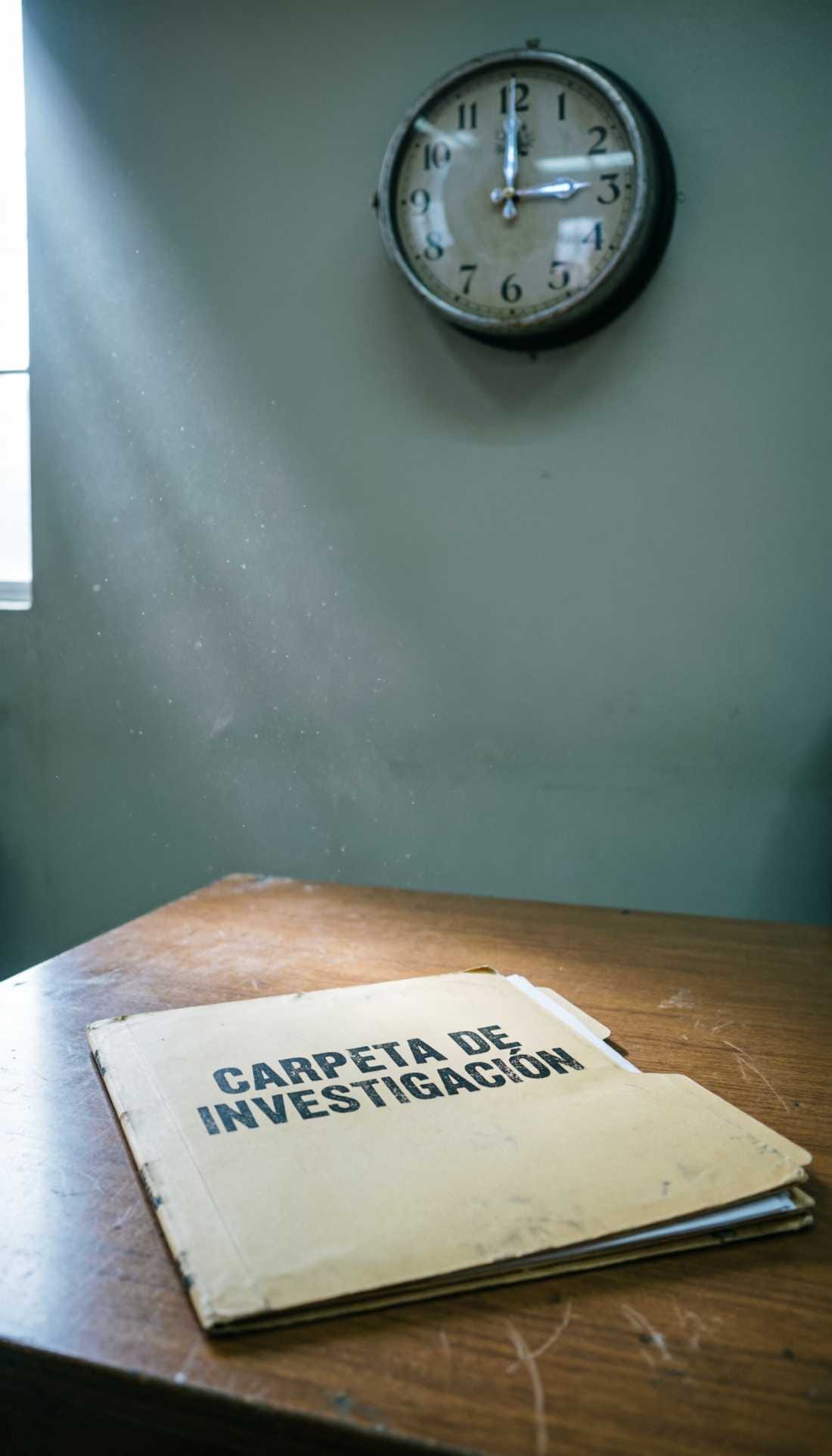
Every criminal investigation in Mexico begins with a carpeta de investigación — an investigation file. This file contains all the evidence, witness statements, forensic reports, and official documentation of the case. When a case is transferred between jurisdictions, the entire physical file must move with it. In an age of digital everything, Mexico's justice system still relies heavily on paper, and files can — and do — get lost.
The transfer process typically works like this: A prosecutor determines that a case falls under a different jurisdiction. A formal request for transfer is made. The receiving jurisdiction must accept the case. The file is physically transferred. A new prosecutor is assigned. The investigation effectively restarts from the beginning. Each step can take weeks. In the meantime, hotel rooms are cleaned and rented to new guests. Witnesses return to their home countries. Forensic evidence degrades. By the time a new investigator picks up the file, the case may be cold beyond revival.
When Crimes Overlap
The legal doctrine of concurso de delitos — concurrent crimes — creates another layer of complexity. When a single criminal act violates both federal and state laws, jurisdiction becomes a question of interpretation. According to Mexican legal codes, when investigating multiple crimes, authorities must separate federal from common crimes, even when they're connected. This means a single incident can spawn parallel investigations in different jurisdictions, with different prosecutors, different resources, and different priorities.
The result? Confusion, duplication, and gaps. A federal prosecutor might focus on the organized crime angle while the state prosecutor handles the homicide. Or — more commonly — both jurisdictions assume the other is handling it, and the case falls through the cracks entirely.
Is the System Really That Bad?
To be fair, the Mexican government has made efforts to reform its justice system. The 2008 constitutional reforms, fully implemented in 2016, transformed trial procedures from a written, inquisitorial system to an oral, adversarial one — theoretically providing more due process protections for both victims and the accused. The World Justice Project has documented these reforms' potential to improve outcomes, but also notes that reforming the police and prosecutor's offices requires additional, targeted efforts.
Some argue that the militarization of law enforcement — the deployment of the Army, Navy, and National Guard — has brought necessary firepower to bear against cartels. Supporters point to the fact that official murder rates have fallen slightly in recent years, from 25.9 per 100,000 in 2022 to 24.9 in 2023. But critics counter that this approach has not reduced the power of criminal groups and has led to serious human rights abuses, while failing to address the core problem: an ineffective criminal justice system.
The reality is nuanced. Some jurisdictions are better than others. Some prosecutors are honest and hardworking. Some cases do result in justice. But these are exceptions, not the rule. The system as a whole remains fundamentally broken for the average person seeking accountability — and especially for foreigners navigating it from thousands of miles away.
Mexican Justice System by the Numbers
Metric | Value |
Municipal Police Forces | ~1,807 |
State Police Forces | 33 (31 states + 2 for Mexico City) |
Police Officers per 100,000 People | 366 (50%+ higher than U.S.) |
Impunity Rate for Violent Crimes | ~94.8% |
Homicide Rate (2023) | 24.9 per 100,000 |
Missing Persons Since 2007 | 94,000+ |
Women Murdered Since 2001 | ~50,000 |
What the Jurisdictions Actually Cover
Jurisdiction | Primary Crimes | Investigative Body |
Federal | Drug trafficking, organized crime, terrorism, arms trafficking, human trafficking, customs/tax crimes | Fiscalía General de la República (FGR), National Guard |
State | Homicide, robbery, assault, theft, kidnapping, femicide, most crimes against persons | State Fiscalía, state judicial police |
Municipal | Public order, traffic violations, preventative patrols (no criminal investigation) | Municipal police (first response only) |
Reading the Headlines Differently
The next time you read about a tourist death in Mexico — the next time a headline screams about an American found dead in a Cancún hotel room or a Canadian family poisoned by a gas leak in Tulum — you'll understand more than the reporters are telling you. You'll understand that the morning ritual of bureaucracy has already begun. Somewhere, a carpeta de investigación is being opened. A prosecutor is deciding whether this is federal or state. Municipal police are securing a scene they won't investigate. A family is receiving a phone call that will change everything.
The Mexican justice system isn't designed for victims, foreign or domestic. It's designed to process cases, manage statistics, and avoid political liability. Jurisdictional overlaps aren't accidents; they're pressure valves, allowing cases to be shuffled between offices until everyone who might be responsible can plausibly claim someone else was supposed to handle it. The 94.8% impunity rate isn't a failure of the system; it's the system working as designed.
For anyone following Mexican news, this knowledge should change how you read the stories. When you see that a case has been "transferred to federal authorities," you'll know that means months of delay and lost evidence. When you read that "investigations are ongoing," you'll know that means nothing is happening. When you hear a family demanding justice, you'll understand why their demands are so unlikely to be met.
This isn't a call to avoid Mexico or to ignore its many wonders. It's a call to understand the landscape. To know what questions to ask. To recognize that the morning ritual — the bureaucracy that springs into action when a body is found — is not your friend. It's a machine, indifferent to your grief, designed to process files rather than deliver justice. And the first step to navigating it is understanding that the cracks between jurisdictions are wide enough to swallow entire cases whole.
References
[1] Wikipedia. "Law enforcement in Mexico." https://en.wikipedia.org/wiki/Law_enforcement_in_Mexico
[2] Human Rights Watch. "Double Injustice: How Mexico's Criminal Justice System Fails Victims and the Accused." February 2025. https://www.hrw.org/report/2025/02/19/double-injustice
[3] Human Rights Watch. "Mexico's Justice System." 1999. https://www.hrw.org/reports/1999/mexico/Mexi991-03.htm
[4] UNODC. "Mexico: Crime and criminality." 2011. https://www.unodc.org/documents/treaties/organized_crime/Review_mechanism/Pilot_country_report_Mexico_8.06.2011.pdf
[5] Wilson Center. "The Structural Redesign of Security in Mexico." December 2024. https://gbv.wilsoncenter.org/article/structural-redesign-security-mexico
[6] Rolling Stone. "Feds Won't File Charges in Mysterious Death of Shanquella Robinson." April 2023. https://www.rollingstone.com/culture/culture-news/shanquella-robinson-feds-wont-file-charges-mexico-vacation-death-1234714124
[7] UN News. "Mexico: Boom in organised crime making femicide invisible." December 2024. https://news.un.org/en/story/2024/12/1157811
[8] Vision of Humanity. "2023 Mexico Peace Index." https://www.visionofhumanity.org/wp-content/uploads/2023/05/ENG-MPI-2023-web.pdf
[9] World Justice Project. "Mexico's New Criminal Justice System." https://worldjusticeproject.org/sites/default/files/documents/WJP-NewJusticeSystemMexico_.pdf
[10] Travel.gc.ca. "The Mexican criminal law system." https://travel.gc.ca/travelling/advisories/mexico/mexican-criminal-law-system