Mexico's $58M AI Play That Nobody Noticed
While the world argues over AI dominance, Mexico just quietly landed in the global top six for AI and data center manufacturing. Flex's $58 million investment will create 5,000 skilled jobs — and almost nobody outside Mexico noticed.

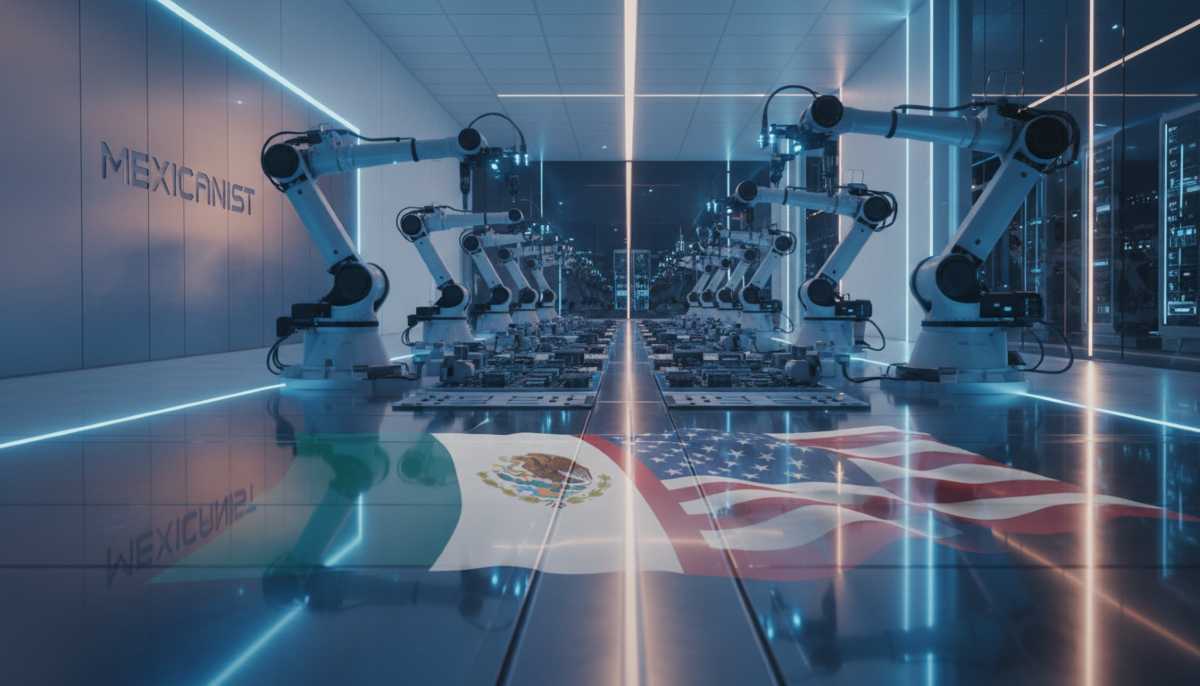
While the world obsesses over which country will dominate artificial intelligence, Mexico just quietly positioned itself in the top six globally for data center and AI manufacturing — and practically nobody outside the country noticed.
Flex, the multinational high-tech manufacturer, announced this week a 1 billion peso investment (roughly $58 million USD) to build AI and advanced manufacturing centers across three Mexican states between 2026 and 2030. The project will create 5,000 new highly skilled jobs and solidify Mexico's position as a critical node in the global AI supply chain.
The announcement came during a morning press conference at Mexico's National Palace, delivered by Guillermo del Río, Flex's director of business development and government affairs, alongside Economy Secretary Marcelo Ebrard.
What Flex Is Actually Building
Flex isn't a household name in the United States, but it should be. The Singapore-domiciled, American-run company is one of the world's largest contract manufacturers — the kind of company that builds the hardware other companies design. If you're holding a piece of consumer electronics, there's a reasonable chance Flex assembled it.
The new Mexican investment will focus on three locations:
- Guadalajara, Jalisco — already Mexico's "Silicon Valley" and home to a deep talent pool of software engineers
- Aguascalientes, Aguascalientes — a growing manufacturing hub in central Mexico
- Ciudad Juárez, Chihuahua — a border manufacturing powerhouse with direct US logistics connections
The facilities will produce high-technology components for AI systems and data centers — the physical infrastructure that makes artificial intelligence actually work. And the energy requirements are massive: del Río noted that the new plants will consume seven times the energy of the Port of Manzanillo, one of Mexico's largest Pacific cargo ports.
Why Mexico, Why Now
Flex has been in Mexico for 40 years. The company operates eight plants — five along the US border, three in central Mexico — and employs 40,000 people. Over the past decade alone, Flex has invested $2.3 billion in Mexican operations.
"We have tremendous talent in Mexico," del Río said. "Engineers, technicians, operators with enormous capacity who can compete with any country in the world."
That's not corporate flattery — it's a supply chain calculation. Mexico offers three things that AI hardware manufacturing desperately needs:
- Proximity to the US market. AI data centers are being built across the American Southwest. Manufacturing components in Juárez means they can cross the border in hours, not weeks from Shenzhen.
- Cost-competitive skilled labor. Mexican engineers earn a fraction of their US counterparts but deliver comparable quality in advanced manufacturing.
- Trade agreement protection. Under the T-MEC (the renegotiated NAFTA), components manufactured in Mexico receive favorable trade treatment entering the US and Canada — a critical advantage as trade tensions with China escalate.
Economy Secretary Ebrard used the announcement to drop a bigger number: 300 billion dollars. That's the total foreign investment committed to Mexico during President Claudia Sheinbaum's administration, according to government figures.
"Mexico is among the top six countries in the world for data center and artificial intelligence production," Ebrard stated. "This creates a very extensive supplier network. It means everyone who needs to participate to build this sophisticated equipment benefits — and it puts Mexico in a better position in advanced manufacturing."
The timing is strategic. The T-MEC itself is under review — US Trade Representative Jamieson Greer is arriving in Mexico this Monday for a second round of high-level negotiations. Steel, aluminum, automotive, agriculture, and rules of origin are all on the table. Every foreign investment announcement that lands before those talks begins strengthens Mexico's negotiating position.
The Energy Problem Nobody's Talking About
Here's the catch, and it's a big one. AI manufacturing requires enormous amounts of electricity. Del Río's comparison to the Port of Manzanillo wasn't casual — these facilities will be power-hungry on an industrial scale.
Mexico's energy infrastructure is already strained. The national grid struggles during peak demand, and the government's energy sovereignty policy has limited private investment in generation. Sheinbaum's administration is walking a tightrope between maintaining state control over energy (a political sacred cow for her MORENA party) and providing the reliable, abundant electricity that AI manufacturers demand.
If Mexico can't power the plants, the investment announcements won't translate into operational facilities. It's that simple.
For American companies in the AI supply chain, the Flex expansion is a signal that "nearshoring" — the shift of manufacturing from Asia to Mexico — is accelerating in the most advanced technology sectors. The components that power AI aren't just being built in China anymore. They're being built in Juárez, Guadalajara, and Aguascalientes.
For American investors, Mexico's AI manufacturing play represents an opportunity that's been hiding in plain sight. The country has the labor, the trade agreements, and increasingly the infrastructure to be a credible alternative to Asian supply chains for advanced technology. The question isn't whether Mexico can compete with China on cost (it can't). The question is whether proximity, trade access, and geopolitical stability make it worth a premium — and the Flex investment suggests the answer is yes.
The next time someone tells you AI is a Silicon Valley story, remind them: the hardware is being built in Mexico. And Mexico is betting the farm on it.
Flex Ltd. trades on NASDAQ (FLEX) with a market cap of approximately $14 billion.