The Crocodile Tattoo: Ancient Earth-Bearer to Modern Ink
The Maya crocodile carried the world on its back—now it carries stories on skin. From ancient earth-bearer myths to Playa del Carmen tattoo studios, discover why this 3,000-year-old symbol still grips imaginations.
Quick Answer
The crocodile tattoo draws its deepest meaning from ancient Mesoamerican cosmology, where the crocodile represented the earth itself. In Maya belief, Itzam Cab Ain ("Itzam Earth Caiman") was the primordial creature whose body became the foundation of the world. Today, this powerful symbol connects wearers to themes of primal strength, creation, and the sacred earth—a meaning that spans from the temples of ancient Tenochtitlan to the tattoo studios of Playa del Carmen.
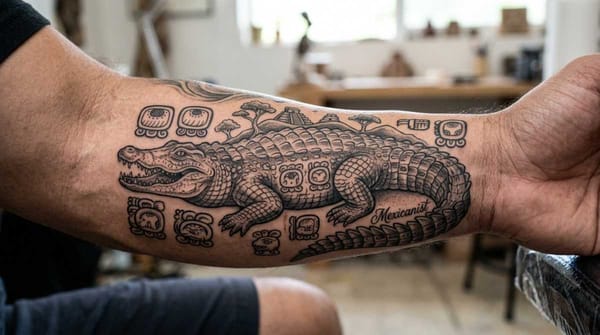
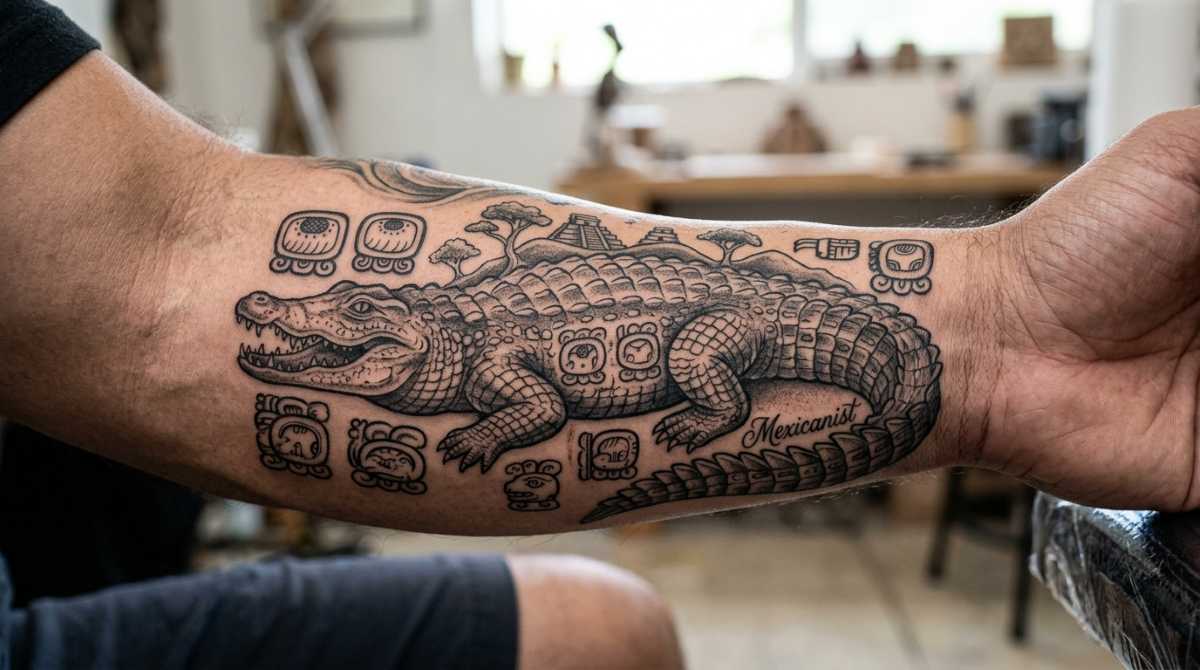
Walk into any tattoo studio along the sun-drenched coast of the Riviera Maya, and you will likely spot it: the sinuous form of a crocodile etched into someone's skin. Perhaps it coils around an arm, its scales rendered in precise black ink. Maybe it lurks on a shoulder blade, jaws agape in permanent warning. What most wearers—and even some tattoo artists—may not fully appreciate is that they are participating in a tradition that stretches back millennia, to a time when crocodiles were not merely predators but gods whose bodies formed the very earth beneath human feet.
The crocodile occupies a unique position in Mesoamerican cosmology, one that transcends simple animal symbolism to embody the most fundamental concepts of creation, fertility, and cosmic order. For the Maya, this creature was Itzam Cab Ain—the Earth Caiman—whose sacrifice and dismemberment brought forth the ordered world from primordial chaos. For the Aztecs (Mexica), Cipactli, the divine crocodile, served as both the first day of the sacred calendar and the source from which the gods fashioned the land of Mexico. Understanding these ancient meanings transforms a crocodile tattoo from striking imagery into a profound connection with one of humanity's most sophisticated cosmological traditions.
The Maya Crocodile
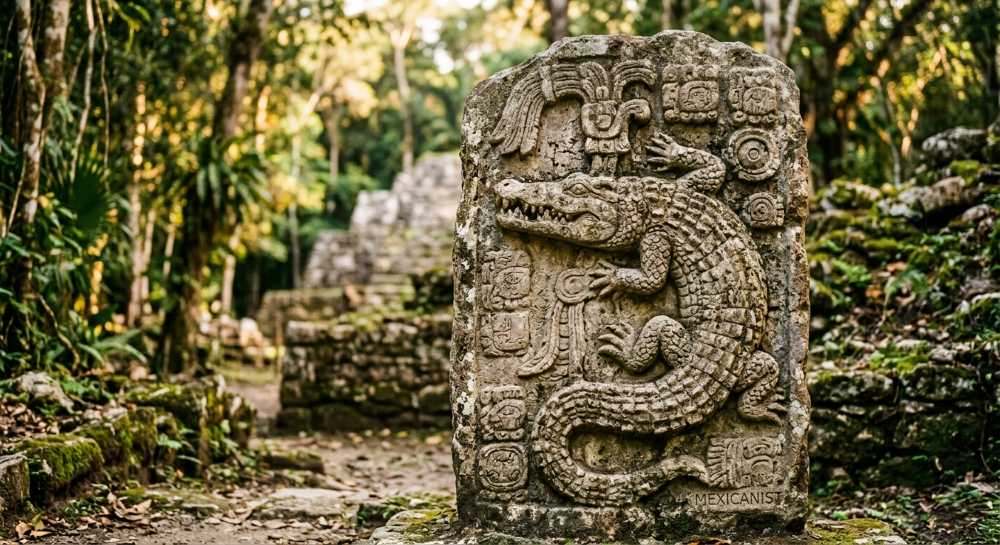
In the complex pantheon of Maya deities, Itzamna stands as one of the most significant creator gods—ruler of the heavens, inventor of writing, and bringer of civilization. But within the broader manifestations of this deity exists a particularly fascinating aspect: Itzam Cab Ain, literally translated as "Itzam Earth Caiman" or sometimes "Iguana Earth Crocodile." This zoomorphic representation of the earth reveals sophisticated Maya understanding of the cosmos, where the ground beneath one's feet was conceptualized as a massive reptilian creature floating in the primordial sea.
The Dresden Codex, one of the few surviving pre-Columbian Maya books, provides crucial visual evidence of this concept. On its opening pages, the head of Itzamna appears within the serpent maw of a two-headed caiman representing the earth. This imagery corresponds to creation narratives recorded in the Books of Chilam Balam, colonial-era Maya texts that preserve pre-Hispanic traditions. According to these accounts, at the moment of creation, this cosmic crocodile was sacrificed and dismembered, its body parts becoming the mountains, valleys, and features of the ordered universe.
Archaeological research has revealed how deeply this symbolism permeated Maya urban planning. A 2022 study published in Nature World News demonstrated that the ancient Maya city of El Mirador was laid out in a pattern resembling a crocodile—an observation that suggests the earth-crocodile concept was not merely mythological but actively shaped the built environment. The creature that tattoo enthusiasts now wear on their bodies once determined the very streets and temples where Maya priests conducted their most sacred rituals.
The Aztec Crocodile
The Aztec (Mexica) civilization, which dominated central Mexico in the centuries before the Spanish conquest, developed their own sophisticated crocodile cosmology centered on Cipactli (sometimes spelled Sipaktli). This primordial earth monster occupies the first position in the Aztec sacred calendar—the tonalpohualli—and represents the very principle of creation emerging from chaos. In Aztec cosmology, the earth was conceived as a great crocodile floating in the primeval waters, a concept that echoes across Mesoamerican cultures and suggests shared roots in the region's deepest antiquity.
According to Aztec creation mythology, the gods Tezcatlipoca and Quetzalcoatl needed to create land upon which humans could live. They descended upon Cipactli, a monstrous creature described as part crocodile, part fish, and part toad, with mouths at every joint—constantly hungry, eternally dangerous. In some versions of the myth, Cipactli was lured with bait and then torn apart; in others, the creature was defeated in direct combat. From its dismembered body, the gods formed the earth: its back became the land, its blood the rivers, its eyes the caves and springs. This violent creation story established the fundamental Aztec understanding of the earth as both nurturing and dangerous—a duality that the crocodile perfectly embodies.
Recent archaeological work by Mexico's National Institute of Anthropology and History (INAH) has illuminated how thoroughly crocodile symbolism permeated Mexica ritual practice. Archaeologist Erika Lucero Robles Cortés has documented extensive crocodile remains at the Templo Mayor, the great Aztec temple complex in what is now Mexico City. These remains, transported from coastal regions hundreds of kilometers away, were placed in ritual deposits as representations of the earth and its fertility. As Robles Cortés noted in her research, "The crocodile represented the fertility of the earth"—a sacred function that made these animals essential to Aztec religious practice despite their absence from the high-altitude Valley of Mexico.
Crocodile Across Cultures
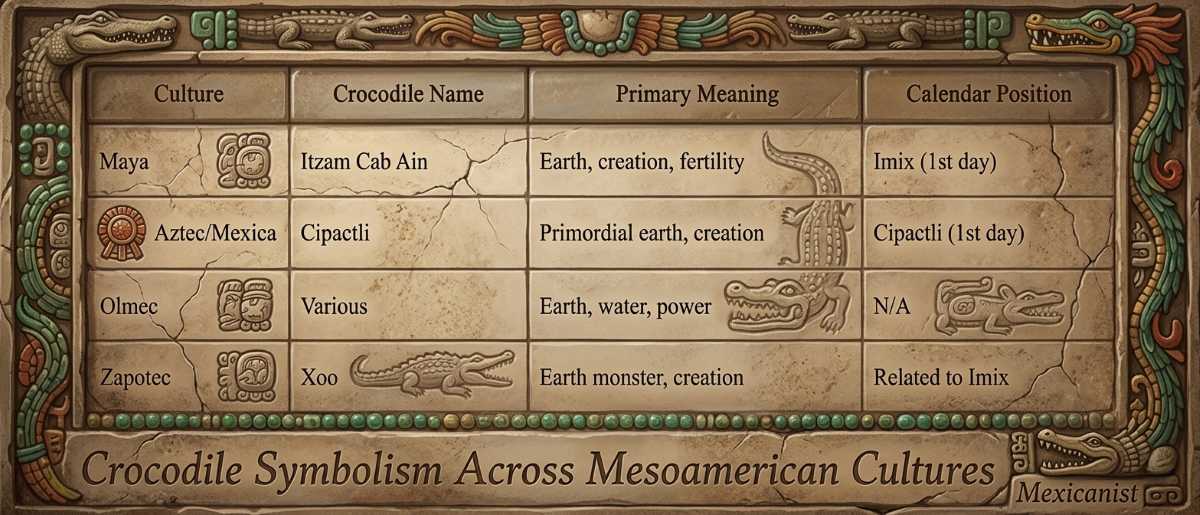
The crocodile's significance extended beyond the Maya and Aztec civilizations, appearing with remarkable consistency across Mesoamerica's diverse cultures. According to research compiled by Mexico's National Commission for the Knowledge and Use of Biodiversity (CONABIO), pre-Hispanic cultures consistently viewed crocodiles as symbols of fertility, rain, lightning, and the humid earth. The creature's amphibious nature—dwelling in both water and on land, bridging surface and depths—made it a perfect symbol for liminality and transformation.
The consistency of crocodile symbolism across these cultures points to shared roots in Mesoamerica's deepest antiquity—possibly extending back to the Olmec civilization (1200-400 BCE), often considered the "mother culture" of Mesoamerica. For those considering a crocodile tattoo, this cross-cultural significance means the symbol carries weight far beyond its striking visual appeal. The crocodile connects to fundamental concepts of creation, fertility, and the sacred earth that have resonated in this region for over three thousand years.
Ancient Maya Tattoo Traditions
The modern enthusiasm for Maya-inspired tattoos has deep roots in authentic pre-Columbian practice. Archaeological evidence, including the identification of ancient tattooing tools by researchers, confirms that the Maya practiced tattooing extensively long before European contact. However, the meaning and function of tattoos in Maya society differed significantly from modern body art practices, carrying profound spiritual and social significance that went far beyond mere decoration or personal expression.
According to historical research, Maya tattoos were achieved by creating small, ornate cuts on the skin and rubbing the wounds with pigment—a painful process that imbued tattooing with connotations of sacrifice and endurance. The more elaborate a person's tattoos, the higher their apparent status; body modifications served as visible markers of social standing, spiritual devotion, and personal accomplishment. Warriors and nobles bore the most extensive tattooing, their bodies mapped with symbols of power, protection, and divine connection.
The Maya god Acat is associated with tattooing, particularly the patronage of tattoo artists. This divine connection underscores the sacred nature of the practice in Maya culture—tattooing was not merely artistic expression but a form of spiritual technology, a way of inscribing sacred power onto the human body. Those who chose to receive tattoos were revered for their willingness to endure pain as a form of sacrifice, echoing the creation myths where gods themselves sacrificed to bring the world into being.
Modern Crocodile Tattoo Meanings
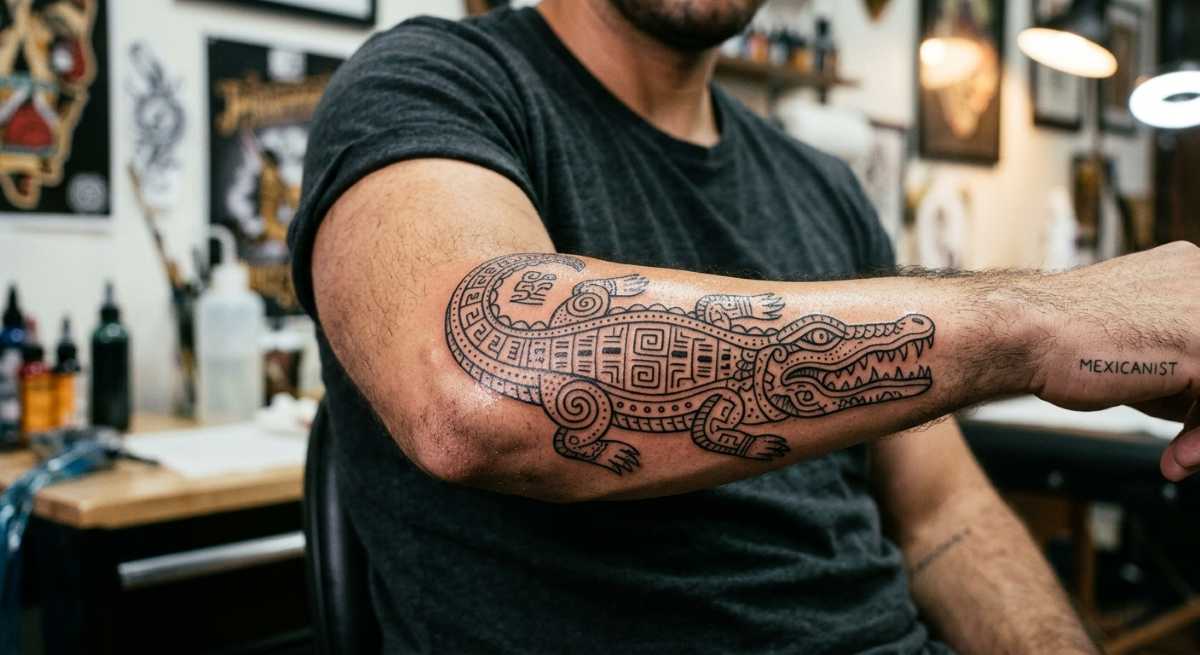
Contemporary crocodile tattoos carry multiple layers of meaning, from universal symbolism to specifically Mexican cultural significance. Understanding these meanings can help wearers choose designs that authentically reflect their intentions and connect them to the rich heritage of Mesoamerican symbolism.
Universal Crocodile Symbolism
• Primal Power and Survival: As one of Earth's oldest species (over 200 million years), the crocodile represents survival, resilience, and primal strength. Wearers often choose this symbol to represent their own ability to endure and overcome adversity.
• Mastery of Two Worlds: Crocodiles' amphibious nature—equally at home in water and on land—symbolizes adaptability and the ability to navigate different realms or states of being.
• Protection and Guardianship: In many traditions, crocodiles serve as protectors and guardians. In Thai Sak Yant tattoo traditions, the crocodile (Hanuman Crocodile) design offers protection from all types of danger.
• Hidden Danger and Patient Power: The crocodile's ability to lurk almost invisible beneath the water's surface, striking with devastating force, appeals to those who identify with strategic thinking and controlled power.
For wearers connected to Mexican heritage or those who have developed deep appreciation for Mexican culture, the crocodile tattoo carries additional layers of meaning rooted in Mesoamerican cosmology. The crocodile as earth-bearer symbolizes connection to the land itself—not merely any land, but specifically the sacred geography of Mexico. Those with Mexican ancestry may view the crocodile as a way to honor their roots and carry a piece of their homeland's ancient wisdom on their skin.
The crocodile also represents the fertility of the earth and the creative forces that bring forth life. For individuals seeking a symbol of generative power, creativity, or connection to nature's abundant forces, the Mesoamerican crocodile offers a richly meaningful choice. Additionally, as El Universal has documented, crocodiles in pre-Hispanic cultures were symbols of rain and lightning—the life-giving forces that made agriculture possible and sustained civilization.
Tattoo Culture in the Riviera Maya
The Riviera Maya—the Caribbean coastline of Mexico's Yucatan Peninsula—has emerged as a significant destination for tattoo tourism. From the bustling streets of Playa del Carmen to the bohemian enclave of Tulum, tattoo studios dot the landscape, offering everything from traditional Mexican designs to cutting-edge contemporary work. For visitors seeking a meaningful souvenir of their Mexican journey, a tattoo offers permanence that a t-shirt or piece of jewelry cannot match.
This modern tattoo culture exists in fascinating dialogue with the region's ancient traditions. The Maya built their great cities in this landscape—Chichen Itza, Tulum, Coba—leaving behind the stone monuments and painted codices that preserve their beliefs. Today's tattoo artists, many of whom are Mexican nationals deeply versed in their cultural heritage, serve as interpreters of this ancient symbolism for a global clientele. The best practitioners approach their work with reverence for the traditions they draw upon, creating designs that honor rather than appropriate.
Visitors to the Riviera Maya seeking a crocodile or Maya-inspired tattoo should research studios and artists carefully. Look for artists who demonstrate genuine knowledge of the symbols they work with, who can discuss the meaning and history behind designs, and who approach cultural motifs with respect rather than treating them as mere aesthetic choices. Many studios in Playa del Carmen offer consultations where potential clients can discuss design ideas and ensure the artist understands the significance of the requested imagery.
Cultural Appreciation vs. Appropriation
The question of cultural appropriation arises whenever someone from outside a culture adopts its symbols and practices. For non-Mexican or non-Maya individuals considering a crocodile tattoo inspired by Mesoamerican traditions, thoughtful engagement with this question is essential. Cultural appropriation typically involves the unacknowledged, disrespectful, or commercialized use of symbols from marginalized cultures—taking without understanding, profiting without permission, or reducing sacred traditions to mere fashion.
Cultural appreciation, by contrast, involves genuine engagement, education, and respect. Individuals who take time to learn about Maya and Aztec beliefs, who understand the weight and meaning of the symbols they adopt, and who approach these traditions with humility rather than entitlement move toward appreciation rather than appropriation. This means going beyond surface-level meanings to engage with the cosmology, history, and living cultural significance of the crocodile symbol.
Several practices can help ensure respectful engagement: First, learn from Mexican and Maya sources when possible—read Mexican archaeologists, listen to living Maya communities, support indigenous artists. Second, consider whether a crocodile tattoo is appropriate given your relationship with Mexican culture. Those with Mexican heritage, those who have spent significant time in Mexico, or those who have developed deep relationships with Mexican culture may have a more natural claim to these symbols than casual tourists. Third, be prepared to explain your tattoo's meaning and acknowledge its cultural origins when asked, rather than claiming the symbol as a personal discovery.
Frequently Asked Questions About Crocodile Tattoos
1. What does a crocodile tattoo symbolize in Mexican culture?
In Mexican culture, particularly drawing from Maya and Aztec traditions, the crocodile symbolizes the earth itself, creation, and fertility. The Maya knew it as Itzam Cab Ain (Earth Caiman), while the Aztecs called it Cipactli—the primordial creature from whose body the gods created the world. A crocodile tattoo in this context connects the wearer to these ancient earth-centered beliefs and the sacred creative forces they represent.
2. What is the Maya crocodile god called?
The Maya crocodile deity is known as Itzam Cab Ain, which translates to "Itzam Earth Caiman" or "Iguana Earth Crocodile." This deity represents the earth aspect of Itzamna, one of the most important Maya creator gods. According to Maya creation myths recorded in the Books of Chilam Balam, this cosmic crocodile was sacrificed and dismembered to create the ordered world.
3. Is getting a Mayan tattoo cultural appropriation?
Whether a Mayan-inspired tattoo constitutes cultural appropriation depends on the context and approach. Appropriation occurs when sacred symbols are used without understanding or respect. Appreciation involves genuine engagement with the culture, learning from indigenous sources, and approaching the symbol with humility. Those with Mexican heritage or deep connections to Mexican culture have stronger claims to these symbols. Non-Mexicans should educate themselves about the symbolism's significance and be prepared to acknowledge its cultural origins.
4. What is Cipactli in Aztec culture?
Cipactli is the Aztec (Mexica) primordial crocodile monster from whose body the gods created the earth. Described as part crocodile, part fish, and part toad with mouths at every joint, Cipactli was lured, defeated, and dismembered by the gods Tezcatlipoca and Quetzalcoatl. Its body became the land of Mexico. Cipactli also gives its name to the first day of the Aztec sacred calendar (tonalpohualli), making it fundamentally important to Aztec cosmology.
5. Where can I get a meaningful Mayan tattoo in Mexico?
The Riviera Maya (Playa del Carmen, Tulum, Cancun) offers numerous tattoo studios where artists are knowledgeable about Maya symbolism. Mexico City also has excellent studios with artists who specialize in pre-Hispanic designs. Research studios carefully, looking for artists who demonstrate genuine understanding of the symbols they work with. Schedule consultations to discuss your design's meaning and ensure the artist can create authentic, respectful work.
6. Did the ancient Maya really have tattoos?
Yes, archaeological evidence confirms that the ancient Maya practiced tattooing extensively. They used sharp tools to cut designs into the skin, then rubbed pigment into the wounds. Tattoos indicated social status, spiritual devotion, and personal accomplishments. The Maya even had a god associated with tattooing—Acat—who patronized tattoo artists. The practice was considered a form of sacrifice, and those who endured it were respected for their bravery.
Stay Connected with Mexican Culture
Did this article into crocodile symbolism spark your curiosity about Mexican culture? At mexicanist.com, we explore the stories, traditions, and contemporary life that make Mexico one of the world's most fascinating nations. From ancient archaeology to modern art, from street food to spiritual traditions, we bring you the authentic Mexico that lies beyond the tourist brochures.
Join our community of culture enthusiasts, history buffs, and Mexico lovers. Subscribe to our newsletter for weekly insights into Mexican art, history, cuisine, and traditions. Follow us on social media for stunning photography and behind-the-scenes looks at the stories we cover. And if you have a story idea or cultural question you would like us to explore, we would love to hear from you.
Because understanding Mexico means understanding its soul—and symbols like the crocodile carry that soul forward through the centuries.
References
El Universal. "The hidden meaning of crocodiles in pre-Hispanic cultures." (2019) - English section of Mexico's major newspaper
Mexico News Daily. "Archaeologist unveils mysteries of Mexica fascination with crocodiles." (2023) - Rich Tenorio reporting on INAH research
JSTOR. "Maya Crocodilians: Intersections of Myth and the Natural World." Academic paper on crocodile symbolism
ThoughtCo. "Itzamna: Mayan Supreme Being, Father of the Universe." Educational reference on Maya deity
Ancient Origins. "Cipactli and Aztec Creation." Mythological analysis of Aztec creation story
Mad Rabbit. "History of Mayan Tattoo Culture." Research on pre-Columbian tattooing practices
CONABIO. "The crocodile in the pre-hispanic cosmovision of Mexico." Biodiversity commission cultural research