Criminal Profiling Failures That Changed Investigations
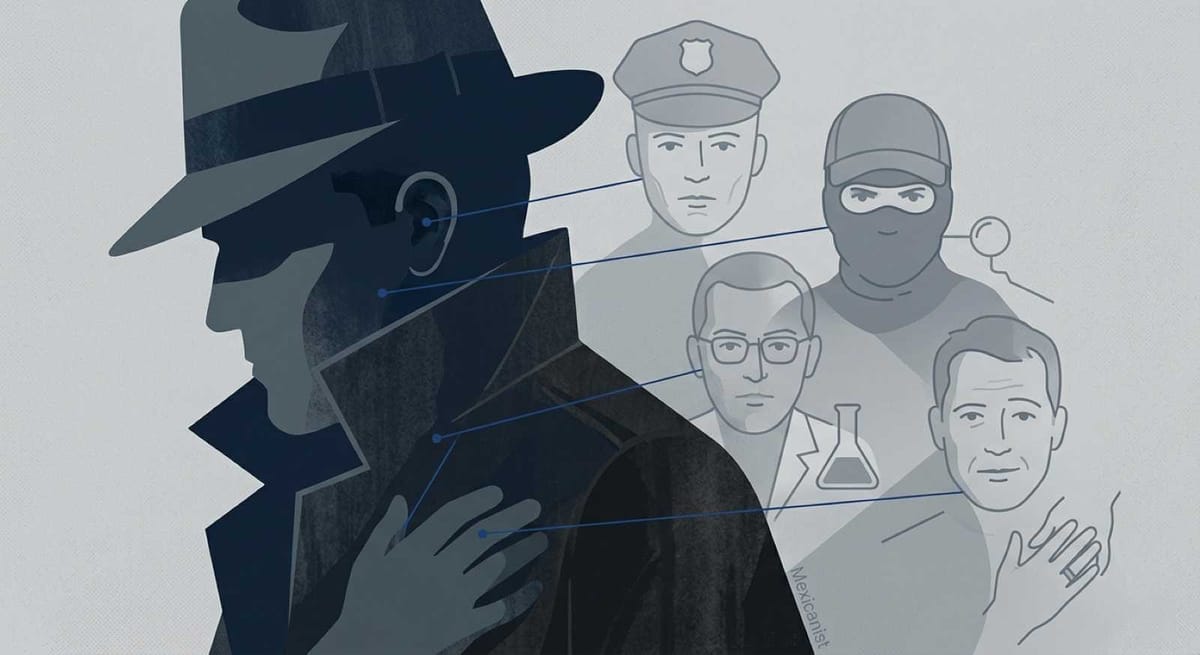
Criminal profiling, for all its seductive glamour, has a disturbing track record of destroying innocent lives while letting real killers walk free.

A man standing in the roaring chaos of a bomb blast, smoke curling into the Georgia night, adrenaline screaming through every vein. He has just saved lives. He spotted the green military-style backpack, noticed the strange pipes poking out, and started clearing people away before the explosion ripped through Centennial Olympic Park. He is a hero. For one shining moment, Richard Jewell was the man who stopped a massacre from being worse.
Ninety-six hours later, the FBI knocked on his mother's apartment door. They told him they wanted his help making a training video about the bombing. They sat him in a small room, handed him a form, and asked him to write a statement. Halfway through, an agent leaned over and said the words that would destroy his life: "You're a suspect."
This is the story of criminal profiling gone wrong. Not once. Not twice. But over and over again, across decades, in the most high-profile cases in American criminal history. It is the story of an entire discipline built on intuition, shaped by Hollywood mythology, and deployed with the swagger of absolute certainty, even when it was sending investigators chasing shadows.
Criminal profiling, for all its seductive glamour, has a disturbing track record of destroying innocent lives while letting real killers walk free. The profiles drawn by the FBI's Behavioral Analysis Unit, the ones breathlessly described in shows like Mindhunter and fictionalized in movies like Silence of the Lambs, have a dirty secret: they are frequently, sometimes spectacularly, wrong. And when they fail, the collateral damage is measured in ruined reputations, shattered families, and graves.
The Birth of the Profiler
It started, like so many things in American law enforcement, with a manic pursuit of one very specific bad guy. In the 1950s, New York City was being terrorized by the Mad Bomber, a shadowy figure who planted more than thirty pipe bombs in movie theaters, train stations, and libraries over sixteen years. The police were stumped. Desperate, they turned to a psychiatrist named James Brussel.
Brussel did something that felt like magic. He studied the crime scenes, read the bomber's taunting letters, and pieced together a psychological portrait. He predicted the bomber would be paranoid, middle-aged, of Eastern European descent, living in Connecticut, and wearing a double-breasted suit buttoned. When George Metesky was finally arrested at his home in Waterbury, Connecticut, he was wearing a bathrobe, but he calmly changed into a double-breasted suit for the ride to the station.
Brussel became a legend, and the idea of the psychological profiler was born. The FBI formalized it in the 1970s with the Behavioral Science Unit at Quantico, eventually building profiles based on interviews with convicted serial killers. The Hollywood machine did the rest. From Clarice Starling's first tentative steps into the corridors of the asylum in Silence of the Lambs to the brooding, cigarette-smoking agents of Mindhunter, the profiler became American law enforcement's answer to the Sherlock Holmes: a brilliant, intuitive mind who could look at a crime scene and see the killer's soul.
The only problem? The reality bears almost no resemblance to the myth. The gap between what profilers promise and what they deliver is not just wide. It is, in the most consequential cases, a chasm into which innocent people fall.
The Hero Who Wasn't
Let's go back to that night in Atlanta. July 27, 1996. The Summer Olympics were in full swing, Centennial Olympic Park was packed with thousands of revelers, and Richard Jewell, a thirty-three-year-old security guard, was doing his job. He noticed an unattended backpack under a bench, flagged down a Georgia Bureau of Investigation agent, and began evacuating the area. The bomb went off minutes later. One person died directly from the blast. Another suffered a fatal heart attack. More than a hundred were injured. Without Jewell's intervention, the death toll would have been far higher.
He was celebrated. He was interviewed on television. His face was everywhere. For about three days, Richard Jewell was America's favorite security guard.
Then the FBI profiled him.
The Behavioral Analysis Unit had a theory, one they had apparently been sitting on for years. They called it the "hero bomber" profile. The idea was simple, almost elegant in its twisted logic: some bombers, driven by a desperate need for attention and validation, plant devices specifically so they can discover them and be hailed as heroes. The profiler looked at Jewell, saw a man who fit this narrative perfectly, and within days he was their primary suspect.
The Atlanta Journal-Constitution broke the story, publishing his name and describing him as a suspect. The media descended like locusts. For eighty-eight days, Jewell and his mother were prisoners in their own apartment, surrounded by reporters, cameras, and the crushing weight of public suspicion. The FBI searched his home, his car, and his belongings. They found nothing. Zero evidence. Not a single fragment connecting him to the bombing.
In October 1996, the U.S. Attorney sent Jewell a letter stating he was no longer a target. Seven years later, Eric Rudolph, an anti-government domestic terrorist who bore no resemblance whatsoever to the FBI's hero-bomber profile, pleaded guilty to the attack. Rudolph was a genuine ideologue, a survivalist who also bombed abortion clinics and a lesbian bar. He was the opposite of everything the profilers had imagined.
Jewell sued multiple media outlets and eventually settled. But the damage was done. He bounced between jobs, struggled with depression, and died in 2007 at the age of forty-four, just two years before he was finally formally exonerated by the Georgia Bureau of Investigation. The man who saved lives at the Olympics could not save himself from the profile.
The Sniper Who Wasn't White
If the Jewell case was a tragedy of wrong identity, the D.C. sniper attacks of October 2002 were a masterclass in collective profiling failure. For three terrifying weeks, the Washington metropolitan area was under siege. Someone was shooting people at random, in gas stations, parking lots, schoolyards, and home improvement stores. Ten dead. Three critically wounded. And the entire nation watching, paralyzed with fear.
The profilers descended, and they were astonishingly unanimous. Every major profiling voice in the country agreed on the basics: the shooter was white, male, in his twenties or thirties, probably a "weekday warrior" who had a job, maybe a family, and killed on the side. They said he was driving a white van or truck, likely a Ford Econoline or a Chevrolet Astro. They described a disgruntled employee, a solid family man, someone who looked like he belonged in the suburbs.
Clinton Van Zandt, a former FBI profiler, told reporters, "This is something white males do." Another prominent profiler, James Fox, said the killer was a "weekday warrior, even snipers have jobs." Geographic profiling software developed by criminologist Kim Rossmo also pointed toward a specific area that turned out to be completely wrong.
Here is who the snipers actually were: John Allen Muhammad, a forty-one-year-old Black man, Gulf War veteran, and his seventeen-year-old accomplice, John Lee Malvo, a Jamaican national. They were destitute. They had been living in a homeless shelter in Bellingham, Washington. Their vehicle was not a white van. It was a beat-up 1990 blue Chevrolet Caprice with a hole cut in the trunk so the shooter could fire from inside the car.
The profile was wrong on every single dimension. Race, age, vehicle, employment status, social standing. The profilers had essentially described a character from a crime novel rather than an actual human being. Worse, the white van fixation was actively counterproductive. Witnesses who saw the blue Caprice initially may have filtered out that information because it did not match the profile. The snipers were ultimately caught sleeping at a rest stop in Maryland, not because of profiling but because of a tip from a truck driver who recognized their car from an alert.
The D.C. sniper case remains the most embarrassing collective failure in the history of criminal profiling, a moment when the entire profession looked at a crime and saw a mirror reflection of its own assumptions rather than the reality staring back at it.
When the FBI Chased Shadows
September and October 2001. America was still raw from the September 11 attacks when a new horror arrived in the mail. Anthrax-laced letters began appearing in the offices of senators and media organizations. Five people died. Seventeen were injured. The nation, already on edge, slid further toward panic. Someone was weaponizing one of the deadliest pathogens on earth and mailing it through the Postal Service.
The FBI needed a suspect, and they thought they found one in Dr. Steven Hatfill, a biodefense researcher with an exotic background and a penchant for self-dramatization. Hatfill had worked at the United States Army Medical Research Institute of Infectious Diseases, had connections to Rhodesia, and had written a fictional novel about a bioterror attack. In the eyes of the FBI, this was enough.
The investigation that followed was aggressive, invasive, and utterly fruitless. The FBI searched Hatfill's apartment, followed him, tapped his phones, and leaked his name to the press. His career was demolished. He could not get work. He could not go anywhere without being recognized as the anthrax suspect. Hatfill was, by every credible account, completely innocent. He had no connection to the attacks whatsoever.
In 2008, the United States government settled with Hatfill for $5.8 million. There was no admission of liability, but the message was clear: the FBI had hounded an innocent man for years and destroyed his life in the process.
The investigation then shifted to Bruce Ivins, an Army scientist at USAMRIID in Fort Detrick. The FBI's pursuit of Ivins was, if anything, even more aggressive. They offered his son $2.5 million and a sports car to turn evidence against his own father. They confronted Ivins's hospitalized daughter with photographs of dead anthrax victims. In July 2008, Ivins died by suicide before the case against him could be fully adjudicated. The FBI declared him the sole perpetrator and closed the case.
But questions remain. Serious questions. Scientists and independent investigators have pointed out significant problems with the FBI's evidence against Ivins, including the disputed quality of the genetic analysis used to link the anthrax spores to his lab. Some experts believe the case was never truly solved, that Ivins may have been driven to his death by an investigation built on sand. The anthrax case is less a story of profiling success than a grim fable about the consequences of getting it wrong.
The Cub Scout Next Door
Dennis Rader was the kind of man you would want on your neighborhood watch. Married, father of two, president of his Lutheran church, a Cub Scout leader, and the municipal code compliance officer for Park City, Kansas. He mowed his lawn, attended council meetings, and was known as a quiet, reliable presence in his community.
He was also BTK: Bind, Torture, Kill. The serial murderer who terrorized Wichita, Kansas for three decades, killing at least ten people between 1974 and 1991 and taunting police with letters and cryptic messages. For thirty years, Rader eluded capture, living an astonishingly ordinary life while committing extraordinarily brutal crimes.
Why did it take so long? Part of the answer lies in the FBI's profiling methodology, specifically the organized versus disorganized classification system. The FBI taught that serial killers fell into two categories: organized offenders, who were well-educated, socially competent, and planned their crimes meticulously, and disorganized offenders, who were less educated, impulsive, and left chaotic crime scenes. The profile pointed investigators toward the disorganized type: seedy-looking, antisocial loners with substance abuse problems.
Rader's crime scenes had both organized and disorganized elements, a fact noted by forensic psychiatrists at UC Davis who were skeptical of the binary classification. Rader was meticulous in planning, leaving no fingerprints or DNA at early crime scenes, yet his kills showed flashes of rage and improvisation that seemed disorganized. The FBI's rigid categorization could not accommodate this complexity.
But the deeper problem was that Rader simply did not match the stereotype. The FBI's behavioral profiling was built on a database of only thirty-six convicted serial murderers. It did not include a single female serial killer. It was, by any reasonable standard, a comically small sample from which to draw universal conclusions about human behavior. Rader, the churchgoing Scout leader, existed entirely outside the profile's field of vision.
He was ultimately caught in 2005 not through profiling but through a floppy disk he sent to police, which contained metadata linking him to a computer at his church. The case was closed by forensic technology, not forensic psychology.
The Science That Isn't
Here is the uncomfortable truth that the profiling community has been reluctant to acknowledge: there is remarkably little empirical evidence that criminal profiling actually works. As researchers at Memorial University in Newfoundland noted in a comprehensive review, "The use of criminal profiling has increased steadily over the last 30 years despite a lack of compelling empirical evidence that it works."
The problems are structural. The FBI's foundational database was built on interviews with thirty-six convicted killers, all male, almost all from the United States, all caught and therefore not representative of the population of offenders who do not get caught. This is a bit like trying to understand the ocean by studying a bucket of seawater from one beach.
Crime scenes are messy, contradictory, and resistant to neat categorization. The organized/disorganized model, the backbone of FBI profiling, assumes a clean binary that rarely exists in reality. As UC Davis forensic psychiatrist Charles Scott diplomatically put it, "The FBI profiling method has many positive attributes, but it also has some inherent limitations." That is academic understatement at its finest.
Then there are the cognitive biases. Confirmation bias leads profilers to focus on evidence that supports their initial theory while discarding contradictions. The representativeness heuristic causes them to over-rely on stereotypes, matching suspects to prototypes rather than evidence. Premature closure, the tendency to settle on an answer too quickly and stop investigating, transforms a profile from a working hypothesis into an immovable wall.
The American Psychological Association has acknowledged these problems and is working to integrate more rigorous scientific methods into the practice of forensic psychology. But the cultural momentum behind profiling, fueled by decades of television dramatization and institutional investment, is enormous. Change comes slowly when an entire profession's identity is built on a method whose validity has never been convincingly demonstrated.
Lives in the Crosshairs
Numbers and methodologies are abstract. Lives are not. Behind every wrong profile is a human being whose world was shattered by the weight of institutional suspicion.
Richard Jewell died at forty-four, his health broken by years of stress and public humiliation. He never received a meaningful apology from the FBI. Steven Hatfill saw his career in biodefense obliterated. Despite the $5.8 million settlement, no amount of money could restore the years of dignity and professional standing that were stripped from him. Bruce Ivins is dead, and the question of whether he was actually guilty may never be definitively answered.
Consider, too, the case of Richard Ricci, a handyman who became a suspect in the 2002 kidnapping of Elizabeth Smart in Salt Lake City. Ricci had a criminal record and worked in the Smart household, which was enough to make him the primary person of interest in the media. He was never charged with any crime related to the kidnapping, but the investigation and public scrutiny were relentless. Ricci died in August 2002 of a brain hemorrhage while in custody on an unrelated parole violation. Elizabeth Smart was later found alive, and another man, Brian David Mitchell, was eventually convicted. Ricci had nothing to do with it. He was another casualty of a profile that pointed in the wrong direction.
These are not footnotes in a textbook. They are people. People who went to work, came home, loved their families, and then found themselves in the crosshairs of a system that was supposed to protect them. The collateral damage of wrong profiles is not measured in failed investigations or wasted resources. It is measured in funerals, in antidepressant prescriptions, in marriages that dissolved under the pressure, in the simple, devastating fact of a life that was never the same.
Can Profiling Be Fixed?
The answer is not to abandon the idea that behavior leaves clues. It clearly does. The answer is to approach those clues with the humility and rigor that the subject demands.
Bayesian statistical methods offer a promising alternative. Instead of relying on a profiler's intuition, Bayesian approaches assign probability weights to different hypotheses and update them as new evidence arrives. This is how medical diagnosis works, how weather forecasting works, and how spam filters work. It is how most complex, uncertain decisions should be made.
Geographic profiling, while it failed in the D.C. sniper case, has shown more success in other contexts when used as one tool among many rather than as a crystal ball. Machine learning algorithms, trained on much larger and more diverse datasets than the FBI's original thirty-six subjects, can identify patterns that human intuition misses. The key is treating these tools as aids to investigation, not substitutes for evidence.
What profiling needs most, though, is a cultural shift. Investigators need to be trained to treat profiles as tentative, falsifiable hypotheses rather than as confident predictions. The language of profiling, with its certainty and its seductive specificity, needs to be tempered by explicit acknowledgment of uncertainty. And the media needs to stop treating profiler pronouncements as gospel, because they are not.
The American Psychological Association's push to integrate actual science into forensic psychology is a start. But real change will require institutions, including the FBI, to be honest about the limitations of their methods and to stop presenting profiling as something more than it is.
The Profile of a Profile
There is a certain irony in trying to profile the profilers themselves. If we applied their own methods, we might describe them as confident, often to the point of overconfidence, driven by a genuine desire to solve crimes but also by the institutional pressure to produce answers, and deeply influenced by the cultural narratives that surround their profession. They are, in other words, human.
And that is precisely the problem. Human intuition, no matter how trained or experienced, is subject to bias, assumption, and error. The history of criminal profiling is littered with cases where that intuition led investigators away from the truth and toward innocent people who had the misfortune of matching a narrative rather than evidence.
The stories of Richard Jewell, Steven Hatfill, Bruce Ivins, Dennis Rader's victims, and the D.C. sniper's casualties are not just cautionary tales. They are a collective demand for accountability, for skepticism, and for the humility to admit that sometimes the profile is wrong. In a world where lives hang in the balance, that humility is not a weakness. It is a necessity.
The next time a profiler steps to a microphone and tells us with certainty who we should be looking for, we would do well to remember: the profile is a story. It may be a good story. It may even be a useful story. But it is not evidence. And until we learn to tell the difference, the collateral damage will continue.
Sources
[1] Slate —"Did Criminal Profilers Blow It in the Sniper Case?" (Oct 2002)
https://slate.com
[2] Baltimore Sun —"Facing the Beltway Snipers, Profilers Were Dead Wrong" (Dec 2002)
https://www.baltimoresun.com
[3] Datafield.dev —"The Criminal Profile That Caught the Wrong Man" (2026)
https://datafield.dev
[4] CBS News —"FBI Aggressively Probed Anthrax Suspect" (Aug 2008)
https://www.cbsnews.com
[5] ABA Journal —"Scientist to Get $5.8M Settlement from DOJ in Anthrax Case"
https://www.abajournal.com
[6] UC Davis —"Forensic Psychiatrists Skeptical of FBI's Serial Killer Profile Methodology" (Nov 2006)
https://www.ucdavis.edu
[7] New York Times —"U.S. Says F.B.I. Erred in Using Deception in Olympic Bomb Inquiry" (April 1997)
https://www.nytimes.com
[8] Memorial University —"A Review of the Validity of Criminal Profiling" (Eastwood)
https://www.mun.ca
[9] American Psychological Association —"Criminal Profiling: The Reality Behind the Myth" (Jul/Aug 2004)
https://www.apa.org
[10] FBI Law Enforcement Bulletin —"Criminal Investigative Analysis: Measuring Success" (Aug 2014)
https://leb.fbi.gov