The Gulf Cartel’s Riviera Maya Corridor: A Brief History
GHB in your cocktail. Pink cocaine at the beach club. Extortion fees on every taco stand from Cancun to Tulum. The Riviera Maya isn’t just Mexico’s crown jewel of tourism—it’s a self-sustaining criminal economy where the resorts themselves are the infrastructure.

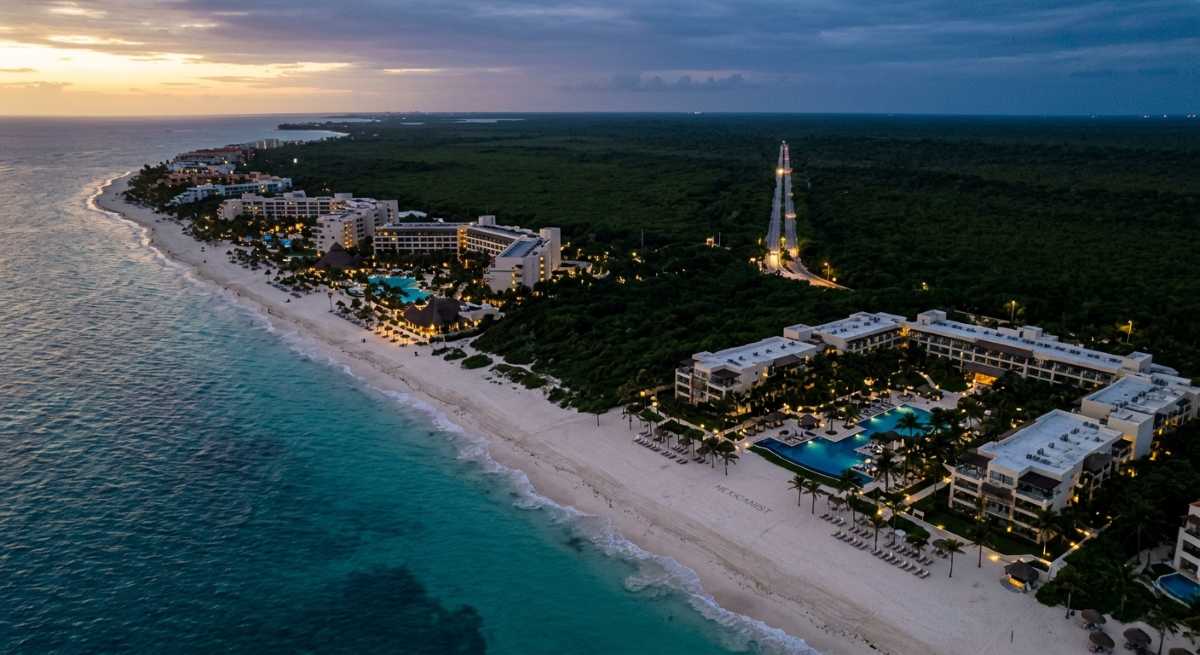
The trouble, as it so often does in paradise, started with a polite request. A couple of tourists at a Hyatt Ziva in Puerto Morelos asked the concierge if he could help them score some cocaine. Not an unusual ask, really. The Caribbean coast of Mexico has been running on tourist hedonism and look-the-other-way economics since the 1970s, when the first all-inclusive resorts began clawing their way out of the mangrove swamps south of Cancún. The concierge knew exactly who to call. That call, according to security officials who later investigated the incident, set off a chain of events that ended with Mexican marines kicking down doors and a brief, ugly firefight between rival drug dealers on the fringe of the property.
Nobody died that particular afternoon, as far as anyone could confirm. The tourists went home with sunburns and a story they probably still tell at dinner parties. But the episode, reported by the Washington Post in December 2021, peeled back a layer of the Caribbean façade that most vacationers prefer not to examine. Behind the swim-up bars and the Instagram backdrops, Quintana Roo—Mexico’s crown jewel of tourism, a state that generated more than $34.9 billion in tourism revenue for the country in 2025 alone—has spent the better part of two decades quietly transforming into one of the most strategically valuable drug trafficking corridors in the Western Hemisphere.
This is the story of how the Gulf Cartel, one of the oldest criminal organizations on the planet, sank its roots into a 130-kilometer stretch of white sand and crystal water—and why nobody, from hotel executives to government officials to the tourists themselves, can afford to talk about it honestly.
The Cartel That Built the Beach
To understand how a drug syndicate based in the dusty border city of Matamoros, Tamaulipas—directly across the Rio Grande from Brownsville, Texas—came to operate with near-impunity in some of the most expensive real estate in Latin America, you have to go back to the beginning. And the beginning, as is so often the case in Mexico, involves the United States government.
The Gulf Cartel, known in Spanish as Cártel del Golfo or simply Los Golfos, traces its origins to the bootlegging operations of Juan Nepomuceno Guerra, a smuggler who ran liquor across the Texas border during Prohibition. By the 1980s, Guerra’s nephew, Juan García Ábrego, had pivoted the family business toward cocaine, and the Gulf Cartel became one of the primary conduits for Colombian product heading north. They were good at it. Relentlessly, violently good.
The real inflection point came in the late 1990s and early 2000s under the leadership of Osiel Cárdenas Guillén, a man whose surname translates loosely to “chains”—and who lived up to it. Cárdenas did something that would reverberate through Mexican history: he recruited a group of deserters from Mexico’s elite special forces, the Grupo Aeromóvil de Fuerzas Especiales (GAFE), to serve as his personal enforcement wing. These men became Los Zetas, and they changed everything. Where traditional cartels operated through bribery, family networks, and political connections, Los Zetas introduced military-grade tactics, paramilitary organization, and a level of theatrical violence—beheadings, mass graves, public displays of corpses—that terrified even their rivals.
For a time, the Gulf Cartel and Los Zetas were the most feared partnership in the Americas. But by 2010, the alliance had fractured spectacularly. Los Zetas, having grown more powerful than their former patrons, went to war. The resulting conflict turned Tamaulipas into a charnel house and, crucially, pushed both factions to seek new territories and revenue streams beyond their traditional stronghold in northeastern Mexico. The Caribbean coast, with its airports, ports, and insatiable tourist market, was too tempting to ignore.
Cancún Is Open for Business
The Gulf Cartel’s move into Quintana Roo was not a sudden invasion. It was a slow, methodical infiltration—more like a termite colony than a military occupation. By 2013, InSight Crime reported that the Gulf Cartel had effectively driven Los Zetas out of Cancún and the broader Riviera Maya corridor, consolidating control alongside a local group called Los Pelones (“The Bald Ones”). A “narco-manta” banner hung in the city that December declared, with characteristic subtlety, that Los Pelones had formally joined forces with the Golfos.
The state attorney general at the time confirmed that only two criminal organizations remained active in Cancún and its surrounding coast: the Gulf Cartel and Los Pelones, who appeared to be working in cooperative arrangement. Quintana Roo, he noted, ranked as the 11th most violent state in Mexico. That ranking would deteriorate.
The catalyst for the federal government’s direct intervention came in February 2009, when retired Brigadier General Mauro Enrique Tello Quiñones was kidnapped, tortured, and murdered less than 24 hours after starting a new job as a special anti-drug consultant for the mayor of Benito Juárez (the municipality containing Cancún). An autopsy revealed that both his arms and legs had been broken. The audacious killing of a senior military officer drew immediate outrage from the highest levels of the Mexican government and prompted the launch of Operation Quintana Roo, a joint army-navy anti-trafficking sweep that brought masked soldiers in open trucks rumbling past gleaming resort towers.
The symbolism was hard to miss. The cartel was sending a message: We operate here. The government was sending one back: Not without a fight. The trouble was, both messages were true, and they have remained in uncomfortable coexistence ever since.
The Cobro de Piso Economy
Extortion—cobro de piso, literally “floor collection” or protection money—is the boring, unglamorous engine that keeps the cartel economy humming in the Riviera Maya. It lacks the cinematic drama of shootouts and narcosubs, but it is far more pervasive, far more corrosive, and far more difficult to eradicate because it depends on the quiet complicity of thousands of legitimate business owners who simply want to stay alive.
A 2021 report by México Evalúa, one of Mexico’s most respected public policy think tanks, documented the breathtaking scope of extortion in Quintana Roo. The report found that criminal groups had developed at least 12 distinct forms of extortion targeting everyone from street vendors in costume to owners of upscale restaurants. The more you have to lose, the more they charge. One entrepreneur interviewed by El País in 2022, speaking on condition of anonymity, summed it up:“They control everything. Drugs, alcohol, prostitution, massage parlors... and they have threatened everyone.”After holding out for several months, he finally agreed to pay the mafia 25,000 pesos (roughly $1,400) per week.
The construction sector has become a particular target. An investigation by Aristegui Noticias, in alliance with Connectas, revealed that everyone from engineers to plumbers to painters was being systematically extorted during the construction of Cancún’s hotels. When workers or their employers refused to pay, they were tortured, disappeared, or killed. The State Attorney General’s Office acknowledged 18 investigation files related to construction industry workers, including nine cases of missing workers—eight in Isla Blanca and one at a resort construction project. In April 2025, a former construction worker named Jesús Salvador was arrested for attempting to extort 50,000 pesos per week from an under-construction Riviera Maya hotel after resigning from the project.
InSight Crime’s analysis described a chilling normalization: extortion had become a “fixed business cost” for restaurants in Quintana Roo, as routine as paying the electric bill. In 2017, only 49 extortion cases were officially reported in the state out of 3,925 nationwide—a figure that tells you less about the actual rate of extortion than about the near-total silence of its victims. Quintana Roo’s attorney general admitted that for every 100 cases, only three or four are formally reported.
The math is devastating in its simplicity. If cartels can extract regular payments from thousands of businesses across the Riviera Maya—from beachside taco stands to five-star hotel kitchens—they don’t even need to traffic drugs. The tourist economy itself becomes a self-sustaining revenue machine. And every business owner who pays becomes, willingly or not, an invested participant in the cartel’s continued dominance.
Cocaine by the Cocktail
The drug trade in the Riviera Maya is not a one-way street where cartels push product on unwilling tourists. There is, as the Washington Post’s Kevin Sieff reported in 2021, a substantial demand-side component. Tourists ask. Hotel staff oblige. The concierge, the bartender, the pool boy, the security guard—anyone with a uniform and a contact becomes a node in an informal distribution network that is as old as the resorts themselves.
The Quintana Roo corridor is also a major transit point for cocaine moving from South America toward the United States and Europe. In July 2024, Mexican authorities seized 390 kilograms of cocaine after a private Hawker 700 jet made an emergency landing on the Carrillo-Mérida highway connecting Quintana Roo with Yucatán. The crew set the plane ablaze before fleeing. The next day, another 210 kilograms were found abandoned in an SUV near the town of José María Morelos. These were not isolated incidents. The Caribbean route for cocaine trafficking has experienced a pronounced resurgence, driven in part by stepped-up interdiction on Pacific maritime routes.
Cancún International Airport, the second busiest in Mexico, serves a dual function in this ecosystem. It is the primary gateway for the millions of tourists who fuel the local drug market, and it is a smuggling hub in its own right. Passengers are regularly detained attempting to transport cocaine in false-bottomed suitcases or hidden luggage compartments. In one notable case, a Los Angeles real estate agent was found carrying 164 pounds of cocaine in his luggage. The DEA’s 2024 National Drug Threat Assessment identified the CJNG and Sinaloa Cartel as the dominant operators in Quintana Roo, but the Gulf Cartel maintains a significant presence through its partnerships with local groups like Los Pelones.
The result is a layered drug economy: wholesale cocaine moving through on its way to North American and European markets, overlaid with a vibrant retail market serving the tourist party scene, all operating within the physical infrastructure of Mexico’s most important tourism destination.
What’s Really in Your Drink
Here’s the part nobody wants to talk about at the resort orientation meeting. GHB—gamma-hydroxybutyric acid, a central nervous system depressant with short-term hypnotic and euphoric effects—has been a persistent, underreported presence in the Riviera Maya nightlife and resort scene for years. Known colloquially as a “date rape drug” alongside its chemical cousin GBL (gamma-butyrolactone), GHB is colorless, odorless, and nearly impossible to detect when dissolved in an alcoholic drink. Its effects include drowsiness, respiratory depression, euphoria, and at high doses, coma and death.
Reports from tourists who believe they were drugged at all-inclusive resorts have circulated for years. A TripAdvisor review from a guest at the Hard Rock Hotel Riviera Maya in Puerto Aventuras described being dangerously ill after a bartender allegedly put GHB in her drink at the pool bar. In 2017, the death of 20-year-old Abbey Conner at the Iberostar Paraiso del Mar in Playa del Carmen—pulled face-down from a resort pool alongside her brother, with a blood alcohol content three times the legal limit—focused national attention on the issue. The family’s attorney alleged the resort served “alcoholic beverages with a large quantity of poor quality alcohol,”and the case spawned a lawsuit and widespread media coverage about the safety of all-inclusive resort drinks.
In August 2024, Zara Hull, an Oklahoma State University student, and her friend Kaylie were hospitalized after consuming drinks at a Cancun resort. The incident made national news in the United States. The head of Quintana Roo’s State Attorney General’s Office, Raciel López Salazar, pushed back, stating that the investigation found “no drug dealing here in Quintana Roo with fentanyl” and classifying the incident as “simple alcohol consumption.”The case highlights a persistent dynamic: tourists report being drugged; local authorities often minimize or dismiss the claims; the truth likely falls somewhere in a gray zone where contaminated alcohol, excessive serving practices, and intentional drug spiking all coexist.
The DEA’s 2024 National Drug Threat Assessment noted that Mexican transnational criminal organizations have transformed the drug landscape through synthetic substances. While fentanyl and methamphetamine receive the lion’s share of attention, GHB remains a fixture of the club and resort scene. It is relatively easy to manufacture using precursor chemicals, and its effects make it a tool for both recreational use and predatory behavior. The fact that it so rarely appears in official crime statistics says more about the difficulty of detecting it and the reluctance of victims to report than about its actual prevalence.
Powder, Party Favors, and the Synthetics
If cocaine is the old guard’s product, the synthetic drug scene is where the Riviera Maya’s criminal future is being written. The DEA has identified a decisive shift by Mexican cartels away from plant-based drugs toward synthetics—substances that can be manufactured anywhere, at any time, with the right precursor chemicals and basic know-how. No crops to tend. No weather-dependent harvest cycles. No government eradication campaigns to dodge. Just chemistry.
In the Riviera Maya’s club scene, the synthetic drug of the moment is often referred to as “pink cocaine” or “tucibi”—a name that is itself a misnomer, because the pink powder frequently contains no cocaine at all. Instead, according to drug harm reduction organizations and academic researchers, it is typically a cocktail of MDMA (ecstasy), ketamine, 2C-B (a synthetic psychedelic), and whatever else the manufacturer decides to throw in. Its unpredictability is part of what makes it dangerous. A user in Playa del Carmen might think they’re buying a party drug, but the actual composition can vary wildly from batch to batch, with potentially lethal consequences.
2C-B, originally synthesized in the 1970s by the American chemist Alexander Shulgin, has become increasingly popular in Latin America’s elite nightlife circuits. InSight Crime reported on its rise as the “drug of choice for the Colombia elite,”and its presence has spread throughout the Caribbean coast’s tourism hubs. Ketamine, a dissociative anesthetic with well-documented abuse potential, has also become a mainstay of the party scene. Both substances are classified as controlled in most countries, but their illicit manufacture and distribution are far more difficult to track than traditional drugs.
The broader synthetic shift has strategic implications for cartel operations in Quintana Roo. If a criminal organization can manufacture MDMA, 2C-B, or GHB locally using imported precursor chemicals, it eliminates the most risky and expensive part of the supply chain—the physical transport of bulk product from South America. A small clandestine laboratory in the jungle outside Tulum can produce enough synthetic drugs to supply every nightclub on the coast, with far less exposure to interdiction than a cocaine shipment arriving by boat or plane.
Bodies on the Beach
For the most part, the cartel violence in Quintana Roo follows an unspoken compact: it happens to locals, at night, in places tourists don’t go. This compact has held, more or less, for years. But when it breaks, it breaks spectacularly—and the world pays attention.
In January 2017, gunmen opened fire at the Blue Parrot nightclub in Playa del Carmen during the BPM electronic music festival, killing five people including an Italian, two Canadians, and a Colombian. The shooting was later attributed to a dispute between rival drug dealers operating in the area. In February 2019, another bar shooting in Cancun left five dead and five wounded. In October 2021, two foreign tourists—including Anjali Ryot, a California-based travel blogger born in India—were killed at a restaurant in Tulum when they were caught in the crossfire of a gunfight between rival drug gangs. The same month, 44-year-old Los Angeles native Niko Honarbakhsh was killed at a Tulum beach club in what prosecutors described as a dispute between drug dealers. She had no connection to the dealers; she was simply standing too close.
In January 2022, the manager of Mamita’s Beach Club, one of Playa del Carmen’s trendiest venues, was found shot dead in the club’s restroom—one bullet in the leg, two in the head. A Mexican entrepreneur quoted by El País, who asked not to be named, decoded the message:“The shot in the leg was a warning: either you pay or we kill you.”A black ribbon was hung at the entrance as the only acknowledgment of what had happened. Tourists continued to drink margaritas a few meters away.
More recently, in April 2026, eleven people were formally charged in drug-related cases across Cancun, Playa del Carmen, and Tulum, with charges ranging from possession to trafficking. The same month, a shooting at a bar in Cancun left one person dead and multiple others seriously injured, with authorities suspecting cartel involvement. The US Embassy and State Department have maintained a consistent “Reconsider Travel” advisory for Quintana Roo, explicitly warning that “Crime, including violent crime, can occur anywhere in Mexico, including in popular tourist destinations.”
The Infrastructure of Denial
Perhaps the most disturbing aspect of the cartel presence in the Riviera Maya is not the violence itself but the quiet, structural integration of criminal organizations into the legitimate tourism economy. This is not a story of shadowy figures operating from jungle hideouts. It is a story of cartels embedded in the physical and economic infrastructure of the resorts themselves.
The construction industry provides the most vivid example. As documented by Aristegui Noticias and corroborated by InSight Crime, criminal groups have systematically infiltrated hotel construction projects along the Caribbean coast. They extort payments at every level—from the developers and contractors down to individual laborers. A worker who refuses to pay is threatened. One who reports is killed. The bodies of at least nine construction workers in the Isla Blanca area were the subject of active investigations by the state prosecutor’s office. The conditions, as one expert noted, made it “practically impossible for workers to have the possibility of reporting extortion and acts of torture,”especially for migrant and indigenous laborers.
Mexico’s tourism investment pipeline reached $36.7 billion in 2025, spread across roughly 700 projects in 30 states. Quintana Roo captures an outsized share of that investment. Every new resort, every condominium tower, every beach club expansion represents a new revenue opportunity for the cartels that control the ground on which they are built. The extortion fees collected during construction become the cobro de piso payments collected during operation, in an unbroken chain of criminal rent-seeking that spans the entire lifecycle of a tourism business.
The hospitality industry itself is not immune. Hotel staff—particularly those with access to guest rooms and guest information—serve as informal distribution nodes. Bartenders, security guards, and maintenance workers are recruited or coerced into providing services that range from connecting guests with drug dealers to, in the most disturbing cases, facilitating drink spiking. The relationship is often symbiotic: the staff member earns money; the cartel expands its distribution network; the tourist gets what they asked for, or in some cases, what they didn’t ask for. The resort itself, as an institution, rarely acknowledges or addresses the problem, because doing so would be catastrophically bad for business.
In February 2026, the US Treasury Department targeted a cartel-linked timeshare resort operation, noting that the FBI’s Internet Crime Complaint Center received nearly 900 complaints about timeshare fraud schemes in Mexico in 2024 alone. The blurring line between legitimate tourism business and criminal enterprise is not a metaphor. It is an operational reality.
What the Data Doesn’t Tell You
There is a counter-narrative, and it deserves its due. Mexico set a new tourism record in 2025 with 47.8 million international visitors and nearly $35 billion in revenue. The vast majority of those visitors experienced no violence whatsoever. They drank their margaritas, they posted their photos, they went home. The risk of a tourist being caught in cartel violence, statistically speaking, remains extremely low. Government officials, tourism industry representatives, and even many security analysts will tell you that the Riviera Maya is safer than many American cities, and they are not entirely wrong.
The Mexican government has taken concrete steps. The creation of a Tourist Security Battalion—1,445 National Guardsmen deployed specifically to patrol Cancun, Tulum, and the Riviera Maya—was a direct response to the violence. During peak vacation periods, up to 7,000 security personnel are deployed across the state. These measures have had measurable effects on visible crime in tourist zones, and hotel associations have called for standardized safety protocols.
But there is a profound difference between “safe for tourists” and “free of organized crime.”The two can coexist, and in Quintana Roo, they do. The cartels have no interest in killing tourists—that would destroy the golden goose. Their business model depends on the resorts staying full, the bars staying open, and the construction cranes staying busy. Violence against tourists is almost always collateral damage—a dealer dispute that spirals, an extortion target who resists too publicly—not deliberate policy. But collateral damage is still damage, and the frequency with which it occurs suggests that the cartel’s ability to control its own operatives is deteriorating.
The underreporting problem compounds the difficulty of assessing the true scale. Quintana Roo’s own prosecutor acknowledges that less than five percent of extortion cases are formally reported. Drug-related crimes against tourists are often reclassified as“alcohol-related incidents.”The statistics that do exist, as the academic journal Tourism Management noted,“rarely capture the magnitude of criminal activity embedded in tourism infrastructure.”What the data shows is bad enough. What it doesn’t show is likely worse.
The $35 Billion Question
The future of the Riviera Maya as both a tourism destination and a criminal corridor will be shaped by forces that are largely beyond the control of any single actor—not the Mexican government, not the cartels, and certainly not the tourists. Three trends bear watching.
First, the continued fragmentation of Mexico’s cartels is likely to increase, not decrease, violence in tourist zones. The Gulf Cartel, once a relatively unified organization, has split into competing factions. The CRS, in a 2024 report to Congress, noted that some analysts no longer consider it a single entity. This fragmentation means more independent operators, more disputes over territory, more opportunities for things to go wrong. The February 2026 violence that erupted after the killing of CJNG leader Nemesio Oseguera Cervantes (“El Mencho”)—which prompted flight cancellations, roadblocks, and “shelter in place” warnings for tourists in multiple cities including Cancun and Playa del Carmen—offered a preview of what happens when the fragile equilibrium between cartels shatters.
Second, the synthetic drug trade will continue its expansion. The DEA’s assessment is unambiguous: synthetic drugs have “transformed the criminal landscape” in North America. The ability to manufacture high-margin products locally, without the logistical vulnerabilities of plant-based drugs, makes the Riviera Maya’s tourism infrastructure even more valuable to criminal organizations. Every nightclub, every beach club, every hotel bar is a potential retail outlet for substances that can be made in a garage.
Third, the economic incentives are moving in the wrong direction. Mexico’s $36.7 billion tourism investment pipeline means more construction, more resorts, more nightlife venues, more money flowing through an ecosystem that cartels already control at the ground level. The bigger the tourism economy grows, the more profitable it becomes for criminal organizations to operate within it. This is not a problem that growth will solve. In many ways, growth makes it worse.
None of this means you should cancel your vacation. The Riviera Maya remains one of the most beautiful places on Earth, and the probability of anything bad happening to any individual tourist remains vanishingly small. But it does mean that the next time you order a cocktail at a swim-up bar in Cancun, you might want to keep an eye on who’s pouring it—and ask yourself what else they might be serving.
Sources
[2] Bargent, J. (2013). ‘Gulf Cartel Now in Control of Cancun.’ InSight Crime, Apr. 18.
[3] InSight Crime. (2024). ‘Gulf Cartel.’ Organized Crime Profile.
[5] Dittmar, V. (2021). ‘Criminal Groups Zero in on Mexico Resort Construction.’ InSight Crime, Apr. 8.
[6] Pérez, D.M. (2022). ‘Extortion and murder in the Riviera Maya.’ El País, Feb. 8.
[8] DEA. (2024). ‘National Drug Threat Assessment.’ U.S. Drug Enforcement Administration.
[9] InSight Crime. (2024). ‘Zetas Criminal History and Splinter Factions.’ Organized Crime Profile.
[10] CRS. (2024). ‘Mexico: Organized Crime and Drug Trafficking.’ Congressional Research Service.
[11] Wikimedia Foundation. (2026). ‘Operation Quintana Roo.’ Wikipedia.
[13] Recommend. (2026). ‘Mexico Tourism Hit All-Time High in 2025.’
[14] Mexico Business. (2026). ‘Mexico Closes 2025 With $36.7 Billion Tourism Investment.’
[15] UNWTO. (2025). ‘Tourism Doing Business: Investing in Mexico.’
[17] CBS News. (2024). ‘Oklahoma college students possibly drugged at Mexican resort.’
[18] CBS News. (2021). ‘Californian blogger among 2 tourists killed in shootout at Tulum.’
[19] AP News. (2021). ‘American woman killed in apparent crossfire in a drug dispute at Tulum.’
[21] InSight Crime. (2024). ‘How Extortion Became Fixed Business Cost for Restaurants in Quintana Roo.’
[23] InSight Crime. (2024). ‘Why Cocaine Keeps Flowing Through the Caribbean.’
[24] Baker Institute. (2024). ‘The Victimology of Extortions in Mexico.’ Rice University.
[25] New York Times. (2026). ‘What Travelers Need to Know as Cartel Violence Rattles Mexico.’