FDI Surges 43%, Poverty Plummets 18%, but GDP? Not so Much
FDI surged 43.58% year-over-year to 2.45% of GDP. That's anomaly territory. A 0.74 percentage point jump means one thing: global capital is going all-in on Mexico as North America's factory floor. The money's not trickling in—it's flooding.

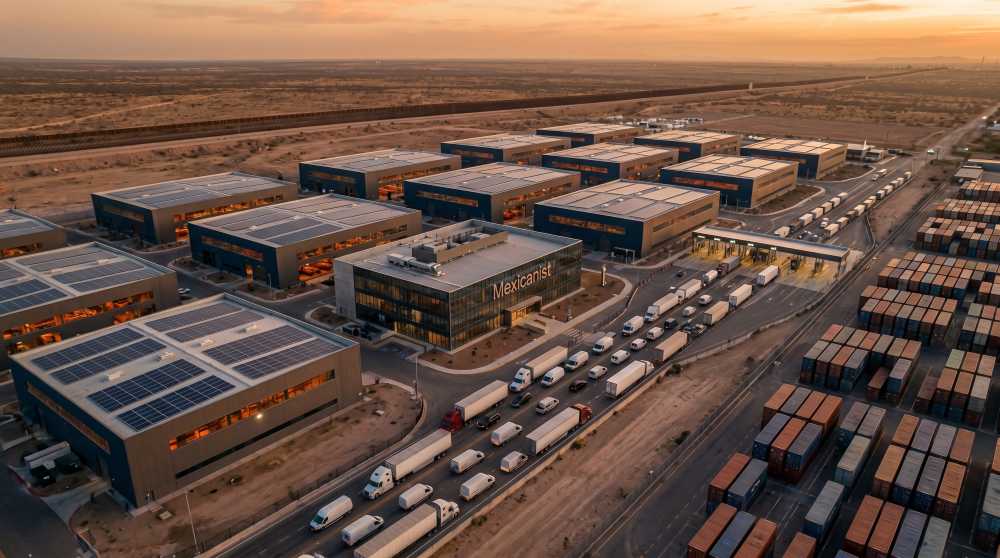
Banxico just torched its benchmark rates to the 2nd percentile at 6.76%, GDP growth collapsed 57% to a meager 1.43%, and yet foreign direct investment is flooding in at +43.58% year-over-year. Oil spiked to $109.76 per barrel — 93rd percentile territory — while inflation cratered 14.58% to 4.72%. Mexico is simultaneously slowing down, opening up, and loading up government debt to 49.57% of GDP. Either the nearshoring thesis is about to pay off spectacularly, or we're watching a high-stakes bet with increasingly thin margins for error.
📈 Key Metrics
- MXN/USD Exchange Rate: 17.19 MXN/USD (↓ -0.11% WoW)
- TIIE 28-day: 6.76 % (↓ -3.45% WoW)
- International Reserves: 256.00 USD millions (→ 0.00% WoW)
- WTI Crude Oil Price: 109.76 USD/barrel (↑ +4.16% WoW)
- Inflation Rate: 4.72 % (↓ -14.58% YoY)
- Unemployment Rate: 2.67 % (↓ -0.19% YoY)
💱 Exchange Rate
The peso just slipped to 17.19 per dollar. Down 0.11% on the week. It's sitting pretty at just the 12th percentile, meaning it's historically weak and barely above its recent floor. That's a full 0.28 pesos stronger than its moving average of 17.47, which tells you this rally has legs but isn't exactly roaring. Thank Banxico's rate moves and US dollar softness for this.
Source: Banxico
🏦 Interest Rates & Monetary Policy
The 28-day TIIE just cratered 3.45% in a single week to 6.76%. Yes, that's an anomaly flagged by the system itself. Sitting at the 2nd percentile historically, this rate has basically fallen off a cliff compared to its 7.03% moving average. Banxico is clearly in rate-cut mode. The market's pricing in even more easing faster than you can say 'inflation's cooling.'
Source: Banxico
The 91-day TIIE mirrors the 28-day, plunging 3.47% weekly to 6.79%. Also an anomaly. Also at the 2nd percentile. When the 3-month benchmark drops 0.24 percentage points in seven days and sits nearly 0.28 points below its 7.07% average, something's broken in the best possible way. Mexico's central bank is aggressively loosening the taps.
Source: Banxico
Real interest rates fell 9.15% year-over-year to 6.02%, dropping 0.61 percentage points as nominal rates came down faster than inflation. At over 6% real, Mexico is still offering some of the juiciest risk-adjusted yields in emerging markets. It's the kind of carry trade that keeps hot money flowing into Mexican bonds. Until it doesn't.
Source: World Bank
📈 Inflation
Mexican inflation collapsed 14.58% year-over-year to 4.72%. The system flagged it as an anomaly because drops this brutal are rare. We're talking nearly a full percentage point shaved off in 12 months. That's the kind of disinflation that makes central bankers pop champagne. Now the question is whether Banxico keeps cutting rates or pumps the brakes.
Source: World Bank
💼 Labor Market
Unemployment barely budged. It dropped a microscopic 0.19% year-over-year to 2.673%. Basically flat, basically tight, basically the same story for months. At this level, Mexico's labor market is tighter than your jeans after a tamale binge. There's simply no slack left in the system.
Source: World Bank
🏦 International Reserves
International reserves are parked at $256 million. Yeah, million with an M. They're sitting dead flat at zero change week-over-week. But look at the history: that's the 95th percentile. Mexico's war chest is near its all-time highs. It's the financial equivalent of a prepper's bunker—fully stocked and ready for whatever nonsense the global economy throws at it.
Source: Banxico
🛢️ Oil & Energy
WTI crude spiked 4.16% to $109.76 per barrel. It's absolutely torching its $100.03 moving average and landing at the 93rd percentile. That $4.38 weekly jump has got PEMEX sweating and AMLO's fiscal team doing mental math on fuel subsidies. Only 7% of historical observations have been higher. Oil is trading in rarefied air right now.
Source: FRED
💸 Remittances
Remittances hit $67.6 billion. Up 2.11% year-over-year. That's an extra $1.4 billion flowing from abroad into Mexican households. Not exactly a growth explosion, but steady as a heartbeat. The diaspora keeps the cash flowing like clockwork, propping up consumption from Acapulco to Zacatecas.
Source: World Bank
Despite the absolute dollar increase, remittances as a share of GDP actually dipped 1.08% to 3.64%. It just means GDP grew slightly faster than the cash coming in from abroad. Think of it as winning a race while your opponent still runs a personal best. The slice of pie shrank, even though the pie got bigger.
Source: World Bank
📦 Trade
Exports surged to $681.3 billion. A healthy 5.04% year-over-year jump adding $32.7 billion to the tally. That's the equivalent of shipping out a mid-sized country's entire GDP in goods. Mexico's manufacturing sector—autos, electronics, and everything in between—is clearly catching global demand tailwinds.
Source: World Bank
Imports climbed to $703.3 billion. Up 4.26% or $28.8 billion year-over-year, which means Mexico is still running a trade deficit. Factories need raw materials and intermediate goods before they can export finished products. This isn't necessarily bad news. That $22 billion gap between imports and exports tells you Mexico is still building out its industrial capacity.
Source: World Bank
Trade as a percentage of GDP ticked up 1.37% to 74.59%. That's just over a full percentage point year-over-year. Mexico's economy is becoming more trade-oriented, which makes sense given the nearshoring boom and USMCA dynamics. When your biggest customer is the US economy, trade intensity tends to climb regardless of what politicians do.
Source: World Bank
💰 Fiscal
Government debt climbed to 49.57% of GDP, up 10.02% year-over-year. That's a 4.51 percentage point spike flagged as an anomaly. Mexico is loading up the credit card at a pace that would make a shopaholic blush. The good news? 49.6% is still modest by global standards. The bad news? The trajectory is pointing north fast.
Source: World Bank
Foreign direct investment surged 43.58% year-over-year to 2.45% of GDP. Anomaly territory. It's the kind of number that makes nearshoring advocates say 'I told you so.' That 0.74 percentage point jump signals global capital is increasingly betting on Mexico as the factory floor of North America. Whether it's Tesla, Chinese manufacturers, or general supply chain reshuffling, the money is flooding in.
Source: World Bank
📊 Growth & Output
GDP growth got body-slammed, plunging 57.44% year-over-year to a meager 1.43%. Not the fun kind of anomaly. That's a 1.93 percentage point vanishing act that screams economic deceleration louder than a Mexico City traffic jam. Mexico's economy is still growing, but barely. Someone might want to check if the nearshoring euphoria got ahead of itself.
Source: World Bank
While GDP growth tanked, GDP in dollar terms actually climbed 3.23% to $1.856 trillion. That's adding $58 billion in a year. Thank the relatively strong peso and dollar dynamics for making Mexico's economy look beefier on paper. It's the kind of math that makes politicians look great at international summits.
Source: World Bank
🏠 Social Indicators
The poverty rate plummeted 18.46% year-over-year to 29.6%. An anomaly-flagged drop of 6.7 percentage points that's nothing short of stunning. We're talking millions of Mexicans climbing out of poverty in a single year. The kind of structural shift that defines presidencies. Whether it's remittances, job creation, or social programs, something is finally working for the bottom quintile.
Source: World Bank
The GINI coefficient dipped 2.07% to 42.6. Down 0.9 points year-over-year. Small moves in inequality math, but directionally encouraging. Mexico is still nowhere near Scandinavian equality, but at least the gap is narrowing slightly rather than widening. Combine this with the poverty drop, and you've got a rare feel-good inequality story.
Source: World Bank
🔗 The Big Picture
Banxico is in full-blown easing mode, and the data explains why. Both the 28-day and 91-day TIIE plunged over 3.4% in a single week, landing at just the 2nd percentile historically — anomaly territory. The trigger? Inflation collapsed 14.58% year-over-year to 4.72%, giving the central bank cover to cut aggressively. But here's the catch: GDP growth cratered 57% to 1.43% in the same period. Banxico isn't just managing price stability — it's firefighting a deceleration that threatens to undermine the nearshoring euphoria before it materializes. Real interest rates still sit at 6.02%, among the juiciest in emerging markets, which keeps the carry trade alive but signals just how much risk premium investors demand for holding Mexican paper.
The trade and investment numbers tell a more optimistic story, and this is where it gets interesting. FDI surged 43.58% to 2.45% of GDP — an anomaly that suggests global capital isn't just dipping its toes in Mexico, it's diving in headfirst. Exports climbed 5.04% to $681.3 billion, and trade as a share of GDP ticked up to 74.59%. The $22 billion trade deficit (imports at $703.3 billion versus exports) isn't a red flag — it's a sign that factories are stocking up on raw materials and intermediate goods to build out capacity. This is what a supply chain reshuffle looks like in real-time: the USMCA conveyor belt is running hot.
But the fiscal picture is where things get complicated. Oil at $109.76 per barrel — up 4.16% in a week and sitting at the 93rd percentile — is a double-edged sword. PEMEX revenues should benefit, but fuel subsidy costs are likely eating into those gains and then some. Government debt climbed 10% to 49.57% of GDP, an anomaly-flagged spike that suggests the administration is spending aggressively even as growth slows. Whether by design or coincidence, that spending aligns with a stunning 18.46% drop in the poverty rate to 29.6% and a narrowing Gini coefficient at 42.6. Millions of Mexicans climbed out of poverty in a single year. That's the kind of structural shift that defines presidencies — and budgets.
Mexico's financial armor is stacked, which buys time. International reserves sit at the 95th percentile, a fully stocked bunker ready for whatever the global economy throws at it. The peso at 17.19 per dollar is 0.28 pesos stronger than its moving average but historically weak at the 12th percentile — a sweet spot for exports. Remittances hit $67.6 billion, up 2.11%, providing a steady consumption floor even as growth sputters. With the US dollar softening globally and the Federal Reserve's own easing cycle underway, Mexico's 6% real yield remains magnetic for hot money. But here's the bet: if that capital ever reverses, the peso's 12th percentile position means there's far more room to fall than to rise. The margin for error is thinner than the TIIE's 2nd percentile ranking suggests.
⚠️ Notable Moves
- TIIE 28-day: 6.76 — TIIE 28-day is significantly below its 2.8σ historical average.
- TIIE 91-day: 6.79 — TIIE 91-day is significantly below its 2.8σ historical average.
👀 What to Watch
Banxico's next move is the one to watch — with TIIE already at the 2nd percentile and real rates at 6.02%, they're either prescient or premature on this easing cycle. Oil above $109 either juices PEMEX revenues or blows up the subsidy bill; there's no middle ground at the 93rd percentile. And if Q3 FDI doesn't convert that 43.58% surge into actual factories and jobs, the 1.43% GDP growth number starts looking like a ceiling, not a floor.
Data sources: INEGI, Banco de México, FRED, World Bank. All data as of 2026-05-11.
This newsletter was auto-generated from public data sources. Human-reviewed before sending.