Occam’s Razor and the Limits of Rationalism in Criminal Investigation
At least 4% of death sentences, and potentially 6% of all prison sentences, are wrongfully imposed. The data suggests this is not a series of unfortunate anomalies but a systemic pattern of reaching for the simplest story and stopping there.

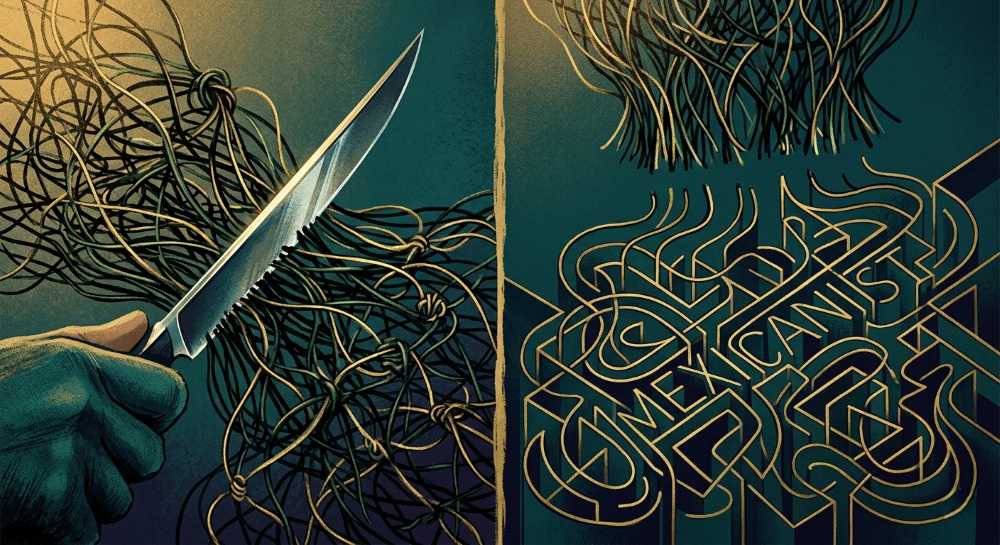
William of Ockham never actually said“the simplest explanation is usually correct.”Shocking, right? The 14th-century Franciscan friar was making a far more nuanced point—that among competing hypotheses, the one requiring the fewest assumptions is preferable as a starting point. Somewhere between a medieval monastery and a modern crime lab, a useful heuristic got promoted to gospel. And in criminal investigation, that promotion has cost people their freedom, their families, and in some cases, their lives.
Let’s be real: we’re wired for simplicity. Cognitive psychologists have demonstrated this for decades—the human brain is a prediction machine that rewards efficiency. When a detective walks into a crime scene, the mind immediately begins pattern-matching, sorting observations into the nearest available narrative bucket. A woman found dead in her home? The husband did it. A child vanishes from a quiet street? A predator from the neighborhood. Multiple infants die in the same family? The mother must be killing them. These aren’t irrational leaps—they’re, in a sense, profoundly rational. They follow the path of least cognitive resistance. The problem? Reality doesn’t play by those rules.
Occam’s Razor, properly understood, isn’t a law of nature. It’s a tool for prioritizing hypotheses, not for settling them. In the laboratory, where variables can be controlled and experiments repeated, parsimony serves science well. But criminal investigation? It’s not a controlled experiment. It’s a messy, human, emotionally charged process operating under extreme time pressure, political scrutiny, and the ever-present weight of a grieving public demanding answers. Under those conditions,“start with the simplest explanation”rapidly degrades into“stop at the simplest explanation.”That’s not a philosophical error. It’s a system failure.
The Sally Clark Case
November 1999. Sally Clark, a 35-year-old British solicitor, gets slapped with a murder rap for the deaths of her two infant sons. First kid, Christopher, dies suddenly at 11 weeks in 1996. Second one, Harry, at 8 weeks in 1998. Docs initially called it SIDS—Sudden Infant Death Syndrome—a heartbreaking but legit medical phenomenon. But prosecutors smelled a rat and had a magic number to prove it.
Enter Professor Sir Roy Meadow, a hotshot pediatrician who drops a bombshell on the jury: The odds of two SIDS deaths in one affluent family? One in 73 million. He squared the individual SIDS risk rate of about 1 in 8,543—treating each death like they were totally separate statistical events. The jury hears this astronomical number and convicts faster than you can say“guilty.”Clark gets life. The British press, sensing a monster, tears her apart.
The math was a complete disaster. The Royal Statistical Society comes out in 2001 and slams the calculation, pointing out Meadow committed what stat geeks call the“prosecutor’s fallacy”—mixing up the probability of evidence given innocence with the probability of innocence given the evidence. Plus, assuming those two deaths were independent? Scientifically laughable. Professor Ray Hill of Salford University does the real math in 2004 and shows that after one cot death, the odds of a second jump by a factor of 5 to 10 because of shared genetic and environmental risk factors. The real odds? Closer to 1 in 200, not 1 in 73 million. Still rare, but a far cry from impossible.
Clark’s conviction gets tossed on appeal in January 2003, after she’s already done more than three years hard time. She never bounces back. Dies in 2007 at 42 from acute alcohol intoxication. The coroner calls it a narrative verdict. The bottom line? The simplest explanation—that this mom killed her babies because two unexplained infant deaths in one family seemed“too unlikely”to be natural—wasn’t just wrong. It was a statistical illusion that wrecked a human life.
The Central Park Five
April 19, 1989. Night falls on the Big Apple, and 28-year-old investment banker Trisha Meili goes for a jog through Central Park. She gets attacked, beaten within an inch of her life, and left for dead. The city was already on edge, crime stats climbing like a thermometer in July, and this sent New Yorkers into full panic mode.
Within 48 hours, cops collar five Black and Latino teenagers—Antron McCray, Kevin Richardson, Yusef Salaam, Raymond Santana, and Korey Wise, all between 14 and 16 years old. After marathon grilling sessions—some lasting 30 hours straight, without parents or lawyers present—four of the five cough up confessions on video. Case closed. The story line was too perfect: a pack of wild animals attacking a woman in the park. New York could exhale.
But those confessions contradicted each other on every single important detail. Where the attack went down, what order things happened, which weapons were used, how many guys were involved. And the DNA found on the victim? Didn’t match any of these five kids. The red flags were waving, but nobody wanted to see them. Why? Because the simple story—teenage thugs, mob violence, a city under siege—fit exactly what investigators, prosecutors, media, and everyday New Yorkers already believed about crime in late-80s NYC. The truth—that some other dude acted alone, and these confessions were bogus—would’ve meant admitting everyone had it wrong from the start. Too uncomfortable for the powers that be.
Then comes 2002. Matias Reyes, a serial rapist and murderer already doing 33 to life, steps up and cops to the Central Park attack. His DNA? Perfect match. The DA’s office drops the charges like a hot potato. These five guys? They’d collectively spent roughly 40 years behind bars for a crime they didn’t commit. The“simplest explanation”had been wrong from the first night, and 13 years of their lives were the price of that mistake.
The West Memphis Three
In May 1993, the bodies of three eight-year-old boys—Stevie Branch, Michael Moore, and Christopher Byers—turned up dead in a West Memphis, Arkansas drainage ditch. Brutally murdered. The town freaked. Cops needed a perp, pronto. Enter Damien Echols, an 18-year-old metalhead who dressed in black, worshipped at the altar of heavy metal, and even called himself“Damien”after the demon kid from“The Omen.”To the investigators, he practically had SATAN tattooed on his forehead. His buddies Jason Baldwin, 16, and Jessie Misskelley, 17, got dragged into the circus with him.
Misskelley, who clocked in with an IQ of 72 and was basically a kid in a grown-up’s body, got interrogated for 12 straight hours—no lawyer, no mom, no nothing. He caved and gave a confession so full of holes you could use it as a colander. Wrong time, wrong cause of death, wrong body dumpsite. But hey, it was a confession, and under the spell of Occam’s Razor as a cultural reflex rather than actual logic, that was good enough for the jury. The simplest story: three weirdo teens in a small Southern town, obsessed with the occult, killed three kids in some sick ritual. All it required was one teensy assumption—that teenagers who look different are dangerous.
The“impossible”truth, as decades of later investigation would reveal, was way messier. The forensics didn’t match the prosecution’s fairy tale. Zero signs of ritual activity at the crime scene. The wounds on those boys? More like animal predation after death, not satanic torture before it. Expert after expert would later shred the prosecution’s forensic claims to pieces. Echols got the needle. Baldwin and Misskelley got life. After 18 years, new DNA evidence and a army of wrongful-conviction advocates finally got them out via an Alford plea in 2011—a legal loophole letting them claim innocence while admitting prosecutors had enough to convict. They walked, but Arkansas never said oops.
Steven Avery
If there’s a case that makes you want to throw Occam’s Razor right out the window, it’s Steven Avery’s. In 1985, Avery, a 23-year-old from Manitowoc County, Wisconsin, got nailed for sexual assault and attempted murder based mainly on some eyewitness ID. Victim picked him out of a lineup. Looked like the guy. Case closed, right? Wrong. He did 18 years before DNA proved the real perp was a man named Gregory Allen—a suspect another agency had flagged but local investigators apparently never bothered to chase.
Avery walked in 2003. Then he filed a $36 million civil suit against Manitowoc County. And what do you know? In 2005, while that lawsuit was still hanging out in legal limbo, he got busted for killing photographer Teresa Halbach. The evidence looked like a slam dunk: Halbach’s ride turned up on the Avery family salvage yard. Avery’s blood was inside. The car key? Found in his bedroom. His 16-year-old nephew Brendan Dassey confessed to helping with the deed. The simplest story? Steven Avery, already proven to have violent tendencies, did it again.
But the“impossible”details kept clawing their way out of the grave. The Manitowoc County Sheriff’s Department—guys who should’ve been banned from the case because of the pending civil suit—magically“found”the key evidence. Oh, and Avery’s blood vial from the original case had a puncture wound in its stopper. Dassey’s confession, experts later analyzed, bore every hallmark of being squeezed out of a cognitively impaired juvenile: no lawyer, no parent, leading questions, and details that shifted to match whatever the interrogators wanted. A federal magistrate judge later found Dassey’s confession was coerced. Too bad some appeals court disagreed. As of 2026, both men are still rotting behind bars. The simplest explanation? Might just be the wrong one—again.
The Sally Clark case? That’s just the tip of the prosecutorial iceberg. It exposes a dirty little secret in the law: the prosecutor’s fallacy. Yeah, it sounds fancy, but it’s basically statistical malpractice. We’re talking about mixing up two totally different probabilities—how likely the evidence is if the defendant is innocent versus how likely the defendant is innocent given the evidence. Subtle difference? Try night and day.
Take DNA evidence. Some lab coat stands up and says the odds of a random match are 1 in a million. Then the prosecutor turns to the jury with that“case closed”look:“There’s only a one-in-a-million chance this guy’s innocent.”Sound familiar? It’s the oldest trick in the book. But in a city of 10 million? You’re looking at about 10 people who would match that profile. The real question isn’t about the match—it’s about whether this guy is the actual source, and that depends on everything else in the case, not just some flashy statistic.
A 2020 study in the Vanderbilt Journal of Entertainment and Technology Law nailed four statistical screw-ups that plague DNA testimony: making up stats without proof, twisting what match probability means, screwing up the reference class, and ignoring lab error rates. Each one has sent innocent people to prison. Why? Because juries hear“one in a million”and think“case closed.”No nuance needed. Just guilty.
How Good Investigators Go Wrong
The nastiest side effect of Occam’s Razor in criminal investigations? It doesn’t just give you wrong answers—it makes those wrong answers feel inevitable. Once cops zero in on a suspect, it’s like they put on blinders. Suddenly, everything that points away from their theory disappears. Psychologists call this“tunnel vision,”and let me tell you, it’s public enemy number one in our justice system.
A 2022 study in SAGE Open looked at tunnel vision and confirmation bias among cops and regular folks. Here’s the kicker: once investigators decided someone was guilty, they only saw evidence that backed them up and ignored everything else. And the experienced investigators? In some ways, they were worse than amateurs. Why? Because their professional confidence made them think they couldn’t be wrong.
The Public Prosecution Service of Canada, in its official training materials, lists the usual suspects: confirmation bias (looking for proof you’re right), belief perseverance (clinging to a theory even after it’s been debunked), hindsight bias (“I knew it all along”), and anchoring (over-valuing the first piece of info you get). Now throw in the pressure cooker of real police work—closing cases, satisfying victims’families, dealing with the media, and an adversarial system that rewards certainty over truth. It’s a perfect storm for tunnel vision. And when that happens, innocent people get crushed.
The National Registry of Exonerations—run by UC Irvine, Michigan Law, and Michigan State—has the real scoop on wrongful convictions in this country. As of their 2024 annual report, they’ve documented over 3,600 exonerations since 1989. In 2024 alone, 147 people got out after losing an average of 13.5 years of their lives to a prison system that got it wrong. In 2025, the Registry recorded 97 exonerations, with 32% classified as“no-crime”cases—meaning no crime even happened in the first place.
The leading causes of these wrongful convictions? They read like a hall of shame for Occam’s Razor failures: perjury or false accusation, official misconduct, mistaken eyewitness IDs, false confessions, and misleading forensic evidence. The Innocence Project drops the bombshell: nearly 30% of DNA exonerations involve false confessions. Sounds impossible until you see how these interrogations work, especially on kids, the intellectually disabled, and the mentally ill.
Back in 2014, the National Academy of Sciences estimated that about 4.1% of death row inmates are actually innocent. If that rate holds for non-capital cases—and there’s no reason to think it’s better, since death penalty cases get way more scrutiny—then we could be talking tens of thousands of wrongful convictions nationwide. Then the American Statistical Association dropped a 2024 analysis using different math: roughly 6% of the 1.2 million people in state prisons might be innocent. That’s about 72,000 innocent people sitting in cells right now. Chew on that.
The Nurse Who Wasn’t a Killer
Over in the Netherlands, the case of Lucia de Berk stands like a neon sign flashing“PROSECUTOR’S FALLACY”across the continent of Europe. This pediatric nurse got nabbed in 2001 after some hotshot prosecutor cooked up a statistical analysis claiming she was present at way too many deaths at her hospital. Get this—a prosecution expert calculated the odds of this clustering occurring by chance at 1 in 342 million. Sound familiar? It should—it’s the same kind of voodoo math that put Sally Clark behind bars. And just like that case, this number was later exposed as complete garbage.
De Berk got convicted in 2003 of seven murders and three attempted murders, and the Dutch press had a field day, calling her the worst serial killer in Dutch history. But when real statisticians looked at the case, they found multiple fatal flaws in the prosecution’s calculations. The data was cherry-picked like it was going out of style, the definition of an“incident”was twisted to include obvious natural deaths, and the statistical model treated every shift as an independent trial—ignoring that nurses don’t get randomly assigned to patients, and experienced nurses always get the sickest cases.
In 2010, after a full-court press by statisticians, scientists, and journalists, de Berk walked free. A proper reanalysis showed that the clustering of deaths during her shifts was totally consistent with chance. The simplest explanation—that a nurse present at many deaths must be causing them—had mistaken correlation for causation, and a woman spent six years in prison for murders that never happened.
The history of criminal investigation is littered with cases where the“impossible”explanation turned out to be the correct one—reality was stranger, more complex, or just plain more disturbing than the narrative Occam’s Razor would have carved. Take the Cleveland Strangler case. Anthony Sowell murdered 11 women and buried their remains in and around his home, and nobody noticed for years because cops dismissed reports of a foul smell as coming from a sausage shop next door. The simplest explanation for the stench? The sausage factory. The impossible explanation? A house full of rotting corpses. Guess which one was right.
Then there’s Dennis Rader, the BTK Killer. Investigators spent decades hunting for a criminal mastermind. The reality? A church-going municipal compliance officer who murdered 10 people over 17 years, then just stopped and blended into suburban life. The FBI profile they built—loner, socially inept, unable to hold a job—was wrong on nearly every count. Rader was married, employed, active in his church, and even a Cub Scout leader. The simplest profile didn’t match the killer because serial predators don’t fit neat little boxes.
And let’s not forget the Golden State Killer, Joseph James DeAngelo. This guy evaded capture for over 40 years despite being one of the most prolific serial offenders in American history. For decades, investigators thought the East Area Rapist, the Original Night Stalker, and the Visalia Ransacker were completely different people. It wasn’t until forensic genealogists linked the DNA across these supposedly separate crime sprees that the“impossible”truth emerged: one man had committed at least 13 murders, 51 rapes, and over 100 burglaries across California. The simplest explanation—that these were different criminals operating independently—was dead wrong. The complex, sprawling, seemingly impossible explanation was the truth all along.
The Neuroscience of Getting It Wrong
So why does Occam’s Razor fail so spectacularly in criminal investigations? Modern neuroscience has the answer: our brains don’t work the way we think they do. The prefrontal cortex, which handles executive decision-making and analytical reasoning, gets easily overridden by the amygdala’s threat-detection system. Under stress—and what murder investigation isn’t stressful?—the brain defaults to heuristic processing: fast, efficient, and systematically biased toward the first plausible explanation it encounters.
A study published in PMC in 2025 on combating confirmation bias in criminal investigations shows this isn’t just individual cognitive failure—it’s a cascading, systemic phenomenon. Once an investigator commits to a theory, everything gets filtered through that lens. Witnesses get asked leading questions. Forensic analysts receive irrelevant information that influences their conclusions. Prosecutors build narratives around their strongest evidence while burying exculpatory material. Defense attorneys, overwhelmed and under-resourced, fail to challenge the assumptions. And juries, presented with a tidy story, convict.
The solution, researchers say, isn’t to ditch Occam’s Razor but to supplement it with structured analytical techniques that force investigators to consider alternative hypotheses systematically. Think Analysis of Competing Hypotheses, red-team exercises, and mandatory devil’s-advocate reviews at key decision points. Some jurisdictions have started implementing these reforms. Most haven’t. Why? Because the criminal justice system moves slower than molasses, and everyone loves a simple story too much to give it up.
Occam’s Razor isn’t the enemy of justice. When used properly—as a starting point, not a stopping point—it’s a valuable tool for organizing investigative priorities and allocating limited resources. The danger comes when it transforms from a heuristic into a dogma, when the preference for simplicity becomes a demand for it, and when the failure to imagine complex, unlikely, or disturbing explanations becomes standard operating procedure.
The cases we’ve explored—Sally Clark, the Central Park Five, the West Memphis Three, Steven Avery, Lucia de Berk—they all share the same anatomy. In each case, investigators, prosecutors, and juries grabbed the simplest narrative they could find. In each case, that narrative was wrong. And in each case, the truth was more complex, more uncomfortable, and in some ways more“impossible”than the fiction that replaced it. The data from the National Registry of Exonerations suggests this isn’t just a string of bad luck—it’s a systemic pattern: at least 4% of death sentences, and potentially 6% of all prison sentences, are wrongfully imposed.
If our criminal justice system is going to live up to its name, it needs to learn to tolerate uncertainty, resist the seduction of the simple story, and treat the“impossible”not as a logical impossibility but as an invitation to dig deeper. William of Ockham would have approved. After all, he never said the simplest explanation was correct—only that it was a good place to begin. The tragedy is how often we forget to go any further.
Sources
National Registry of Exonerations, 2024 Annual Report. exonerationregistry.org.
National Registry of Exonerations, 2025 Annual Report. exonerationregistry.org.
Innocence Project,“Inadequate Defense.”innocenceproject.org.
Innocence Project,“Timothy Cole.”innocenceproject.org.
Wikipedia,“Sally Clark.”en.wikipedia.org/wiki/Sally_Clark.
Hill, R.“Sudden Infant Death Syndrome and the Prosecutor’s Fallacy.”Paediatric and Perinatal Epidemiology, 2004.
Royal Statistical Society, Statement on the Sally Clark Case, 2001. rss.org.uk.
Nature,“Sally Clark was cleared of murder in 2003 after statistical evidence was discredited.”nature.com.
UnHerd,“The danger of convicting with statistics,”2024. unherd.com.
Forensic Statistics,“Misuse of Statistics in the Courtroom: The Sally Clark Case.”forensicstats.org.
Wikipedia,“Central Park jogger case.”en.wikipedia.org/wiki/Central_Park_jogger_case.
Britannica,“Central Park Five.”britannica.com.
Innocence Project,“West Memphis Three: What You Should Know.”innocenceproject.org.
Death Penalty Information Center,“How Preconceptions and Bias May Have Led to Wrongful Convictions of West Memphis Three.”deathpenaltyinfo.org.
Wikipedia,“Steven Avery.”en.wikipedia.org/wiki/Steven_Avery.
All That’s Interesting,“Brendan Dassey, The Teen Convicted of Killing Teresa Halbach.”allthatsinteresting.com.
Cornell University,“Making a Murderer: Confessions.”courses2.cit.cornell.edu.
Mason Investigative,“Occam’s Razor Meets Criminal Defense,”2025. masoninvestigations.com.
NIJ/OJP,“Case Deconstruction of Criminal Investigative Failures.”nij.ojp.gov.
SAGE Open,“Tunnel Vision and Confirmation Bias Among Police Investigators,”2022. journals.sagepub.com.
PMC,“What Happened and What Proves You Wrong? Combatting Confirmation Bias,”2025. pmc.ncbi.nlm.nih.gov.
Springer,“Cognitive Biases in Criminal Case Evaluation: A Review,”2021. link.springer.com.
PPSC Canada,“Understanding Tunnel Vision,”Chapter 2. ppsc-sppc.gc.ca.
Vanderbilt Journal of Entertainment and Technology Law,“Solving DNA Forensic Science Statistical Fallacies in Trial Testimony,”2020.
AAAS,“The Origin and Popular Use of Occam’s Razor.”aaas.org.
The Atlantic,“Occam’s Razor Has Distorted the History of Science,”2016. theatlantic.com.
OpenMind Magazine,“Cutting Down Ockham’s Razor,”2022. openmindmag.org.
PMC,“Razor Sharp: The Role of Occam’s Razor in Science,”2023. pmc.ncbi.nlm.nih.gov.
Springer,“Reconsidering Racial and Ethnic Bias in Wrongful Convictions,”2025. link.springer.com.
MSU Today,“MSU Professor’s Report Reveals Nearly 150 Exonerations in 2024,”2025. msutoday.msu.edu.
ACLU,“Let an Innocent Man Spend His Last Days at Home,”2014. aclu.org.