Playa del Carmen Is Betting Its Entire Budget on Airbnb and The Math Is Terrifying
Playa del Carmen's finance secretary just admitted that vacation rental taxes are the key to the city's 2026 budget. When nearly half your revenue comes from Airbnb, you don't have a tourism strategy — you have a platform dependency.

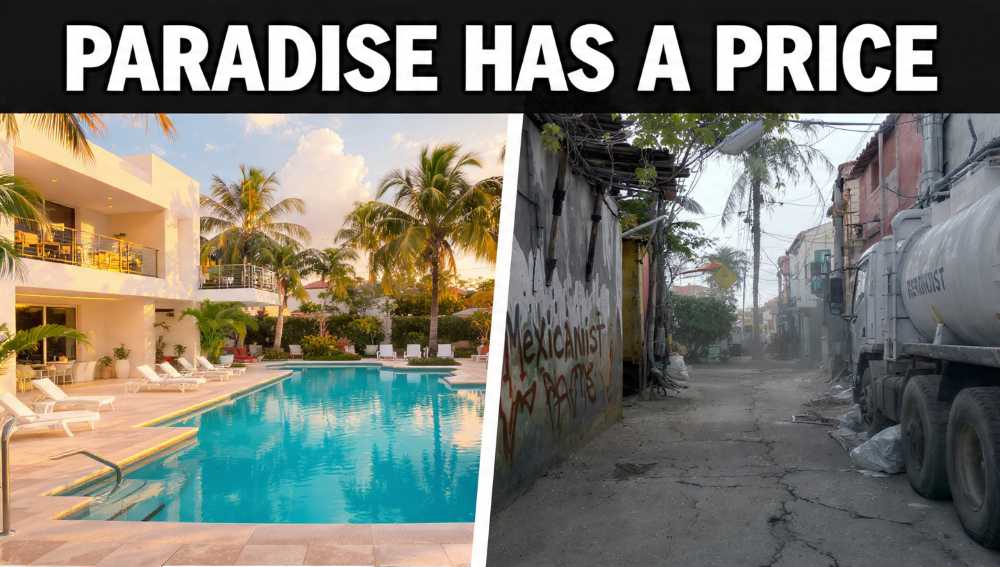
Forty-five percent of Playa del Carmen's municipal revenue now comes from vacation rental taxes. The finance secretary just admitted it publicly. If the platform economy sneezes, an entire city government catches a cold.
Stop for a second and think about what it means when a city of 300,000 people — one of the fastest-growing in Mexico, the gateway to the Riviera Maya, the second-most important tourism economy on the Caribbean coast — tells you that nearly half its budget depends on Airbnb, VRBO, and Booking.com.
Because that's what Javier Regalado Hendricks, Playa del Carmen's municipal finance secretary, just said. In a public statement that should have made headlines across Mexico and didn't, Regalado confirmed that vacation rental income has become "the key piece" — his words — for shoring up the municipality's finances for fiscal year 2026.
This isn't a footnote in a budget report. This is a city government that has structurally dependent itself on a platform economy that it doesn't control, can't predict, and can't replace if the numbers go south.
The Scale of the Vacation Rental Economy
Playa del Carmen's vacation rental market has exploded. In a city that was a sleepy fishing village 30 years ago, there are now thousands of active short-term rental listings across Airbnb, VRBO, Booking.com, and smaller platforms. The growth has been driven by three factors:
1. The foreign investor wave. Americans, Canadians, and Europeans have been buying condos in Playa del Carmen as investment properties for two decades. The rental income — primarily through Airbnb — is what makes the math work. Buy a $150,000 condo, rent it for $100-200/night for 200 nights a year, and you've got a cash-flowing asset in a tropical paradise. At least on paper.
2. The remote work revolution. Playa del Carmen became one of Latin America's premier digital nomad destinations during and after the pandemic. The coworking spaces, the fiber optic internet, the time zone alignment with the US East Coast — it all made long-term Airbnb stays (1-3 months) a massive revenue category.
3. The hotel alternative. For groups, families, and travelers who want kitchen access, more space, or a "local" experience, vacation rentals have been eating into the all-inclusive hotel model that dominates the Riviera Maya. The major hotel chains have responded by launching their own rental-style offerings, but the platform economics still favor individual property owners.
Why Dependence on Platform Taxes Is Dangerous
Here's the problem with building a municipal budget on vacation rental tax revenue: you don't control the platform.
Airbnb changes its algorithm — and your occupancy drops 15%. Booking.com adjusts its commission structure — and owners delist, reducing the taxable base. The Mexican federal government imposes new regulations on short-term rentals — and the supply shrinks overnight. A pandemic hits — and the entire market collapses for 18 months.
All of these things have happened in the past five years. And Playa del Carmen's response has been to deepen its dependence rather than diversify.
The municipal government is currently expanding its tax collection apparatus for vacation rentals. Regalado announced that the Cabildo has approved measures to improve fiscal collection from the sector. In plain language: they're getting better at taxing Airbnb — which means they're getting more dependent on it.
The deeper issue is what this revenue dependence reveals about Playa del Carmen's priorities. A city that derives nearly half its budget from vacation rentals is, by definition, a city that prioritizes the needs of tourists and property investors over the needs of permanent residents.
Consider what Playa del Carmen's permanent residents actually face:
- Water infrastructure — The federal government just signed a 200-million-peso agreement with Conagua to improve water access. That this is necessary in 2026, in a city that generates billions in tourism revenue, tells you everything about historical underinvestment.
- Healthcare — Cruz Roja (Red Cross) in Playa del Carmen and Tulum has fewer than 40 active medical professionals covering half a million people. The organization's director has called the situation "critical" and launched an emergency fundraising campaign targeting the private sector.
- Housing — The SUUT real estate scandal — where 50+ families allege they lost their properties through fraudulent transfers — is partly a consequence of a market that prioritizes investor-grade condo development over affordable housing for residents.
- Security — The recent 8-raid security operation across Benito Juárez, Bacalar, José María Morelos, and Cozumel — netting drugs, weapons, tactical equipment, and surveillance cameras — is a reminder that cartel activity remains a persistent challenge in the region.
These are the problems that municipal revenue is supposed to solve. And the revenue is increasingly coming from an industry that contributes to some of these problems — particularly housing costs and infrastructure strain.
Playa del Carmen Municipal Finance 2026
- ~45% — Estimated share of municipal revenue from vacation rental taxes
- $200M MXN — Federal investment (Conagua agreement) for water infrastructure
- 35 — Current Zofemat workers for sargazo cleanup in Tulum (15-20 more being hired)
- ~40 — Active Red Cross medical professionals for Playa del Carmen + Tulum (~500K population)
- 50+ — Families allegedly defrauded in the SUUT real estate development
Sources: 24 Horas Quintana Roo, La Jornada Maya, DQR — April 16-19, 2026
Playa del Carmen isn't unique in this dynamic. Cities across Mexico — from Mexico City to San Miguel de Allende to Oaxaca — are grappling with the economic transformation that vacation rental platforms have brought. The benefits are real: more tourist spending, more construction jobs, more tax revenue. The costs are equally real: housing displacement, neighborhood transformation, infrastructure strain, and now — as Playa del Carmen demonstrates — fiscal dependence on platforms that answer to shareholders in San Francisco, not voters in Quintana Roo.
The solution isn't to ban vacation rentals — that's both impractical and economically counterproductive. The solution is diversification. A city that depends on one revenue source for nearly half its budget is a city one algorithm change away from a fiscal crisis.
Playa del Carmen needs to use the vacation rental windfall to build the infrastructure that attracts permanent residents, high-value businesses, and diversified economic activity. Use the Airbnb tax to fix the water system. Use the platform revenue to fund healthcare. Use the tourism dollars to build a city that works for the people who actually live there — not just the people who visit for a week and leave a five-star review.
Because if the platforms ever decide that Playa del Carmen isn't profitable enough — or if a competitor disrupts them, or if regulation shrinks the market — the city that bet its entire budget on Airbnb will discover that five-star reviews don't pay for water pipes, hospital beds, or police cars.
Sources: 24 Horas Quintana Roo — "Rentas vacacionales, clave" (April 18, 2026); DQR — "Convenio por casi 200 mdp" (April 18, 2026); La Jornada Maya — Cabildo de Playa del Carmen, sargazo, Cruz Roja coverage (April 18-19, 2026)