El Chapo's Handwritten Letters from the Prison That Was Built for Him
Joaquín "El Chapo" Guzmán — the cartel boss who tunneled out of two prisons — is now writing handwritten letters from ADX Florence, America's most secure prison, begging a federal judge for fair treatment. His words reveal a man who built tunnels to freedom now trapped in concrete.

The most notorious drug lord in modern history is sitting in a concrete box in the Colorado mountains, and he's writing letters.
Joaquín "El Chapo" Guzmán Loera — the former head of the Cártel de Sinaloa, the man who tunneled out of two Mexican prisons, the prisoner whose trial captivated American audiences for months — has sent a handwritten letter to the federal judge who condemned him to life without parole. The request: a fair shake.
"I request to receive fair treatment in this country," Guzmán wrote to Judge Brian M. Cogan in a letter filed this week in Brooklyn federal court. "In accordance with constitutional principles and the applicable laws of the court, I have the right to communicate and to be heard, as well as equality in the protection of my rights."
It's the latest in a series of handwritten pleas from the man who once controlled the world's largest drug trafficking empire, now reduced to petitioning a judge who has already told him, effectively, that there's nothing he can do.
What Chapo Is Complaining About
The letter is characteristically brief — Guzmán is not, by all accounts, a man of many words — but pointed. He claims his constitutional rights "have been violated" and describes "apparent lack of evidence under federal law." He asks Cogan to "attend to my request for justice and equity in accordance with the law."
It's not entirely clear what specific grievance triggered this particular letter. But it follows a well-established pattern. In April 2024, Guzmán sent another letter complaining that he was being denied phone calls and visits at the United States Penitentiary Administrative Maximum Facility in Florence, Colorado — known as ADX Florence, the most secure federal prison in the United States, and the place where the nation keeps the people it never wants to see again.
On that occasion, Cogan's response was blunt: once Guzmán was convicted, all decisions about his confinement were in the hands of the Federal Bureau of Prisons. The judge had no power to intervene. Petition denied.
Both letters were filed in the official case docket. Which means they're public record — anyone can read them. Including, presumably, the prosecutors who put him there.
To understand El Chapo's letters, you have to understand where he's writing them from.
ADX Florence is not a normal prison. It's a 37-acre complex in the Rocky Mountains designed for inmates who are too dangerous, too escape-prone, or too high-profile for any other facility. Current and former residents include Boston Marathon bomber Dzhokhar Tsarnaev, Unabomber Ted Kaczynski (now deceased), and 9/11 conspirator Zacarias Moussaoui.
Inmates spend approximately 23 hours a day in solitary confinement in 7-by-12-foot concrete cells with a single window four inches wide. Meals come through a slot in the door. Recreational time, when granted, is spent alone in an enclosed concrete yard. Human contact is minimal. Phone calls are restricted. Visits are heavily monitored.
This is where El Chapo will die. He's 68 years old, serving life plus 30 years, with no possibility of parole. His appeals have been exhausted. The Supreme Court declined to hear his case in 2023.
The Man Who Built Tunnels Now Has Nowhere to Go
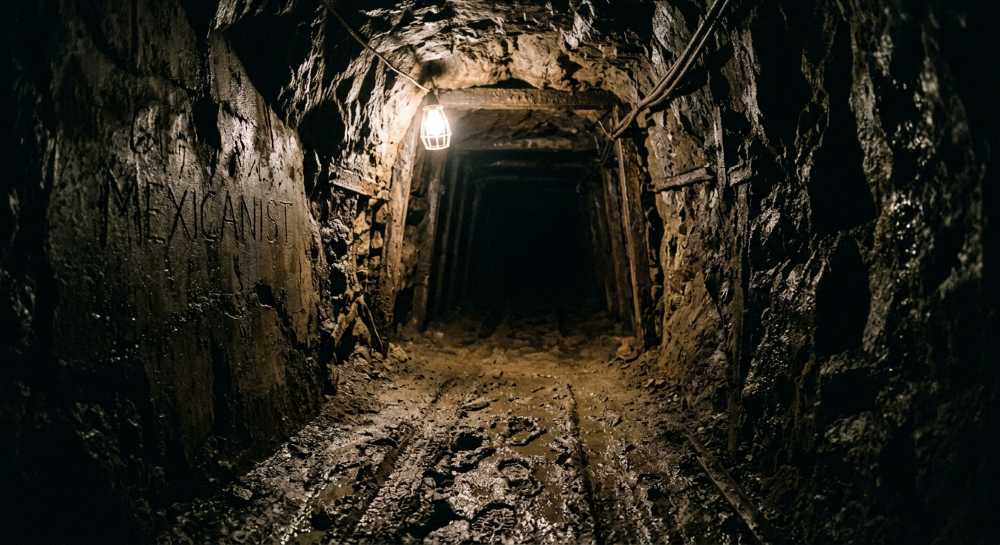
There is a dark poetry in Guzmán's situation. This is a man who literally built tunnels under the US-Mexico border to move drugs — sophisticated, ventilated, railway-equipped passages that stretched for miles. He escaped from Puente Grande prison in 2001, reportedly hiding in a laundry cart, and spent 13 years as a fugitive. He escaped again from El Altiplano in 2015, this time through a mile-long tunnel that opened directly into his shower cell.
He was recaptured in 2016, extradited to the United States in 2017, tried in Brooklyn in 2018-2019, and convicted on all ten counts: drug trafficking, conspiracy, money laundering, weapons charges, and involvement in murder conspiracies. The trial featured testimony from his former associates, his mistress, and accounts of staggering violence — hit squads, torture, bodies dissolved in acid.
For Americans, the trial was a window into a world that felt both foreign and uncomfortably close. The drugs Guzmán moved — heroin, cocaine, methamphetamine, fentanyl — killed tens of thousands of Americans. The corruption he fueled destabilized a neighboring country. The violence he orchestrated was routine and brutal.
They probably don't matter legally. Judge Cogan has made clear he has no jurisdiction over prison conditions. The Bureau of Prisons doesn't take orders from cartel bosses. El Chapo will not be getting phone privileges.
But the letters matter symbolically. They're a reminder that the man who once commanded an army of assassins, who met with actors and politicians, who was interviewed by Sean Penn in a jungle hideout, is now a prisoner in a concrete box, reduced to handwritten petitions that will be read, filed, and ignored.
The letters also serve as a strange kind of propaganda — and not the kind Guzmán might intend. Every time one of these notes surfaces, it reinforces the message that the US justice system, for all its flaws, can contain even the most powerful criminals. The man who escaped every prison in Mexico cannot escape ADX Florence.
For Mexico, the letters are a ghost from the past. El Chapo's Sinaloa Cartel has fragmented — his sons, known as "Los Chapitos," now run competing factions that war with each other and with rival organizations. The violence has gotten worse since his capture, not better. Removing the kingpin didn't kill the empire; it just made it messier.
The Irony of "Fair Treatment"
There's something almost theatrical about a man who ordered the murder of thousands asking for "fair treatment" from the American justice system. Guzmán's victims — and there were thousands, on both sides of the border — never received due process. They received bullets, acid, and unmarked graves.
But that's exactly the point of the system that put him away. Even the worst criminals get a lawyer, a trial, and the right to file handwritten letters from their cells. The constitutional rights Guzmán invokes are the same rights he denied to everyone he ever encountered.
The letters will keep coming. They'll keep getting filed. And they'll keep being ignored. That's the sentence within the sentence — not just life in a box, but the gradual, grinding irrelevance of a man who once terrified two nations.
Based on reporting by La Jornada Maya. The case against Joaquín Guzmán Loera is United States v. Guzmán Loera, 18-CR-00416, U.S. District Court, Eastern District of New York (Brooklyn).