How a Warehouse Manager Stole 18,000 Bottles Using Fake Receipts and a Family Discount
A warehouse manager in Aguascalientes faked 18,395 bottle sales using phantom client tickets, stole $36K in wine and liquor, and got caught only when auditors noticed the books didn’t match the barrels. Family helped.

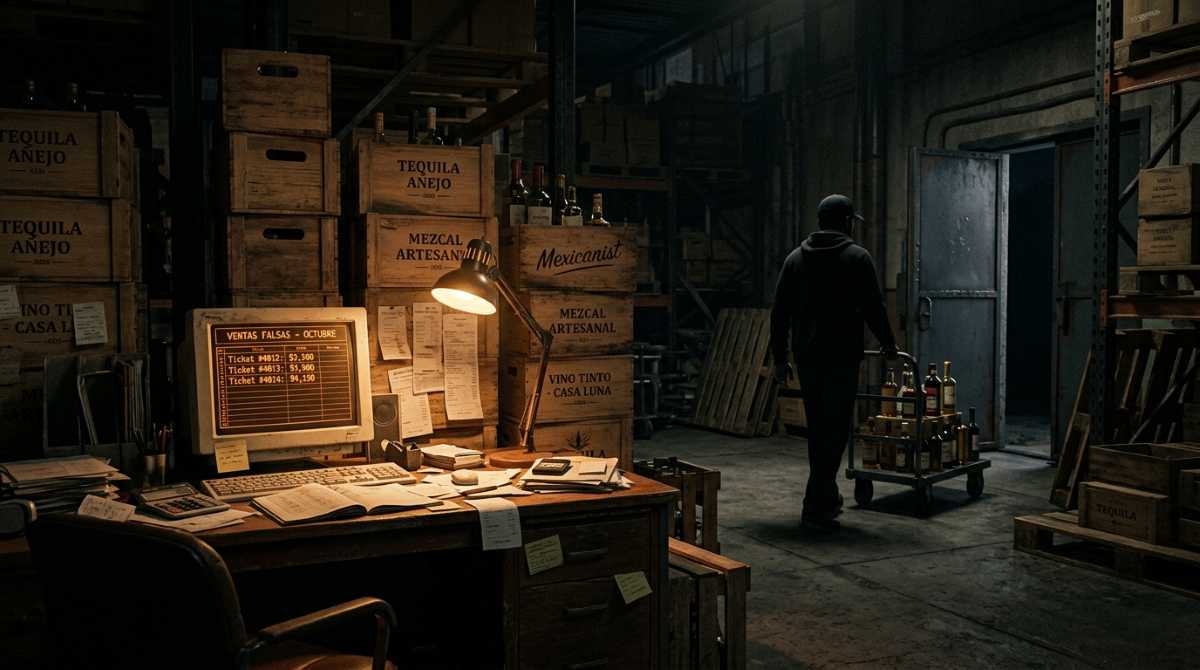
AGUASCALIENTES — It sounds like a Netflix pitch meeting got out of hand. A warehouse manager in this tidy central-Mexican city spent months running a phantom-client scheme out of a wine-and-liquor depot, shuffling 18,395 bottles out the door on bogus paperwork before the accountants finally noticed the cellar was singing a little too quietly.
The suspect, identified by prosecutors only as Víctor “N,” wasn’t some masked bandit scaling walls at midnight. He was the guy with the keys, the inventory logins, and—allegedly—a very cooperative relative already facing charges in the same caper. When state investigators from the State Attorney General's Office (FGE) finished untangling the receipts, they found a damage bill of 736,612 pesos, roughly USD $36,500,and a fraud so pedestrian it was almost brilliant.
Fake Tickets, Real Booze
Here’s how prosecutors say it worked. Víctor had access to the warehouse sales system in Colonia Cuartidores, a working-class neighborhood on the east side of Aguascalientes city. Instead of breaking in, he simply created fake purchase tickets under the name of a registered client who enjoyed special pricing. That gave him a paper trail showing the wine and liquor left the building legally.
Then he faked the inventory logs to match. To anyone auditing the books, it looked like a routine bulk sale to a preferred customer. In reality, the “client” was a ghost, the tickets were fiction, and the bottles were walking out with accomplices—including, investigators say, a female family member who had already been indicted back in February for her part in the operation.
The FGE alleges the crew sold the haul on the side, pocketing cash while the warehouse’s digital ledger hummed along like nothing happened. It was only when a deeper audit turned up the phantom transactions that the alarm bells went off. On April 18, a judge ordered Víctor bound over for trial (auto de vinculación a proceso), slapped him with periodic check-ins, banned him from leaving the state, and forbade him from contacting witnesses. The court gave prosecutors two months to wrap the investigation.
If you’re going to steal 18,000 of something, you want a liquid asset—literally. Mexico’s wine market is booming, valued at roughly $4.38 billion USD in 2024, with imported still wines alone topping $259 million in the last year. Per-capita consumption has climbed from a paltry 450 milliliters in the early 2000s to about 1.3 liters today. That’s still low by global standards, which means the market is hungry, prices are rising, and a black-market bottle moves fast.
Globally, food and beverage products accounted for 22% of all cargo theft incidents in 2024, making them the most stolen commodity category worldwide. Alcohol sits in a sweet spot: high value, easy resale, and—if you avoid premium serial-numbered bottles—hard to trace. In Mexico, where organized retail crime has exploded and cargo theft remains a national headache, a warehouse full of Spanish reds and Chilean whites is basically a bank vault with a cork.
The Inside Man Problem
What makes this case fascinating isn’t the violence; it’s the banality. There were no guns, no midnight heists, no narco banners. Just a guy with a keyboard and a cousin.
But that fits a global pattern. According to supply-chain risk data, at least 26% of cargo theft incidents in 2024 involved insider collusion—corrupt warehouse employees sharing security protocols with theft gangs or simply looting inventory themselves. In the U.S., organized retail crime rings have been caught shipping over $120 million in stolen merchandise into Mexico between 2023 and 2024, feeding black-market networks south of the border.
Aguascalientes, notably, is one of Mexico’s safest states—a rare pocket of relative calm in a country where cargo thieves often hijack trucks at gunpoint. The fact that this theft happened quietly, digitally, and from within underscores a quieter threat: when the perimeter is secure, the risk walks in through the front door with an employee ID.
Víctor’s legal troubles are just beginning. He’s facing aggravated theft (robo calificado) charges, and the two-month investigative window means more names could surface. The FGE has already signaled that the female relative’s earlier indictment in February is part of the same file, suggesting prosecutors are treating this as a family business rather than a solo act.
For the warehouse owners, the damage is more than financial. In Mexico’s competitive drinks market—where Spain, Chile, and Italy battle for shelf space and margins are tightening—trust is inventory. A single compromised manager can erase years of supplier relationships in a matter of months.
Eighteen thousand bottles is a lot of wine. It’s enough to stock a wedding venue for a decade, or to keep a college fraternity wasted through graduation. In the hands of a small-time fraud ring in Aguascalientes, it became a lesson in modern Mexican crime: sometimes the most effective cartel is just a guy with a spreadsheet, a fake client account, and a very thirsty black market.
Sources
- LJA.MX — “Vinculan a proceso a encargado de bodega por robo de más de 18 mil productos en Aguascalientes” (April 20, 2026). Primary reporting on the indictment, method of fraud, and judicial measures.
- Vinetur — “Mexican wine market hits $4.38 billion” (April 14, 2025). Market valuation and per-capita consumption data.
- Grand View Research — Mexico Wine Market Size & Outlook, 2026-2033 (December 2022). Revenue figures and forecast data.
- TT Club / BSI Consulting — 2024 Cargo Theft Report (2025). Global insider-collusion statistics and warehouse vulnerability analysis.
- Munich Re / BSI — Cargo Theft Tactics and Trends Report 2025 (March 2025). Food-and-beverage theft trends and commodity targeting data.
- FreightWaves / Overhaul — “Cargo crime continues to disrupt US, Mexican freight sectors” (August 2025). Mexico cargo theft hotspots and methodology.
- U.S. Congress / National Retail Federation — Written testimony on organized retail crime (December 2025). Cross-border fencing operations and stolen-goods trafficking.
- OSAC — Mexico Country Security Report (2024-2025). Aguascalientes safety profile and crime context.