Cancún
The Army Just Swapped Out the General Running Mexico's Billion Train
General David Lozano Águila replaced as Tren Maya director. New general from Banjército takes over the billion railway.
The Maya world , ancient ruins, living communities, archaeological discoveries, and the 3,000-year civilization that still shapes southeastern Mexico. Chichén Itzá, Palenque, Tulum, and a culture that refuses to die.
Cancún
General David Lozano Águila replaced as Tren Maya director. New general from Banjército takes over the billion railway.
History
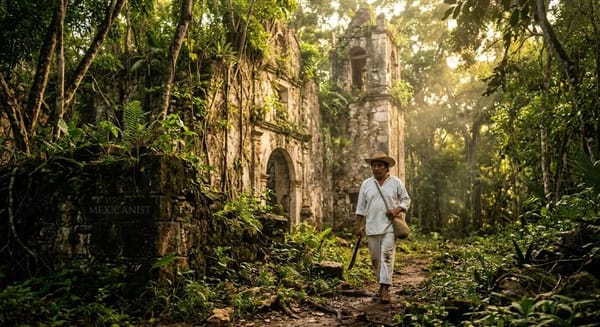
The Mexican Caribbean rakes in over $20 billion a year from tourism. But drive two hours inland, past the last resort billboard, and the 21st century starts to look awfully negotiable. The Maya communities of the Quintana Roo interior are living a different calendar entirely.
Yucatan
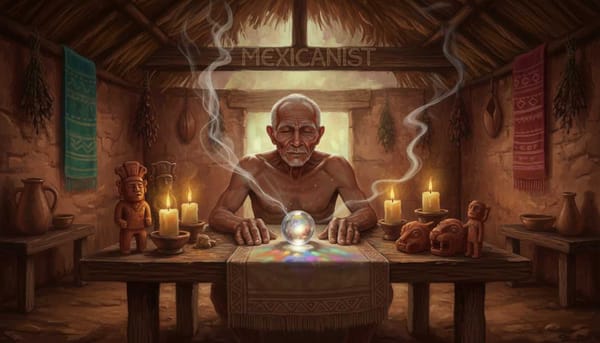
A single h’men’s pharmacopeia may include more than 400 plant species. Prescriptions specify nine plumeria flowers, not eight or ten, because the number 9 is associated with women, and 13 with men. The h’men is not just a herbalist. He is a pharmacist with a cosmological dosing system.
Yucatan
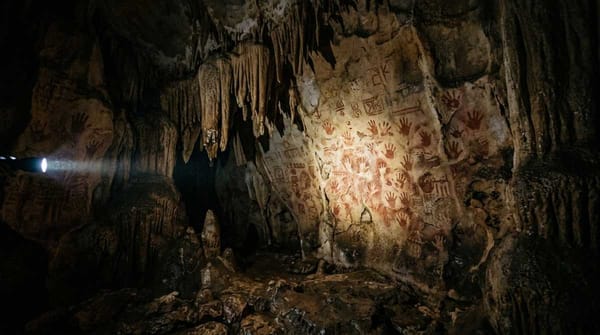
Two calcified skulls shattered by tourist-dropped cameras. A cave sealed for 1,000 years and opened to reveal 200 untouched artifacts. 137 children’s handprints in red and black, a coming-of-age ritual from the age of drought. The Yucatán’s cave paintings are an archive in crisis.
Quintana Roo
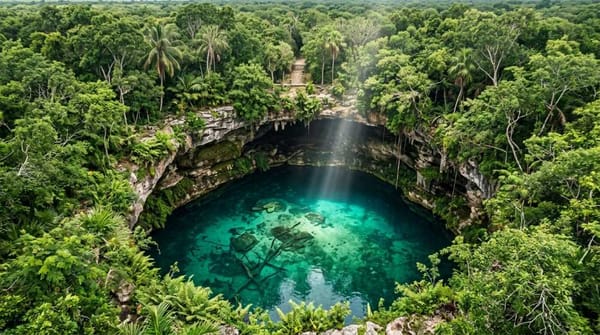
Thousands of cenotes lie undocumented beneath Quintana Roo's jungle, deliberately kept off every map by Maya communities who understand that the fastest way to destroy a sacred site is to tell people where it is.
Tourism
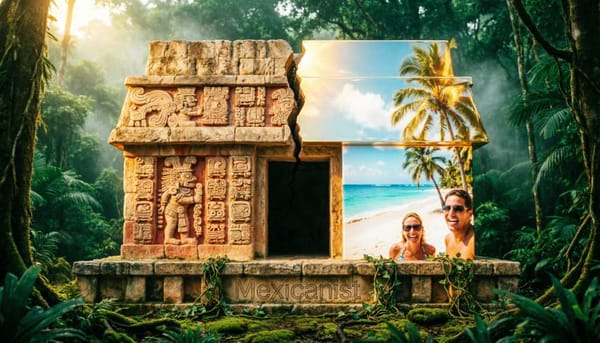
Mexico's Supreme Court just told the country's biggest eco-park empire it can't use Maya symbols anymore. The tourism industry is screaming. Indigenous communities are celebrating. And nobody knows where the line between homage and appropriation actually falls.
Maya
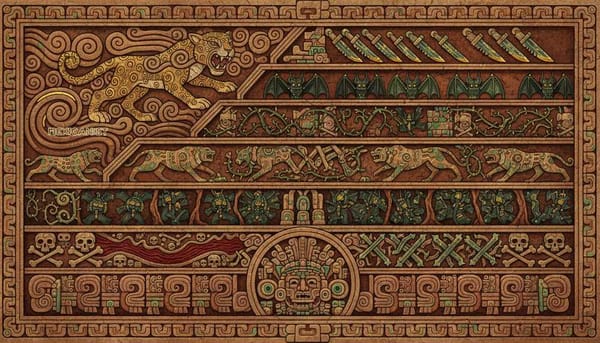
Xibalba wasn't abstract damnation — it was a nine-layered underworld ruled by twelve sadistic death gods who delighted in human suffering. The Maya believed you could physically enter through cenotes still open today.